
When comparing MMA flooring vs. epoxy, facility managers must weigh the speed of installation against long-term cost-efficiency. Both systems offer robust protection for an industrial concrete substrate, yet they serve very different operational needs. Selecting the right one ensures your facility remains safe, compliant, and durable for years to come.
What Is MMA Flooring and How Does It Work in Industrial Spaces
Methyl methacrylate flooring, commonly known as MMA, is a dual-component resin known for its incredibly fast curing time. Unlike other coatings, MMA uses a catalyst to trigger a chemical reaction that hardens the floor in as little as one hour. This makes it a go-to industrial MMA flooring system for businesses that cannot afford long periods of downtime.
In industrial spaces, MMA creates a bond that is both strong and flexible. It can handle thermal shock, which happens when temperatures change rapidly. Because it cures via a chemical bond rather than just drying, it can be applied in temperatures well below freezing. This makes it the premier choice for cold storage flooring where other resins would fail to set.
What Is Epoxy Flooring and Where Is It Commonly Used?
An epoxy resin floor coating is perhaps the most widely recognized industrial floor coating in the world. It consists of a resin and a hardener that, when mixed, create a rigid plastic surface. Epoxy is prized for its high compressive strength and its ability to level out uneven concrete surfaces.
You will find epoxy flooring in a variety of settings, from automotive shops to large-scale manufacturing plants. It is often applied as a self-leveling epoxy floor coating to create a perfectly flat surface for precision machinery. For lighter duties, a water-based epoxy floor coating might be used to provide a clean and dust-free environment.
MMA Flooring vs. Epoxy: Key Differences in Industrial Applications
The biggest difference between MMA flooring vs. epoxy is the cure time. Epoxy usually requires 24 to 72 hours to fully cure before heavy traffic can resume. MMA is ready for full loads in about 60 minutes.
Another difference is the odor. MMA has a very strong, distinct smell during installation that requires professional ventilation. Epoxy has a much lower odor, making it easier to install in facilities where neighbors or other staff are present. However, MMA offers better UV resistance, meaning it will not yellow over time when exposed to sunlight through large bay doors.
| Feature | MMA Flooring | Epoxy Flooring |
| Cure Time | 1 to 2 Hours | 24 to 72 Hours |
| Installation Temperature | -20°F to 90°F | 50°F to 90°F |
| UV Resistance | Excellent | Poor (tends to yellow) |
| Odor Level | High during install | Low to Moderate |
| Flexibility | High (handles thermal shock) | Low (can be brittle) |
MMA Flooring vs. Epoxy: Durability and Chemical Resistance Comparison
Both options are considered chemical resistant flooring, but they react differently to specific substances. MMA is highly resistant to organic acids and alkalis, which are common in food production. Epoxy excels at resisting industrial solvents, fuels, and heavy oils.
In terms of industrial floor durability, epoxy is harder and has higher scratch resistance. However, because it is more brittle, it may crack if the concrete underneath shifts. MMA is slightly more flexible. This flexibility allows it to absorb impacts and handle the expansion and contraction of a factory floor coating solution without losing its bond.
Installation Process: MMA Flooring vs. Epoxy Systems
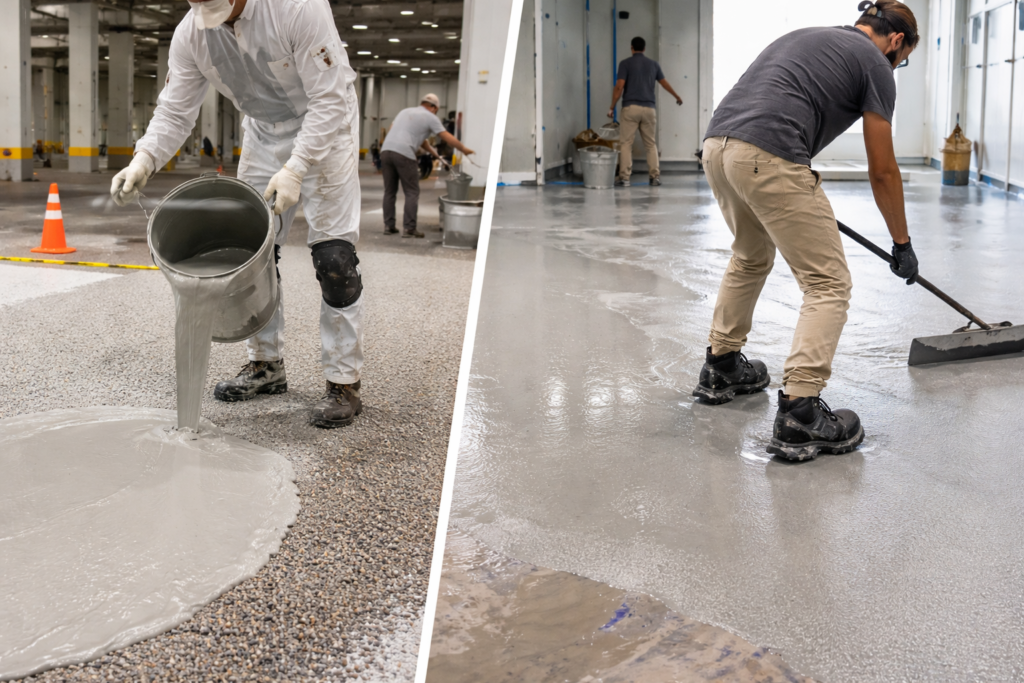
The industrial flooring installation process begins with surface preparation. Both systems require a clean, profiled concrete surface, usually achieved through shot blasting or diamond grinding. This ensures the resin can “bite” into the concrete.
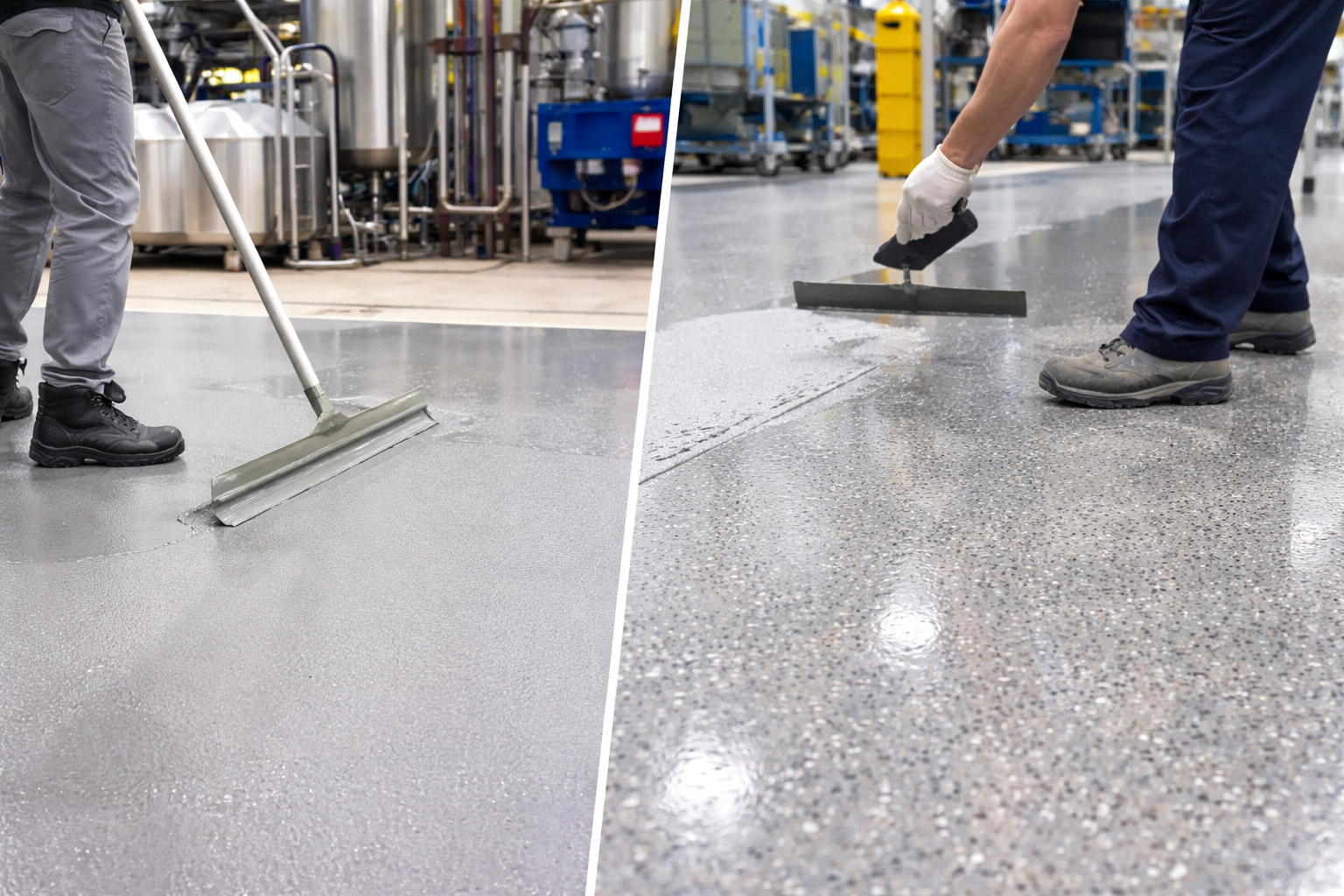
For MMA, the installers mix the resin with a powder catalyst. Because it sets so fast, they must work in small sections. For epoxy, the two parts are mixed and spread using squeegees and rollers. If a facility requires anti-slip aggregate flooring, sand or quartz is broadcast into the wet resin during the middle stages of the process for both systems.
Best Industrial Environments for MMA Flooring vs. Epoxy
Choosing between MMA flooring vs. epoxy often comes down to the specific environment:
- Food Processing Plant Flooring: MMA is often preferred here because it can be installed in coolers and handles the hot water washdowns required for industrial safety standards.
- Warehouse Flooring Systems: Epoxy is the standard choice for massive warehouses. It is cost-effective for large square footage and provides a smooth surface for forklifts.
- Cold Storage: MMA is the only viable option for rooms kept at sub-zero temperatures.
- Pharmaceutical Labs: Epoxy provides a seamless industrial flooring finish that is easy to sanitize and resistant to various lab chemicals.
How to Choose Between MMA Flooring and Epoxy for Industrial Facilities
To make the right choice, ask yourself how much downtime you can afford. If a weekend shutdown is possible, epoxy offers a budget-friendly and durable result. If you need to finish a repair during a shift change, MMA is the necessary choice.
You should also consider the temperature of the room. If you are coating a floor in a non-heated space during winter, epoxy will not cure properly. Finally, think about the long-term industrial flooring performance. If the floor will be exposed to sunlight or extreme temperature swings, the flexibility of MMA may save you money on future repairs.
Which Flooring System Performs Better in High-Traffic Industrial Areas
In high-traffic industrial flooring scenarios, both systems perform well but in different ways. Epoxy is incredibly tough against the constant rolling of heavy pallet jacks and steel-wheeled carts. It maintains its gloss and structure under heavy loads.
MMA is better suited for areas where “traffic” includes heavy dropped items or vibrating machinery. Its slightly rubbery nature prevents the coating from shattering under impact. For a factory flooring system that sees 24/7 activity, the ability to perform rapid localized repairs with MMA without shutting down the entire line is a massive operational advantage.
FAQ
What is the difference between MMA flooring and epoxy flooring?
MMA is a fast-curing acrylic resin that works well in cold temperatures, while epoxy is a slower-curing resin known for high hardness and cost-effectiveness.
Which flooring system cures faster, MMA or epoxy?
MMA cures significantly faster, usually reaching full strength in about one hour. Epoxy requires at least 24 hours for light foot traffic and up to several days for heavy equipment.
Which industrial environments benefit most from MMA flooring?
Facilities like commercial kitchens, freezers, and food plants benefit most because MMA handles cold temperatures and allows for very quick returns to service.
Is epoxy flooring suitable for heavy industrial facilities?
Yes, epoxy is a staple in heavy industry due to its high compressive strength and ability to withstand heavy vehicular traffic and chemicals.
How do MMA and epoxy flooring systems handle chemical exposure?
Both provide chemical-resistant coatings. MMA is better for organic acids found in food, while epoxy is superior for oils, greases, and many industrial solvents.
Which flooring system performs better in cold storage environments?
MMA is the best choice for cold storage. It can be applied and cured at temperatures as low as -20°F, whereas epoxy requires a warm substrate to bond correctly.
What surface preparation is required before installing MMA or epoxy flooring?
Both require mechanical preparation like shot blasting or grinding to remove contaminants and open the pores of the concrete.
How do industrial facilities choose between MMA and epoxy flooring systems?
Selection is based on the available installation window, the operating temperature of the room, and the specific types of chemicals or traffic the floor will face.
Which flooring option provides better slip resistance in industrial areas?
Both can be customized as industrial safety flooring solutions by adding slip-resistant aggregates like quartz or aluminum oxide into the resin during installation.
What maintenance practices help extend the life of MMA and epoxy floors?
Regular sweeping to remove abrasive grit and using pH-neutral cleaners will keep both types of floors in top condition for years.
Conclusion
Deciding between MMA flooring vs. epoxy requires a careful look at your facility’s daily operations. If you need a rapid return to service or work in freezing temperatures, MMA is the clear winner. If you have a larger area and more time for installation, epoxy provides a classic, high-strength finish that is hard to beat. Both systems offer excellent industrial safety flooring solutions when installed by professionals.
If you are ready to upgrade your facility, evaluate your specific traffic patterns and chemical exposure needs first. Choosing the right system today prevents costly failures tomorrow. To ensure the best results for your next project, always consult with an expert to determine the most effective MMA flooring vs. epoxy solution for your space.