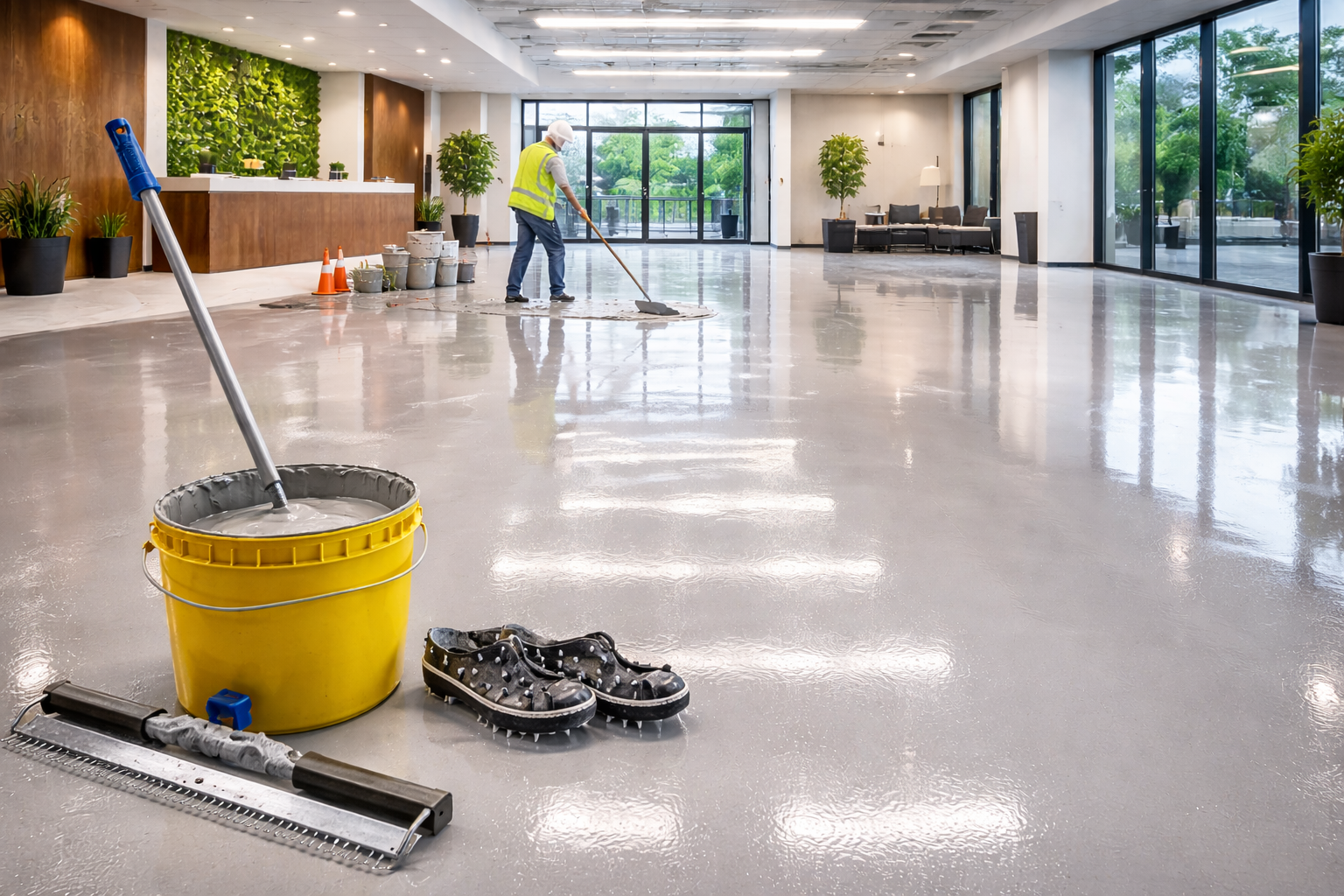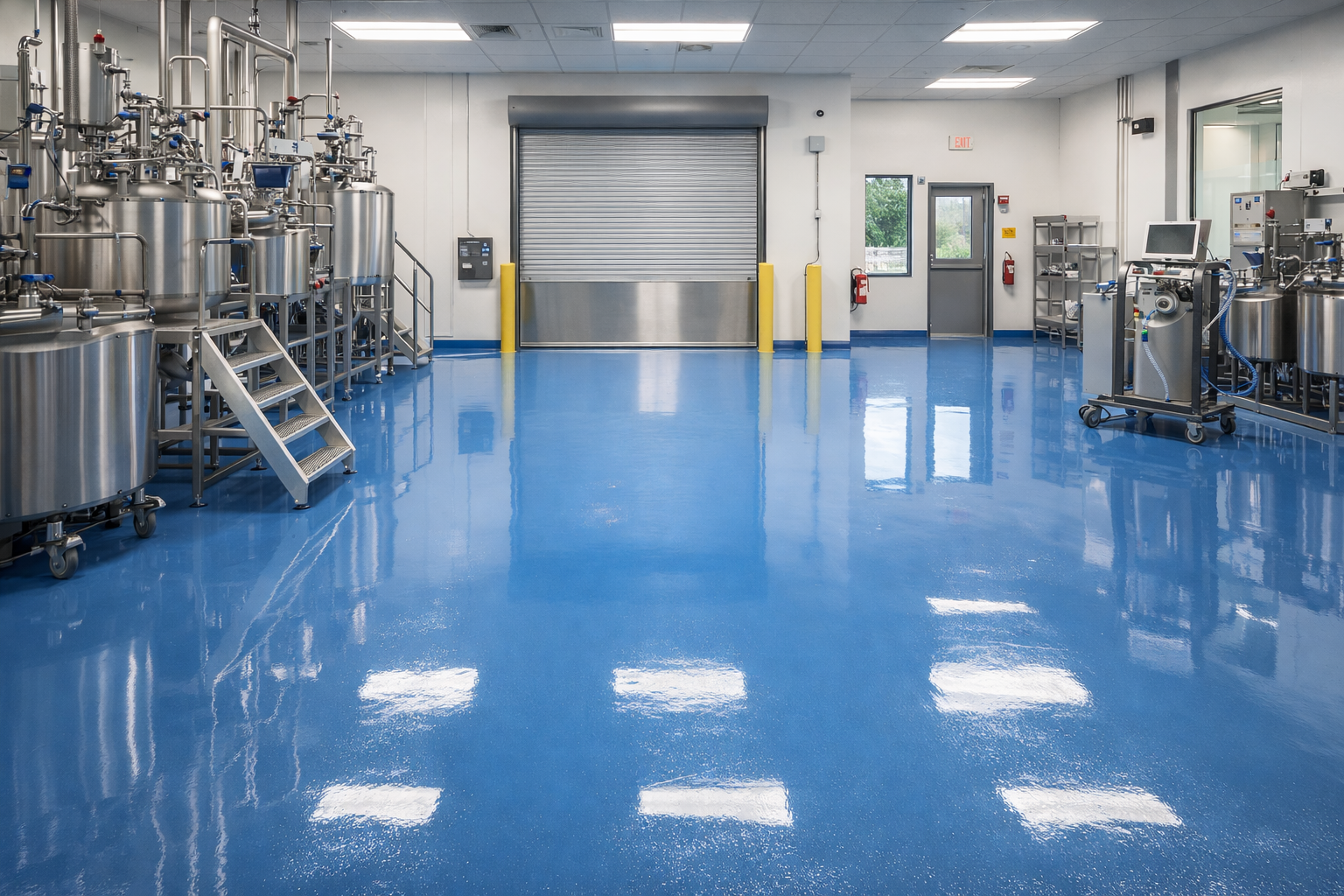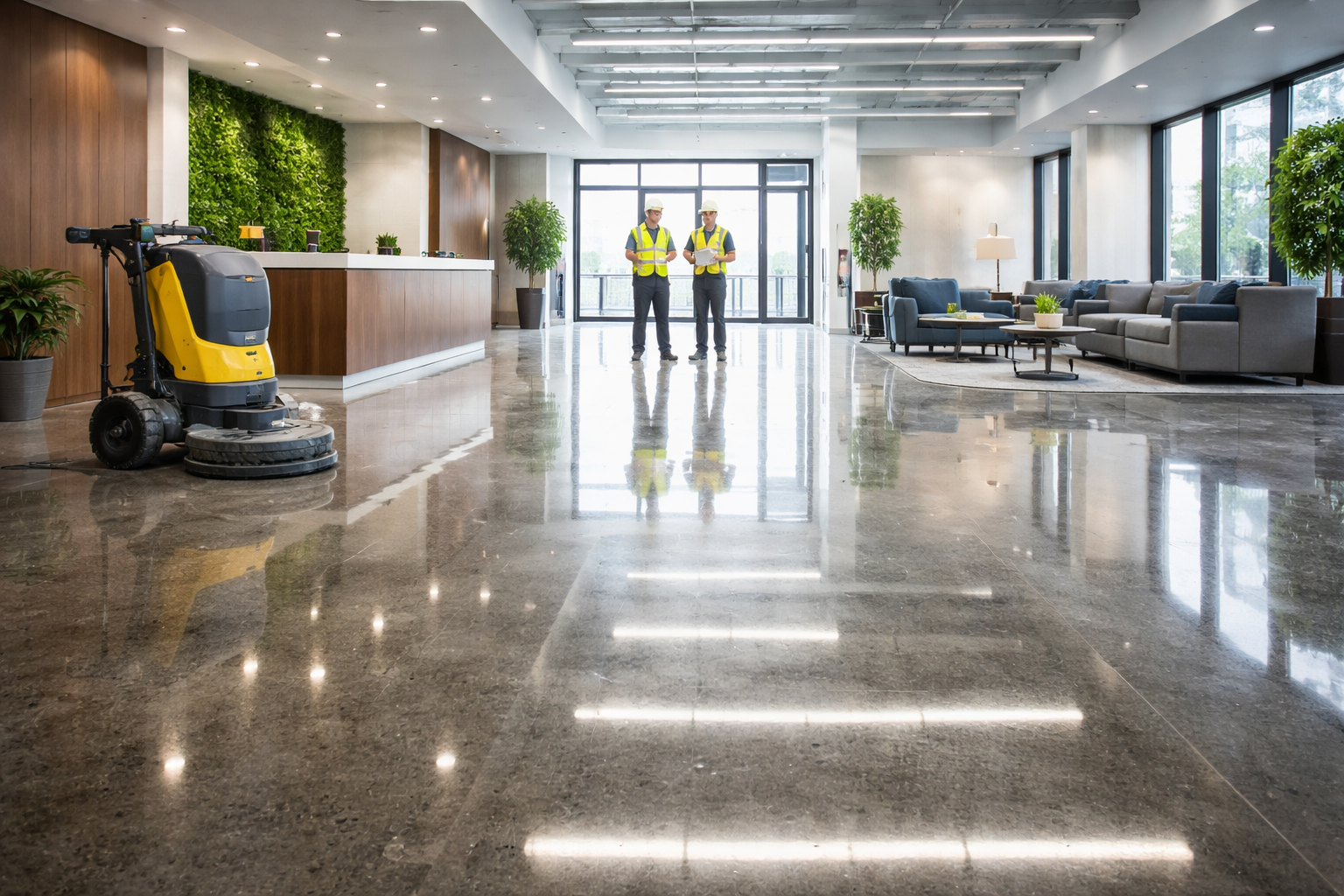

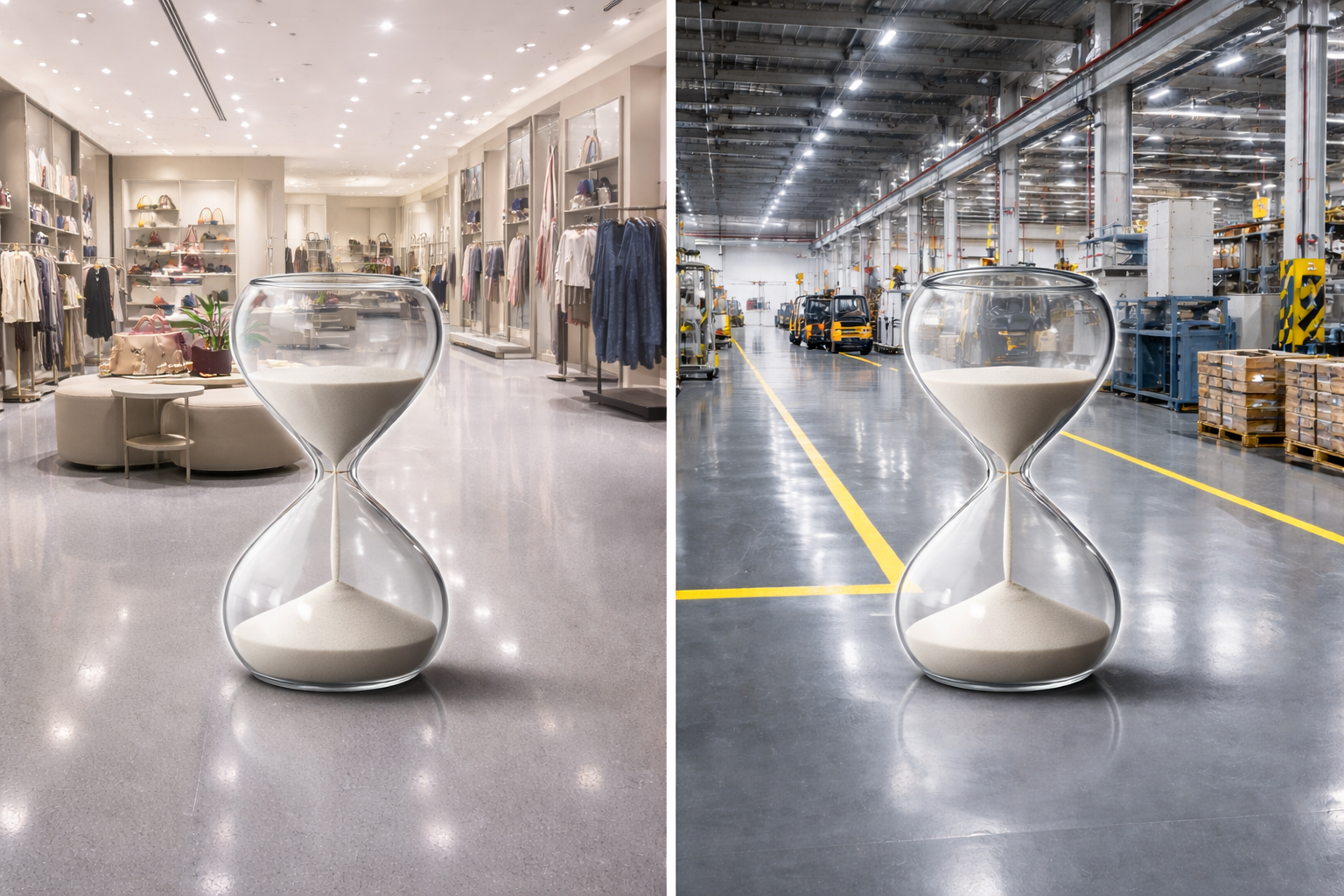
How long does epoxy flooring last is one of the most common questions facility managers and business owners ask when planning durable flooring upgrades. In commercial and industrial environments, floors face constant pressure from foot traffic, heavy equipment, chemicals, and daily cleaning. Choosing a flooring system that can handle this demand without frequent replacement is critical for safety, efficiency, and cost control.
Epoxy flooring has become a preferred solution across the USA because of its strength, clean finish, and ability to perform in challenging environments. However, epoxy flooring lifespan is not the same for every space. Traffic levels, maintenance habits, and installation quality all influence how long the floor continues to perform as intended. In some cases, Polyurethane Flooring Services provide even greater flexibility and thermal shock resistance, offering a strong alternative where epoxy might face limitations. Understanding these factors helps businesses plan smarter and protect their investment.
How Long Does Epoxy Flooring Last on Average?
How long does epoxy flooring last on average depends on where and how it is used. In general, epoxy flooring in commercial environments can last between 7 and 10 years, while industrial facilities may see 5 to 8 years of reliable performance.
Lighter traffic areas such as offices, showrooms, or retail spaces often experience longer epoxy flooring lifespan. In contrast, warehouses, factories, and production floors face heavier wear that shortens floor coating lifespan if not managed properly. For these demanding commercial settings, Commercial Resinous Floor Coatings– including advanced epoxy and hybrid systems- deliver tailored performance that extends usability under heavy use.
The key takeaway is that epoxy floor durability is directly tied to use conditions rather than a fixed number of years.
How Traffic Levels Impact Epoxy Floor Durability
Traffic is one of the biggest factors affecting how long epoxy flooring lasts. High traffic areas experience repeated friction, abrasion, and impact that gradually wear down the surface.
Traffic types that influence epoxy floor durability include:
- Foot traffic from employees and customers
- Forklift and pallet jack movement
- Heavy machinery and rolling equipment
- Repeated loading and unloading
High traffic flooring solutions often require thicker coatings or reinforced systems to maintain performance. Without proper design, even durable flooring systems can wear prematurely.
What Factors Affect the Lifespan of Epoxy Flooring?
Several factors determine epoxy flooring lifespan beyond traffic alone. Understanding these variables helps businesses make informed decisions.
Key factors include:
- Quality of surface preparation before installation
- Type of epoxy system used
- Exposure to chemicals, moisture, or heat
- Cleaning methods and maintenance routines
- Professional installation standards
Poor surface preparation is one of the most common reasons epoxy floors fail early. When installed by professional flooring contractors, epoxy systems are more likely to reach their full lifespan.
Epoxy Flooring Lifespan in Commercial vs Industrial Spaces
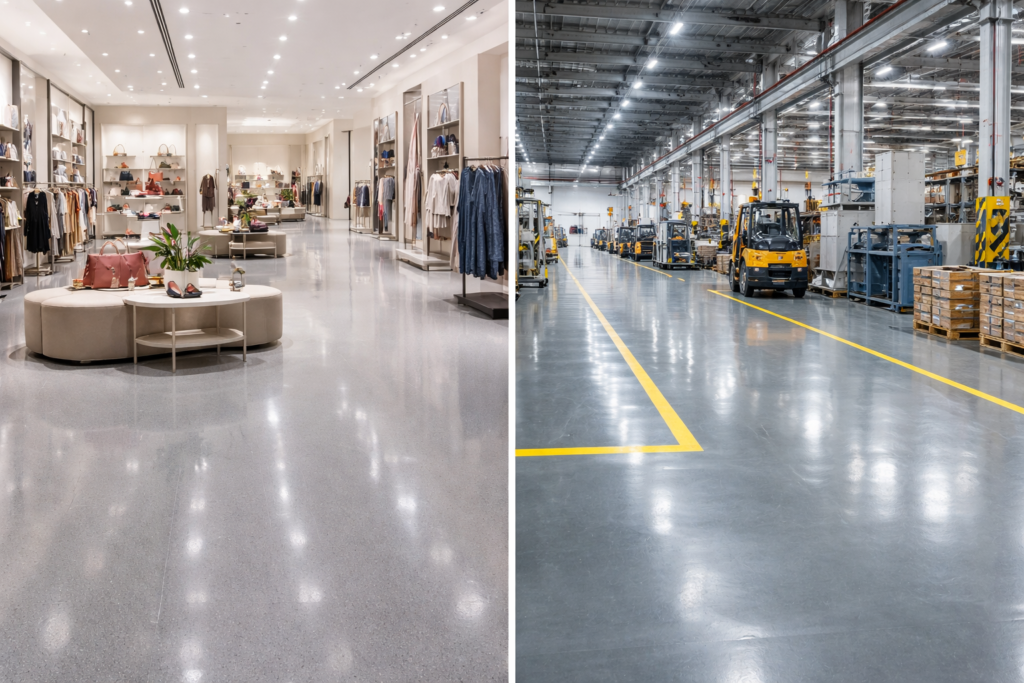
Commercial epoxy floors and industrial epoxy floors face very different demands. This difference directly impacts how long epoxy flooring lasts.
Commercial spaces often benefit from:
- Lower impact loads
- Controlled environments
- Predictable traffic patterns
Industrial spaces typically face:
- Heavy equipment movement
- Chemical spills
- Abrasive materials
- Higher safety requirements
As a result, industrial epoxy floors may require more frequent recoating or floor resurfacing options to maintain performance compared to commercial spaces.
How Often Should Epoxy Floors Be Recoated?
Recoating is an effective way to extend epoxy flooring lifespan without full replacement. How often epoxy floors should be recoated depends on usage and wear patterns.
Typical recoating timelines include:
- Light commercial areas every 5 to 7 years
- Moderate traffic spaces every 3 to 5 years
- Heavy industrial floors every 2 to 4 years
Recoating restores epoxy floor wear resistance and protects the underlying surface. It also supports workplace safety compliance by maintaining consistent traction and surface integrity.
When to Repair vs Replace Epoxy Flooring
Knowing when to repair versus replace epoxy flooring helps control costs and minimize downtime. Not every issue requires full replacement.
Epoxy flooring repairs are suitable when:
- Surface scratches or minor wear appear
- Small areas show coating damage
- The base layer remains intact
Replacement may be necessary when:
- Large sections are delaminating
- Structural cracks affect the substrate
- Repeated repairs no longer hold
In many cases, floor resurfacing options extend the life of existing floors while maintaining safety flooring systems.
How Epoxy Flooring Supports Workplace Safety and Risk Management
Epoxy flooring plays a role beyond durability. It also supports occupational health and safety and broader risk management strategies.
Benefits include:
- Slip resistant surface options
- Seamless finishes that reduce trip hazards
- Easy sanitation for compliance environments
When maintained properly, epoxy floors support workplace safety compliance and long-term asset protection by reducing accident risks and operational disruptions.
Does Heavy Traffic Reduce the Lifespan of Epoxy Floors?
Yes, heavy traffic does reduce how long epoxy flooring lasts if the system is not designed for it. However, this does not mean epoxy is unsuitable for high traffic areas.
Proper design includes:
- Thicker epoxy layers
- Reinforced aggregates
- Protective topcoats
High-traffic flooring solutions built correctly can withstand demanding environments while maintaining epoxy floor durability. Fast-Curing MMA Floor Systems are particularly valuable in time-sensitive industrial or production areas, as their rapid return-to-service minimizes operational downtime without compromising long-term resilience.
How Epoxy Flooring Maintenance Extends Lifespan
Epoxy flooring maintenance is one of the most effective ways to extend floor coating lifespan. Even the most durable flooring systems need care to perform long term.
Best maintenance practices include:
- Routine cleaning with appropriate products
- Avoiding harsh chemicals that degrade coatings
- Prompt cleanup of spills
- Periodic inspections for wear
Consistent maintenance planning helps identify issues early and prevents small problems from becoming costly failures.
Is Epoxy Flooring Strong Enough for Warehouses and Factories?
Epoxy flooring is widely used in warehouses and factories because it can handle heavy use when properly installed. Its ability to resist abrasion, chemicals, and impact makes it suitable for demanding environments.
When paired with safety flooring systems and proper maintenance, epoxy flooring remains a reliable option for industrial facilities focused on durability and compliance. Should wear or damage occur over time, professional Flooring Repair and Restoration can extend the life of the existing surface cost-effectively, preserving performance and avoiding full replacement.
Why Professional Installation Matters for Long-Lasting Performance
Professional installation is one of the most important factors in determining how long epoxy flooring lasts. Poor installation can lead to early peeling, cracking, or uneven wear.
Working with experienced providers like PPI Flooring ensures correct surface preparation, system selection, and application standards that support epoxy flooring lifespan
Businesses can explore epoxy flooring solutions to understand system options suited to their space. For guidance, Contact us for epoxy flooring solutions to discuss specific performance needs. Learn more about industry expertise and services through PPI Floorings.
Planning for Long-Term Flooring Value
Epoxy flooring should be viewed as a long-term investment rather than a short-term fix. When designed correctly, it supports operational efficiency, safety goals, and long-term asset protection.
Planning ahead includes:
- Choosing systems based on traffic levels
- Scheduling recoating before major wear occurs
- Partnering with professional flooring contractors
These steps help businesses maximize value and reduce lifecycle costs.
Conclusion
How long epoxy flooring last depends on traffic, environment, installation quality, and maintenance. In commercial spaces, epoxy floors often last close to a decade, while industrial environments may require more frequent recoating to maintain performance.
With proper care, epoxy flooring remains one of the most durable flooring systems available for commercial and industrial use. If you are planning installation, upgrades, or maintenance, Contact us for epoxy flooring solutions to ensure your floors deliver reliable performance for years to come.
FAQ
1. How long does epoxy flooring last in commercial buildings?
Epoxy flooring typically lasts 7 to 10 years in commercial buildings with proper maintenance.
2. How long does epoxy flooring last in industrial facilities?
Industrial epoxy floors usually last 5 to 8 years depending on traffic and exposure conditions.
3. What factors affect how long epoxy flooring lasts?
Traffic levels, surface preparation, maintenance habits, and environmental exposure all impact lifespan.
4. Does heavy traffic reduce the lifespan of epoxy floors?
Yes, heavy traffic increases wear, but properly designed systems can handle high use.
5. How can I extend the life of epoxy flooring?
Routine cleaning, timely recoating, and professional inspections help extend lifespan.
6. When should epoxy flooring be repaired instead of replaced?
Minor wear or localized damage can often be repaired without full replacement.
7. How often should epoxy floors be recoated?
Recoating intervals range from 2 to 7 years depending on traffic intensity.
8. Is epoxy flooring durable enough for warehouses and factories?
Yes, epoxy flooring is widely used in warehouses and factories when designed for heavy use.
9. Does epoxy flooring meet OSHA durability standards?
Epoxy flooring supports OSHA related expectations when installed and maintained properly.
10. Who should install epoxy flooring to ensure long-lasting performance?
Experienced professional flooring contractors provide the best long-term results.