
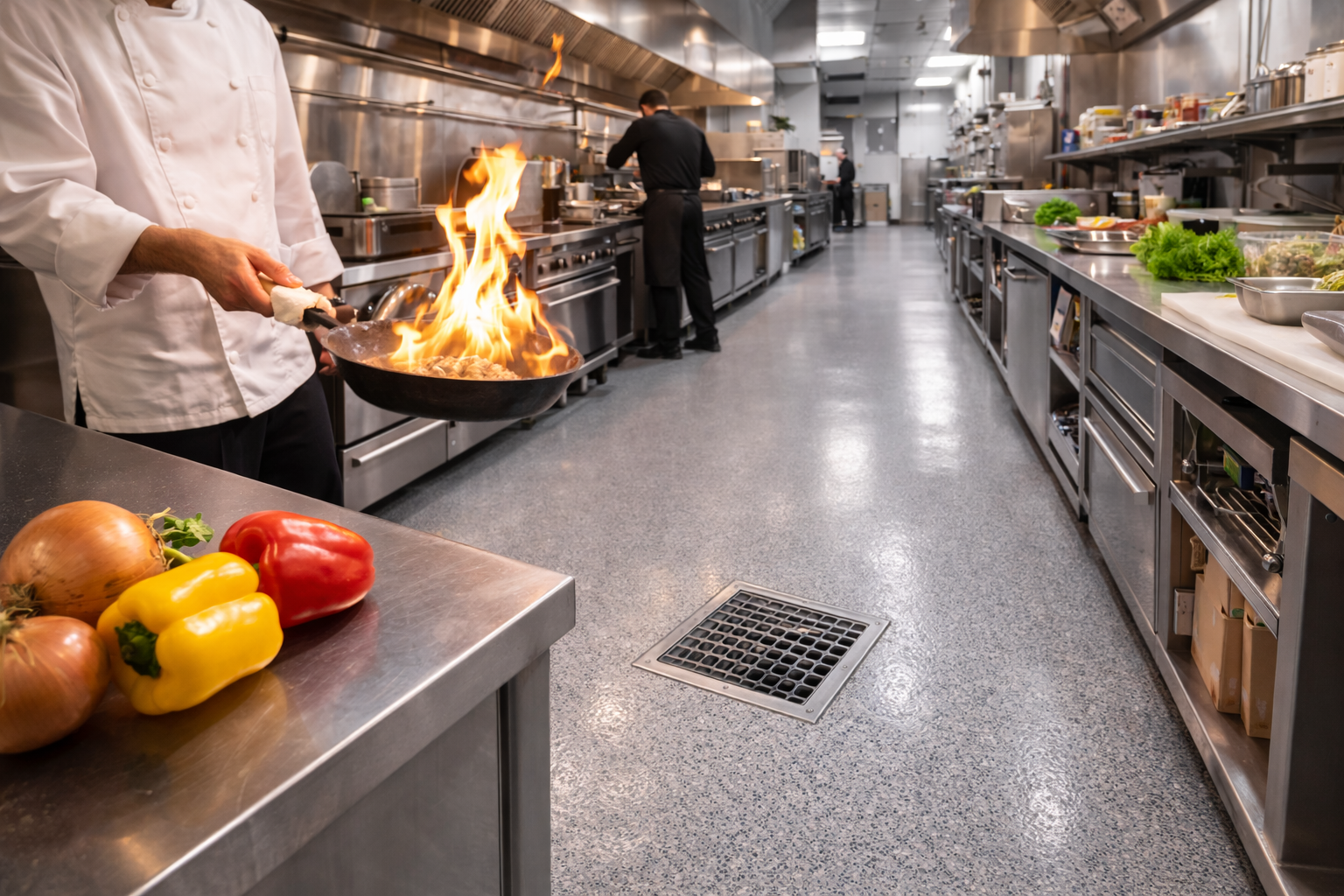
Epoxy kitchen floor solutions are becoming a preferred choice for food and beverage environments across the USA, and for good reason. Commercial kitchens, food processing plants, bakeries, cafeterias, and beverage facilities all operate under strict hygiene and safety expectations. Floors in these spaces are exposed daily to moisture, grease, food spills, cleaning chemicals, and heavy foot traffic. When flooring fails to handle these conditions, it quickly turns into a safety and compliance problem.
Many facility managers struggle with cracked tiles, grout lines that trap bacteria, slippery surfaces, and constant repairs. These problems increase contamination risks and create challenges during food facility safety audits. While Professional Concrete Floor Polishing can refresh and strengthen existing slabs in some cases, an epoxy kitchen floor addresses these issues more comprehensively at the surface level while supporting long-term operational efficiency. Understanding how epoxy kitchen flooring works and why it is suitable for food environments helps decision makers choose solutions that protect both people and products.
What Is an Epoxy Kitchen Floor and How Does It Work?
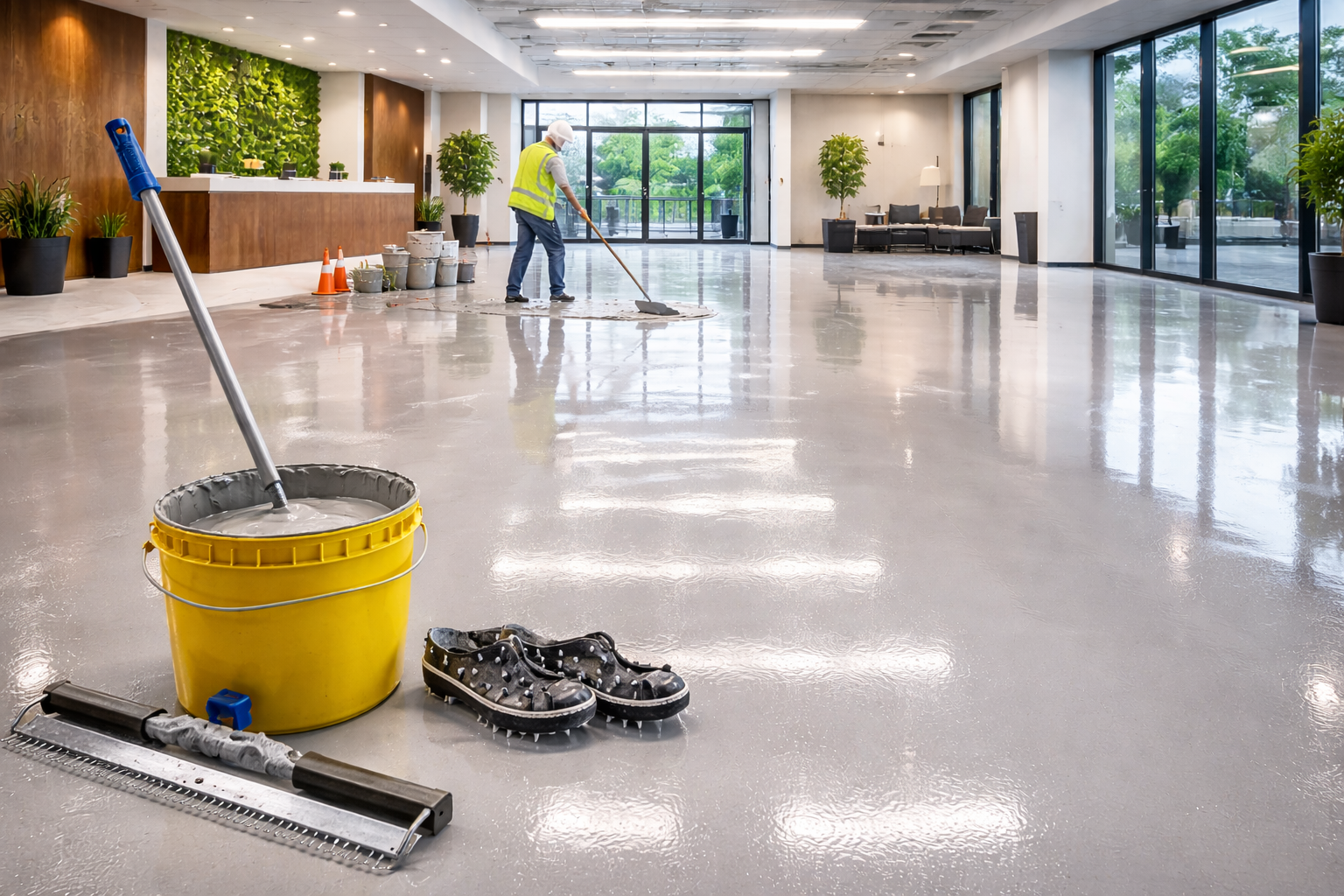
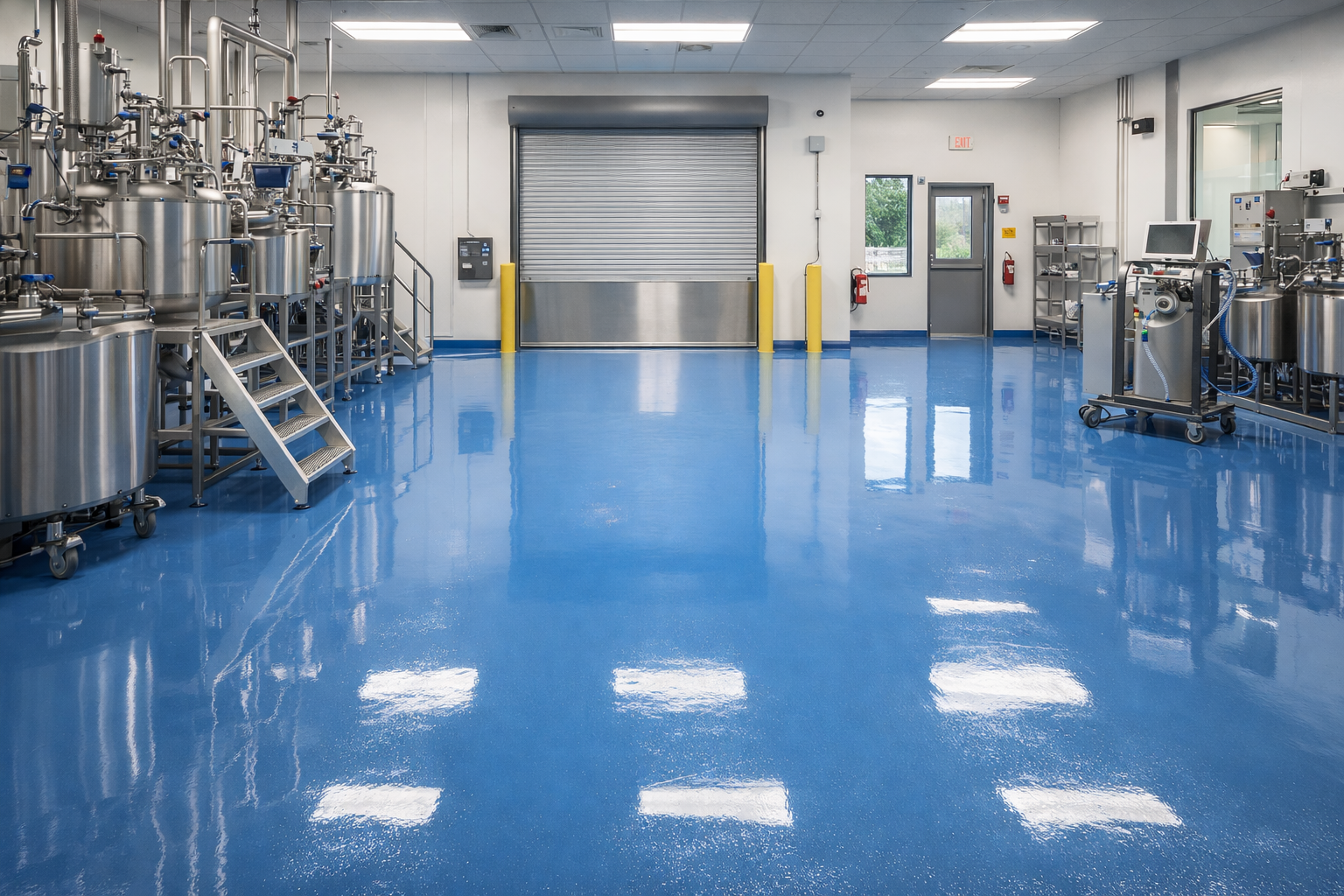
An epoxy kitchen floor is a seamless flooring system created by applying epoxy resin over properly prepared concrete. Once cured, it forms a smooth, durable, and non-porous surface that resists moisture, chemicals, and wear.
Unlike traditional flooring materials, epoxy bonds directly to the substrate. This eliminates seams, grout lines, and joints where bacteria and moisture typically collect. For facilities needing even greater thermal shock resistance or flexibility in extreme temperature zones, Polyurethane Concrete Flooring offers a strong complementary option- yet epoxy food-grade floors are specifically designed to handle the demanding conditions found in commercial kitchen flooring and food processing plant flooring environments.
The result is a sanitary flooring solution that supports daily cleaning, heavy use, and strict hygiene requirements without breaking down over time.
Why Flooring Matters in Food and Beverage Environments
Flooring is one of the most overlooked components in food facilities, yet it plays a direct role in food safety and worker protection. Floors are constantly exposed to spills, temperature changes, and cleaning routines.
When flooring is not designed for food environments, it can:
- Trap bacteria in cracks and seams
- Become slippery and unsafe
- Deteriorate under moisture and chemicals
- Fail during food facility safety audits
An epoxy kitchen floor solves these problems by creating contamination prevention floors that support building hygiene compliance and safer daily operations.
Epoxy Kitchen Floors vs Traditional Kitchen Flooring
Traditional kitchen flooring options like tile, vinyl, or sealed concrete often struggle in food environments. Over time, grout lines crack, tiles loosen, and moisture penetrates beneath the surface.
Compared to traditional options, epoxy kitchen floors offer:
- Seamless surfaces without joints
- Superior moisture-resistant floors
- Better resistance to cleaning chemicals
- Longer lifespan under heavy use
These advantages make epoxy kitchen flooring a more reliable choice for bakery and cafeteria flooring as well as large scale food facilities.
How Epoxy Kitchen Floors Support Hygiene Standards
Hygiene is non-negotiable in food and beverage environments. Epoxy kitchen floors are designed to meet high sanitation expectations by eliminating porous surfaces.
Epoxy floors support hygiene standards by:
- Preventing bacterial growth beneath the surface
- Allowing thorough cleaning and sanitation
- Supporting anti-microbial technology when required
Because epoxy flooring does not absorb liquids, it reduces the risk of lingering contamination and helps facilities maintain consistent cleanliness. When damage does occur from heavy impacts or equipment, timely Professional Floor Damage Repair keeps the seamless, non-porous surface intact and fully hygienic without major downtime.
How Epoxy Kitchen Floors Help Prevent Contamination
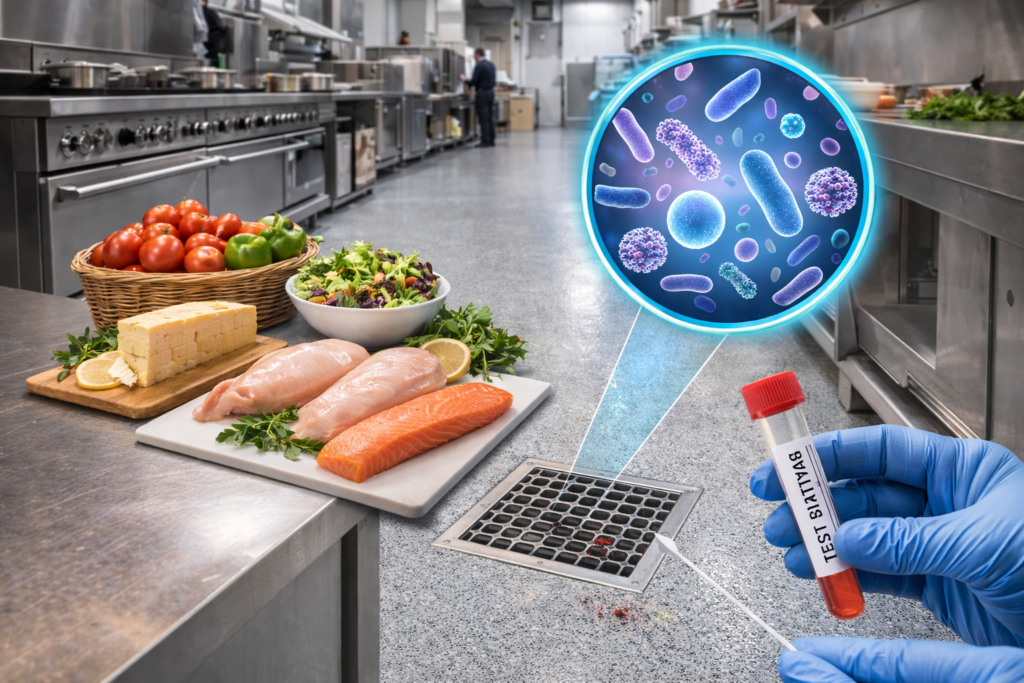
Contamination often starts at floor level. Food particles, moisture, and bacteria can collect in damaged flooring and spread throughout a facility.
Epoxy kitchen floors help prevent contamination by:
- Creating seamless contamination control surfaces
- Resisting moisture penetration
- Supporting effective sanitation protocols
These contamination prevention floors are especially valuable in environments governed by food safety regulations and industrial safety standards.
Slip Resistance and Kitchen Safety
Slips and falls are a common risk in food environments where spills are frequent. Epoxy kitchen floors can be customized with slip-resistant kitchen floors finishes that improve traction without compromising hygiene.
Slip-resistant epoxy systems help by:
- Increasing surface grip in wet areas
- Reducing employee injury risks
- Supporting OSHA compliant kitchen flooring expectations
This balance between safety and cleanliness makes epoxy kitchen flooring a practical solution for busy food operations.
Why Professional Installation Matters for Kitchen Floors
The performance of an epoxy kitchen floor depends heavily on proper installation. Poor surface preparation or incorrect application can lead to peeling, uneven surfaces, or reduced lifespan.
Professional commercial flooring contractors ensure:
- Proper substrate preparation
- Correct system selection for food environments
- Compliance with food facility safety audits
- Long term durability and performance
Facilities that work with experienced providers like PPI Flooring benefit from systems designed specifically for food and beverage environments pasted.
Does an Epoxy Kitchen Floor Meet FDA and USDA Requirements?
While flooring itself is not directly certified by regulatory agencies, epoxy kitchen floors support compliance with FDA approved flooring materials expectations and USDA facility flooring standards.
Epoxy systems help facilities meet requirements by:
- Supporting sanitation and hygiene practices
- Eliminating contamination risks from flooring
- Aligning with food safety regulations
This makes epoxy kitchen flooring a trusted choice in regulated food environments.
Can Existing Kitchen Floors Be Upgraded to Epoxy?
Many food facilities operate in older buildings with worn or damaged floors. The good news is that existing floors can often be upgraded to epoxy kitchen floors without full replacement.
Upgrade options include:
- Applying epoxy over existing concrete
- Installing seamless overlays
- Reinforcing high traffic zones
These upgrades improve safety and hygiene while minimizing downtime.
How Long Does an Epoxy Kitchen Floor Last?
When properly installed and maintained, an epoxy kitchen floor can last many years even in demanding environments. Lifespan depends on traffic, cleaning routines, and exposure conditions.
With regular inspections and Commercial Floor Maintenance, epoxy floors remain a cost-effective, long-lasting solution for commercial kitchen flooring and food processing plant flooring applications.
Maintenance Requirements for Epoxy Kitchen Floors
Epoxy kitchen floors are designed for easy maintenance. Their seamless surface simplifies cleaning and reduces labor.
Best practices include:
- Daily cleaning with approved products
- Prompt spill cleanup
- Periodic inspections for wear
Proper maintenance ensures the floor continues to support hygiene and safety standards.
Is Epoxy Kitchen Flooring Cost Effective?
While epoxy kitchen flooring may require a higher upfront investment than basic flooring, it often proves more economical over time.
Benefits include:
- Reduced repair costs
- Lower contamination risks
- Fewer slip and fall incidents
- Improved performance during audits
For restaurants, cafeterias, and food plants, epoxy kitchen floors deliver long term value.
Choosing the Right Epoxy Kitchen Flooring Partner
Selecting the right installation partner is critical for success. Experienced providers understand the unique demands of food environments and design systems accordingly.
Facilities can Contact us for food and beverage flooring experts to discuss specific needs and compliance goals. Learn more about specialized food facility flooring solutions through PPI Floorings.
Conclusion
An epoxy kitchen floor is well suited for food and beverage environments where hygiene, safety, and durability are essential. By providing seamless, moisture resistant, and slip resistant surfaces, epoxy kitchen flooring supports food safety regulations and daily operational demands.
When installed by experienced professionals, epoxy kitchen floors help facilities reduce contamination risks, protect employees, and maintain compliance. If you are planning a new installation or upgrade, Contact us for food and beverage flooring experts to explore epoxy kitchen floor solutions designed for your environment.
FAQ
1. Is epoxy kitchen flooring safe for food preparation areas?
Yes. Epoxy kitchen flooring creates a seamless, non porous surface that supports hygiene, easy cleaning, and contamination control in food preparation areas.
2. Does epoxy kitchen flooring become slippery when wet?
Epoxy kitchen floors can be finished with slip resistant textures that improve traction, making them suitable for wet and greasy kitchen environments.
3. Is epoxy kitchen flooring suitable for commercial kitchens?
Yes. Epoxy kitchen flooring is widely used in commercial kitchens because it withstands moisture, chemicals, heat, and heavy foot traffic.
4. Can epoxy kitchen flooring meet food safety regulations?
Epoxy kitchen floors support food safety regulations by preventing bacteria buildup, resisting moisture, and allowing thorough sanitation during cleaning routines.
5. How long does epoxy kitchen flooring last in food environments?
With proper installation and regular maintenance, epoxy kitchen flooring can last many years even in demanding food and beverage environments.
6. Can existing kitchen floors be converted to epoxy flooring?
In many cases, existing concrete floors can be upgraded with epoxy systems without full removal, minimizing downtime.
7. Is epoxy kitchen flooring resistant to cleaning chemicals?
Yes. Epoxy kitchen flooring is designed to resist harsh cleaning chemicals commonly used in food and beverage facilities.
8. Does epoxy kitchen flooring crack or peel over time?
When installed by experienced professionals and maintained correctly, epoxy kitchen floors resist cracking and peeling under normal kitchen conditions.
9. Is epoxy kitchen flooring suitable for bakeries and cafeterias?
Yes. Epoxy kitchen flooring works well in bakeries, cafeterias, and food service areas where hygiene and slip resistance are important.
10. How do I know if epoxy kitchen flooring is right for my facility?
A professional evaluation helps determine the right epoxy system based on traffic, moisture exposure, and food safety requirements.