
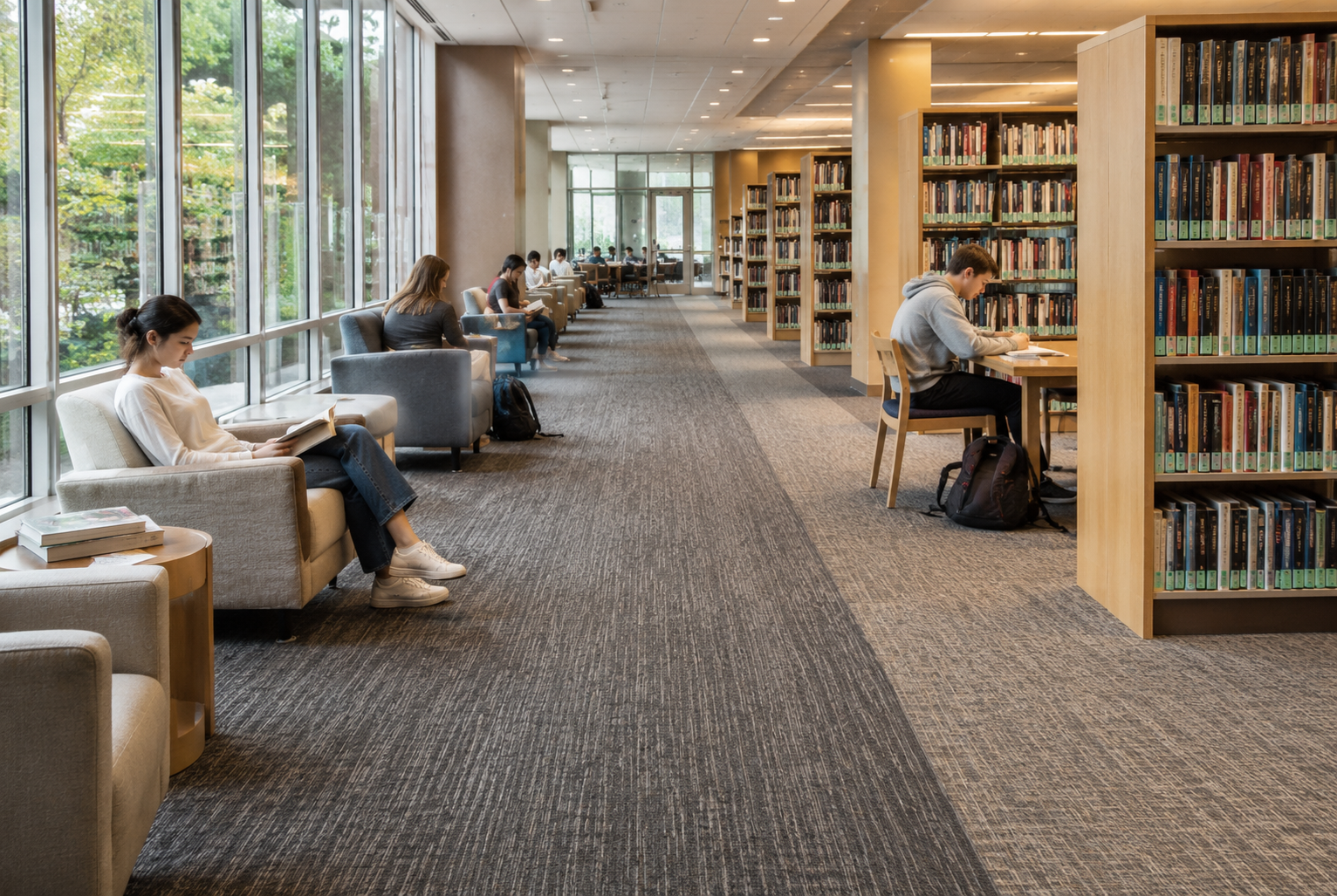
Libraries are designed to support focus, learning, and community use, but maintaining a quiet and durable environment can become difficult when flooring systems are not built for heavy daily traffic. Constant foot movement, rolling carts, furniture shifting, and long operating hours place continuous pressure on library floors. Over time, noisy surfaces, visible wear, and difficult maintenance routines can disrupt the atmosphere visitors expect. Many educational and public facilities rely on PPI Flooring because choosing the right flooring system directly affects comfort, durability, and long-term operational performance.
Library flooring must do more than simply look good. It needs to reduce noise, support safety, withstand heavy traffic, and remain easy to maintain over time. Quiet reading areas, study zones, computer sections, hallways, and common spaces all place different demands on flooring systems. Selecting the right material helps libraries create comfortable environments while reducing maintenance concerns and extending the life of the facility.
Why Does Flooring Matter in Library Environments?
Flooring plays a major role in how libraries function every day. Visitors expect a quiet atmosphere that supports studying, reading, research, and collaboration without constant distractions. Flooring that amplifies footsteps, rolling equipment, or chair movement can negatively affect the user experience.
At the same time, libraries experience high daily traffic from students, visitors, staff, and maintenance equipment. Floors must handle continuous movement while maintaining appearance and structural integrity. Facilities that choose durable and noise-reducing flooring systems often create more comfortable environments while lowering long-term repair and maintenance costs.
Key Requirements for Library Flooring
- Noise reduction performance
- Durability for heavy foot traffic
- Easy cleaning and maintenance
- Slip resistance for safety
- Long-term appearance retention
- Comfort underfoot for visitors and staff
What Flooring Materials Work Best in Quiet Library Spaces?
Quiet spaces require flooring materials that absorb sound rather than amplify it. Hard surfaces such as untreated concrete or certain tile systems can create echo and increase noise levels throughout the facility. This becomes especially noticeable in study zones and reading areas.
Carpet tile, luxury vinyl tile, rubber flooring, and certain resilient flooring systems are commonly used in libraries because they help reduce noise while maintaining durability. These materials absorb footstep sound and rolling cart movement more effectively than many hard flooring surfaces. Facilities looking for quieter environments often prioritize flooring systems designed specifically for acoustic performance.
Why Are Carpet Tiles Popular in Libraries?
Carpet tiles are widely used in libraries because they provide strong sound absorption while offering flexibility for high-traffic environments. They help reduce noise from walking, furniture movement, and daily activity, which supports a quieter atmosphere throughout the facility.
Another advantage of carpet tile flooring is easier maintenance and replacement. Individual tiles can be replaced if damage or staining occurs without replacing the entire floor. Libraries that require both acoustic control and practical maintenance often choose carpet tiles for study spaces, reading areas, and collaborative zones.
Benefits of Carpet Tile Flooring in Libraries
- Reduces footstep noise
- Comfortable walking surface
- Easier section-by-section replacement
- Improves acoustic performance
- Supports quieter study environments
Is Luxury Vinyl Tile a Good Choice for Library Flooring?
Luxury vinyl tile, often called LVT flooring, has become increasingly popular in educational and public facilities because it combines durability, moisture resistance, and easier maintenance. Libraries benefit from LVT because it performs well in high-traffic environments while offering a clean and professional appearance.
LVT flooring is commonly installed in entrances, hallways, computer areas, and public gathering spaces where durability is especially important. Many modern LVT systems also include sound-reducing backing layers that help minimize noise compared to traditional hard flooring materials.
How Important Is Noise Reduction in Library Flooring?
Noise control is one of the most important factors when selecting flooring for libraries. Loud flooring surfaces can interrupt concentration and reduce the comfort of visitors using the space for studying, reading, or research. Flooring systems that reduce sound transmission help maintain a more productive and welcoming environment.
Acoustic performance becomes especially important in libraries with open layouts, large reading rooms, or collaborative spaces where sound travels easily. Flooring materials with cushioning layers or sound-absorbing properties help minimize disruptions caused by foot traffic and furniture movement.
Flooring Options With Strong Acoustic Performance
- Carpet tile flooring
- Rubber flooring systems
- Acoustic vinyl flooring
- Cushioned resilient flooring
- Cork-based flooring materials
Can Library Flooring Handle High Daily Traffic?
Libraries experience more traffic than many people realize. Students, staff, visitors, maintenance crews, and rolling book carts all place continuous pressure on flooring surfaces throughout the day. Weak flooring systems often begin showing wear patterns, stains, or surface damage much faster than expected.
Durable flooring materials help libraries maintain appearance and functionality under constant use. Commercial-grade carpet tiles, resilient vinyl flooring, and rubber flooring systems are designed to withstand high traffic while maintaining structural integrity. Libraries that invest in durable flooring solutions often reduce long-term repair costs and operational disruptions.
How Does Flooring Affect Maintenance in Libraries?
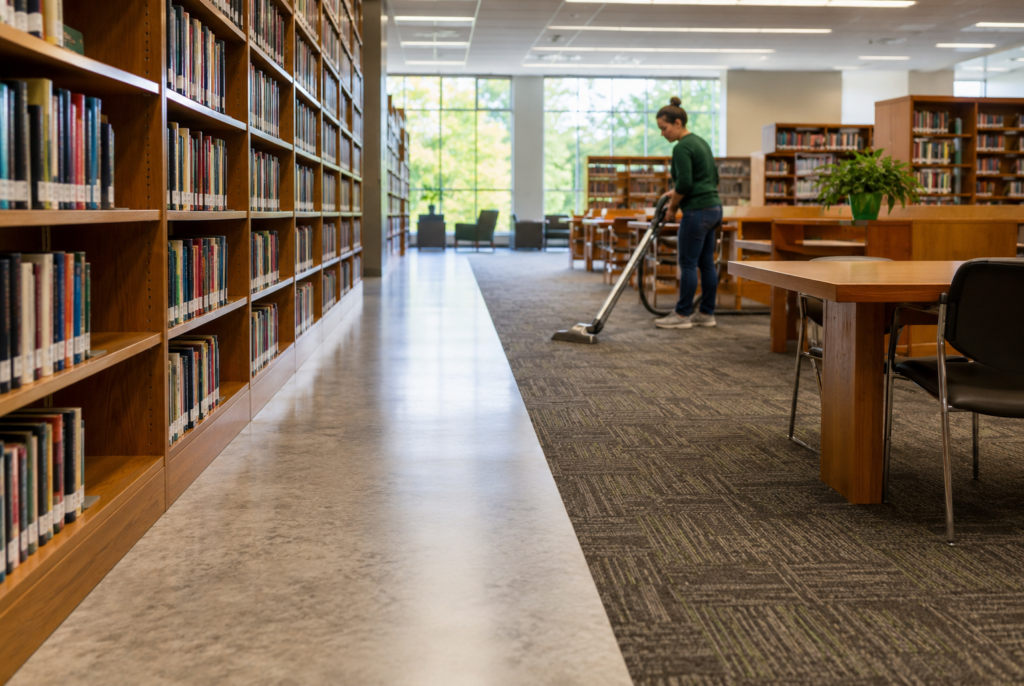
Maintenance requirements directly impact operational efficiency in educational and public facilities. Flooring systems that require constant cleaning, repairs, or replacement can increase labor costs and disrupt library operations.
Library flooring should be easy to clean and capable of resisting stains, scratches, and daily wear. Carpet tiles simplify spot replacement, while vinyl and resilient flooring systems allow easier routine cleaning. Facilities that prioritize low-maintenance flooring often experience fewer interruptions and lower long-term operational expenses.
Maintenance Advantages of Modern Library Flooring
- Easier daily cleaning routines
- Reduced repair frequency
- Better stain resistance
- Simplified damaged section replacement
- Long-term appearance retention
Which Flooring Is Best for Different Areas of a Library?
Different sections of a library place different demands on flooring systems. Quiet reading rooms require strong acoustic performance, while entrances and hallways need stronger durability for heavy traffic. Choosing one flooring material for the entire facility may not always provide the best long-term performance.
Many libraries combine flooring systems to support different functional areas. Carpet tiles may be installed in reading and study zones, while luxury vinyl tile or rubber flooring may be used in entrances, corridors, and collaborative spaces. This approach helps facilities balance durability, maintenance, and acoustic performance more effectively.
Recommended Flooring by Library Area
| Library Area | Recommended Flooring |
| Reading Areas | Carpet Tile |
| Hallways | Luxury Vinyl Tile |
| Computer Zones | Resilient Vinyl Flooring |
| Public Entrances | Rubber or Vinyl Flooring |
| Study Rooms | Acoustic Carpet Tile |
| Staff Areas | Durable Resilient Flooring |
How Does Safety Influence Library Flooring Selection?
Safety is an important factor in public and educational environments. Slippery or damaged floors increase the risk of accidents for visitors, staff, and students. Flooring must support safe movement while maintaining durability under heavy use.
Many library flooring systems include slip-resistant finishes and cushioned surfaces that improve walking stability. Carpet tile and rubber flooring systems also help reduce impact injuries compared to harder surfaces. Libraries that prioritize safety often schedule regular flooring inspection services to identify wear or damage before larger issues develop.
Why Is Long-Term Durability Important for Libraries?
Replacing flooring in active libraries can disrupt operations, limit access to study areas, and increase long-term costs. Facilities need flooring systems capable of handling years of use without frequent replacement or major repairs.
Durable library flooring systems provide better long-term value because they maintain performance under continuous traffic and daily operational demands. Commercial-grade flooring products are specifically designed to resist wear while supporting easier maintenance routines over time.
Features That Improve Flooring Longevity
- Wear-resistant surface layers
- Moisture-resistant construction
- Strong stain protection
- High traffic durability ratings
- Seamless maintenance compatibility
Should Libraries Invest in Professional Flooring Installation?
Even high-quality flooring systems can fail prematurely if installation is not completed correctly. Uneven substrates, poor adhesive application, or improper material selection can lead to lifting, gaps, and reduced flooring lifespan.
Professional installation helps ensure flooring systems perform as intended in high-traffic educational environments. Experienced installers evaluate traffic patterns, acoustic needs, moisture conditions, and maintenance goals before installation begins. Libraries that contact us for professional flooring installation often experience better long-term performance and reduced maintenance issues.
Why Are More Libraries Upgrading Their Flooring Systems?
Modern libraries are evolving into multi-functional community spaces that support studying, collaboration, technology access, and public programs. These expanded roles place greater demands on flooring systems than traditional libraries experienced in the past.
Facilities are upgrading flooring systems to improve acoustics, durability, safety, and maintenance efficiency while creating more comfortable environments for visitors. Modern flooring technologies allow libraries to balance quiet performance with heavy-duty durability more effectively than ever before.
Reasons Libraries Upgrade Flooring Systems
- Improve acoustic comfort
- Reduce maintenance costs
- Support heavier daily traffic
- Increase visitor comfort and safety
- Improve long-term flooring durability
Conclusion
The best library flooring for quiet and high-traffic areas combines durability, acoustic performance, safety, and easier maintenance. Libraries require flooring systems capable of supporting daily activity without disrupting the calm and productive atmosphere visitors expect. Choosing the right flooring helps facilities reduce maintenance concerns while improving comfort and long-term performance.
From carpet tiles and resilient flooring to luxury vinyl tile and rubber flooring systems, modern library flooring solutions offer dependable performance for different functional spaces. If your facility is planning a flooring upgrade, contact us today to learn how PPI Flooring can help you select the right library flooring solution for your environment.
FAQ
What is the best flooring for quiet library areas?
Carpet tile flooring is commonly considered one of the best options because it helps absorb sound and reduce noise levels.
Is luxury vinyl tile good for libraries?
Yes. Luxury vinyl tile is durable, moisture-resistant, and suitable for high-traffic library areas such as hallways and entrances.
Why is acoustic performance important in libraries?
Acoustic flooring helps reduce noise from footsteps, carts, and furniture movement, creating a quieter study environment.
What flooring works best for high-traffic library spaces?
Commercial-grade carpet tile, resilient vinyl flooring, and rubber flooring systems perform well in high-traffic library areas.
How can libraries reduce flooring maintenance costs?
Choosing durable and low-maintenance flooring materials helps reduce repairs, cleaning time, and long-term replacement expenses.