
Your floors are looking tired. The finish is dull; there are scratches in all the high-traffic spots, and you’re staring at them, wondering if it’s finally time for a full overhaul.
Before you commit to ripping everything out, here’s something worth knowing. In a lot of cases, floor refinishing gives you the same fresh, like-new result for a fraction of the cost. The trick is knowing when to refinish and when replacement is truly the smarter move.
What Floor Refinishing Actually Involves
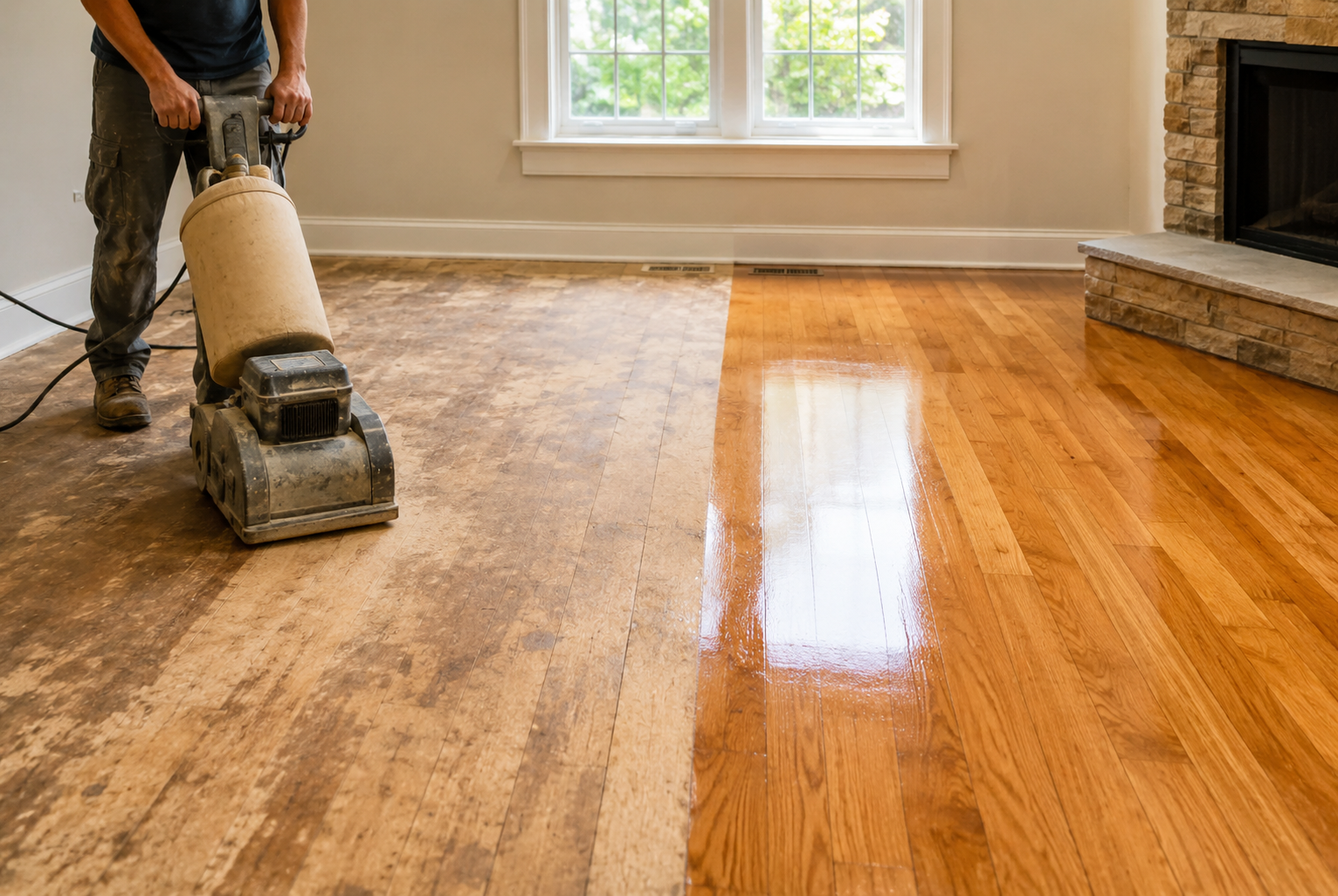
Hardwood floor refinishing is the process of sanding down the top layer of your existing floor, repairing minor damage, and applying a fresh stain and protective finish. It restores the surface without disturbing the planks underneath. Done right, refinishing can take floors that look 20 years old and make them look brand new again. It’s faster, cleaner, and far less invasive than a full floor replacement.
When Refinishing Is the Smarter Choice
Not every worn floor needs to be torn out. Here are the situations where refinishing hardwood floors clearly wins over replacement.
1. Your Floors Have Surface-Level Damage
If you’re dealing with scratches, scuffs, faded finishes, or minor stains, refinishing handles all of it. Sanding removes the damaged top layer and reveals fresh wood underneath, ready for a new stain. This works beautifully for floors that have lived a full life but still have solid structural integrity. The wood itself is fine. It just needs a refresh.
2. The Hardwood Is Still Thick Enough
Solid hardwood floors can typically be refinished four to six times over their lifespan. Engineered wood can usually handle one to three refinishes depending on the thickness of the wear layer. If your floors haven’t been sanded down to the limit yet, refinishing is almost always the better call. You’re tapping into life that’s already built into the wood.
3. You Want to Change the Color or Style
Tired of that orange oak look from the early 2000s? Refinishing lets you completely change the stain color, going from honey tones to rich espresso, classic gray, or natural matte finishes. You get a whole new aesthetic without spending what new flooring would cost. That’s a serious win for anyone planning a kitchen update or whole-home refresh.
4. You’re on a Tighter Budget
Floor refinishing costs significantly less than full replacement, often somewhere between a third and half the price. You save on materials, labor, and disposal fees. If your goal is to refresh your home without draining your savings, refinishing delivers maximum visual impact for minimum investment. Ready to bring your floors back to life without the hefty price tag of replacement? Our refinishing team is just a call away to walk you through your options.
5. You Want to Preserve Original Character
Older homes often have vintage hardwood that simply can’t be replicated. Old-growth oak, heart pine, or original plank flooring carries character that new materials can’t match. Refinishing preserves that history while making the floors functional and beautiful again. You keep the soul of the home intact.
6. You Need a Quicker Turnaround
Replacement projects take days, sometimes weeks. Refinishing can often be completed in two to four days, depending on the size of the space and the drying time of the finish. If you’re working around a busy household, hosting an event, or trying to sell your home, refinishing gets you back to normal life faster.
When Floor Replacement Makes More Sense
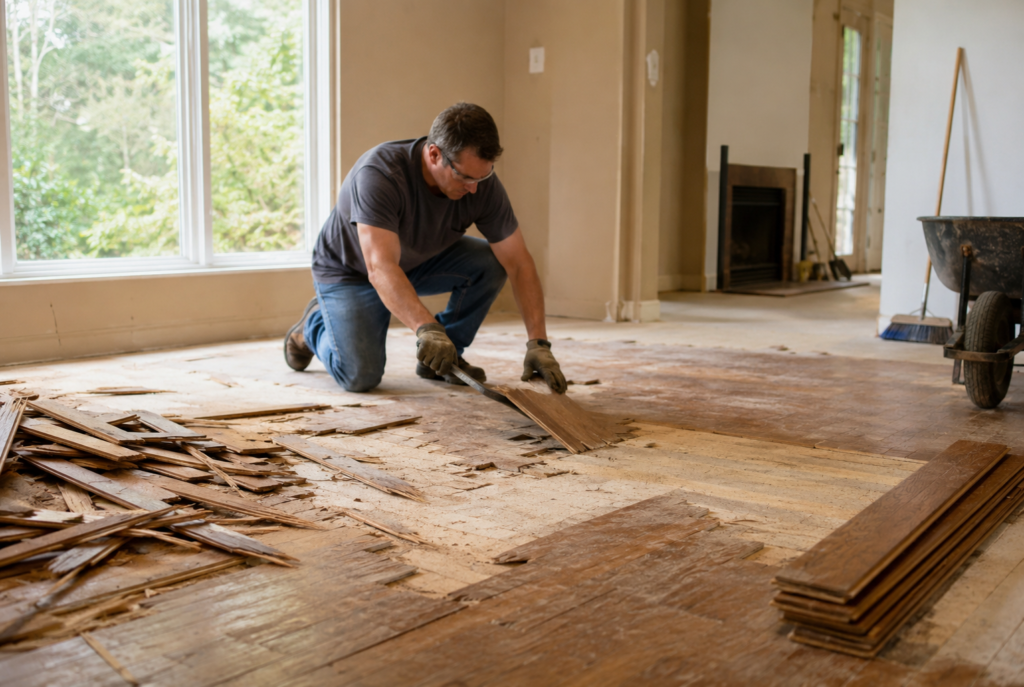
Refinishing isn’t always the answer. There are clear situations where investing in new flooring installation is the right move.
- Deep Structural Damage: If your floors have buckling, warping, severe water damage, or rot, refinishing won’t fix the underlying issue. These problems need replacement to address the root cause.
- The Wear Layer Is Too Thin: When hardwood has already been refinished several times, there isn’t enough material left to sand safely. Continuing to refinish risks exposing nails and damaging the planks beyond repair.
- Outdated or Damaged Subfloor: If the subfloor underneath is failing, no amount of refinishing on top will solve the problem. A full replacement gives you the chance to address what’s happening below the surface.
- You’re switching flooring types: Want to move from carpet to hardwood? Or from old laminate to luxury vinyl plank? Refinishing isn’t an option here. You’ll need a full installation.
Not sure which direction makes sense for your home? Let our flooring specialists take a look in person and give you straight, honest advice based on what your floors actually need.
How to Tell Which Option Fits Your Home
The easiest way to decide is to look at three things. First, the depth of the damage. Surface issues equal refinishing. Structural issues equal replacement. Second, the remaining thickness of the wear layer. A professional can measure this in minutes. Third, your long-term plans for the space. If you love your current floors and just want them refreshed, refinishing wins almost every time.
The Long-Term Value of Refinishing
Beyond saving money upfront, refinishing also extends the lifespan of your existing hardwood flooring by another 10 to 15 years. That’s a serious return on a relatively small investment. It also adds noticeable resale value. Buyers love homes with well-maintained original hardwood, and a freshly refinished floor signals that the home has been cared for.
FAQ
1. How long does floor refinishing take?
Most projects take two to four days from start to finish. That includes sanding, staining, and applying multiple coats of finish with proper drying time in between.
2. Can all hardwood floors be refinished?
Solid hardwood floors can be refinished multiple times. Engineered wood can usually be refinished once or twice depending on the wear layer thickness. Laminate and vinyl cannot be refinished.
3. Is refinishing messy?
Modern refinishing uses dustless sanding systems that capture nearly all debris. The process is far cleaner than it used to be, and most homes stay livable during the project with minor adjustments.
4. How much money does refinishing actually save?
On average, refinishing costs 40 to 60 percent less than full replacement. You save on materials, removal labor, disposal, and installation, while still getting a like-new finish.
5. How do I know if my floors can still be refinished?
A professional inspection is the best way to know. Our team checks the wear layer thickness, structural condition, and overall integrity to recommend the right path forward.
Conclusion
Replacing your floors isn’t always necessary, and in many cases, it’s not even the best option. Floor refinishing gives you a fresh, beautiful surface without the cost, mess, or time commitment of full replacement.
The key is getting an honest assessment from people who actually know floors. If you’re ready to discover whether refinishing is the right move for your home, our experienced team is here to help you decide. Reach out today and let’s bring your floors back to life with care, craftsmanship, and zero pressure.