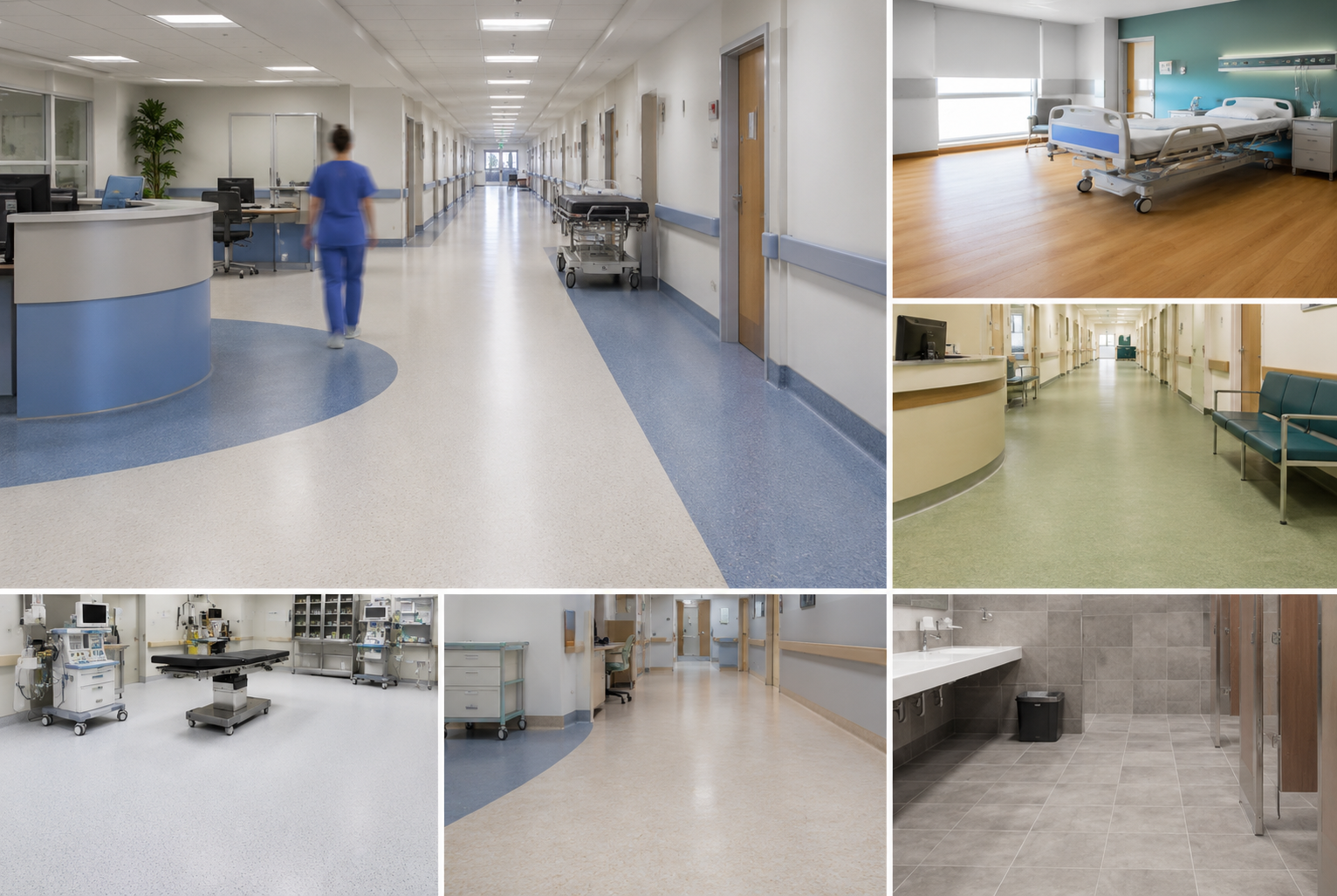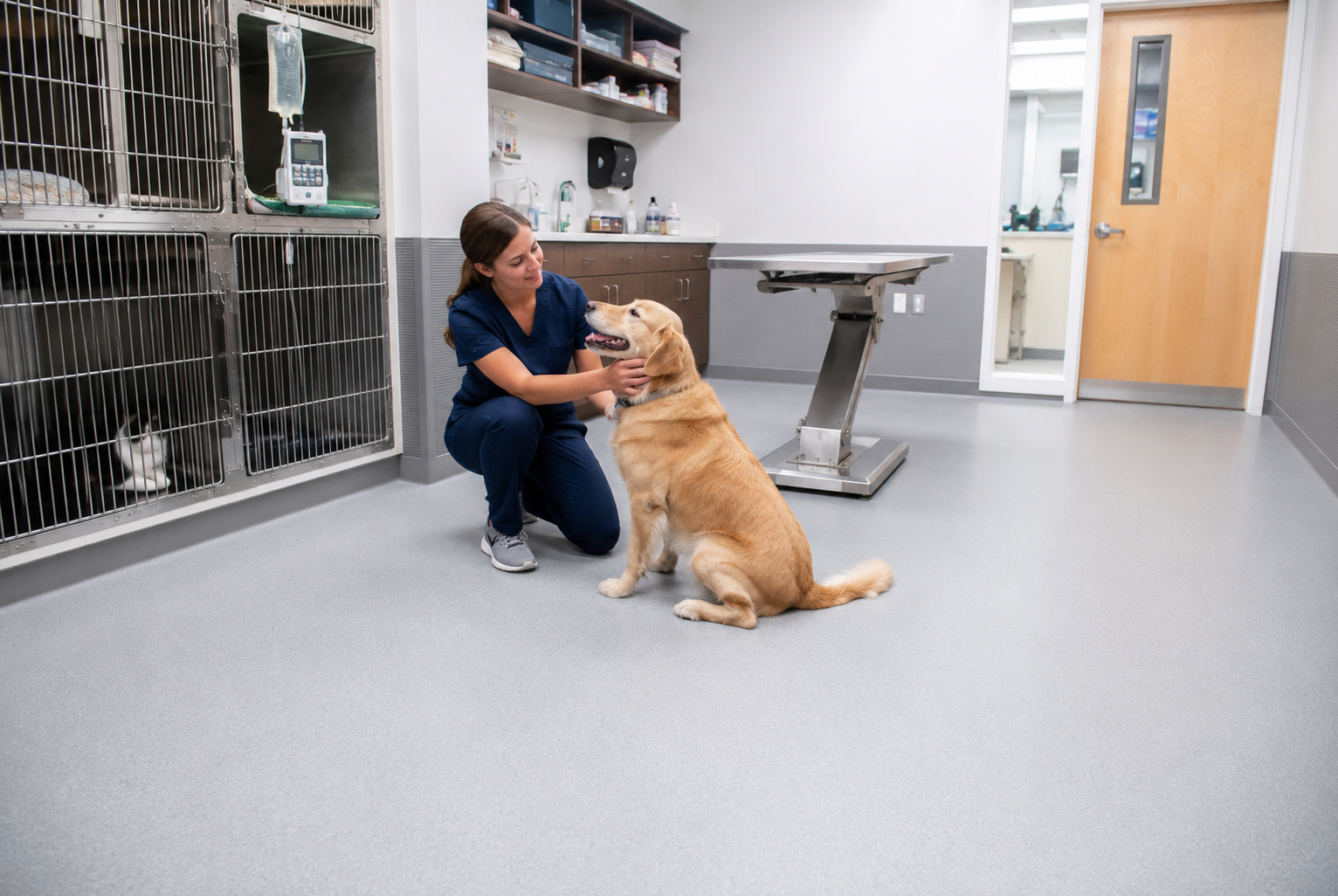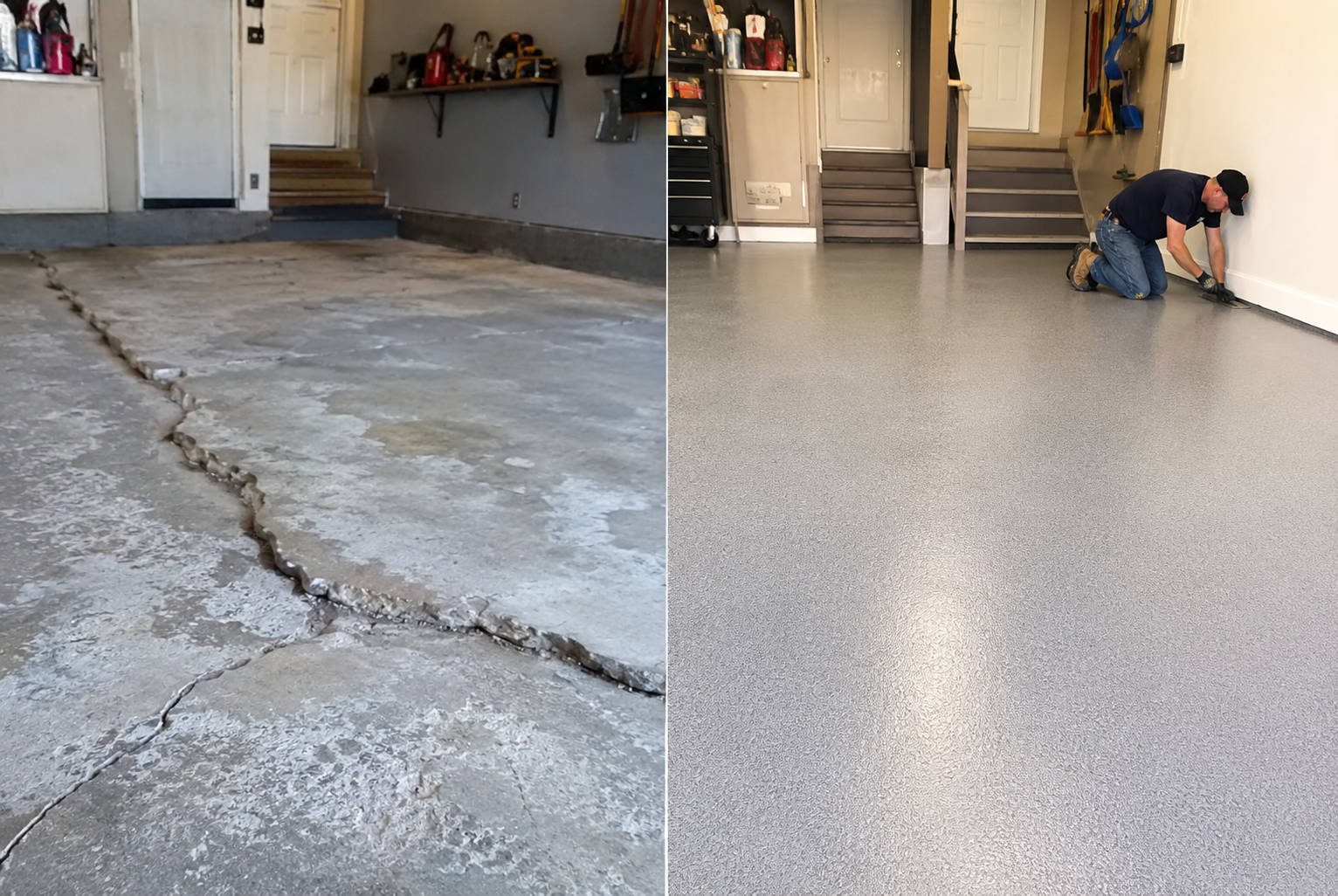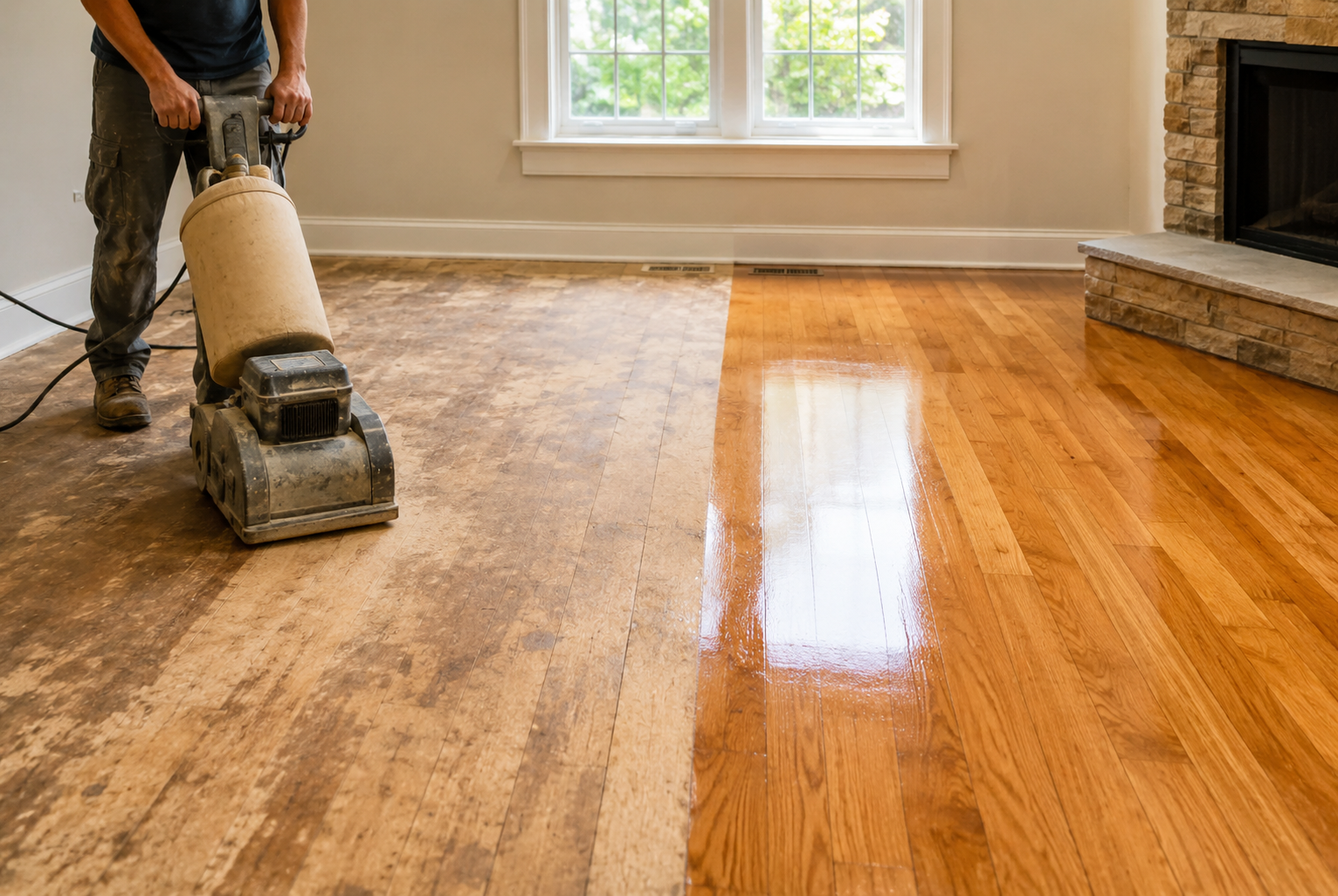

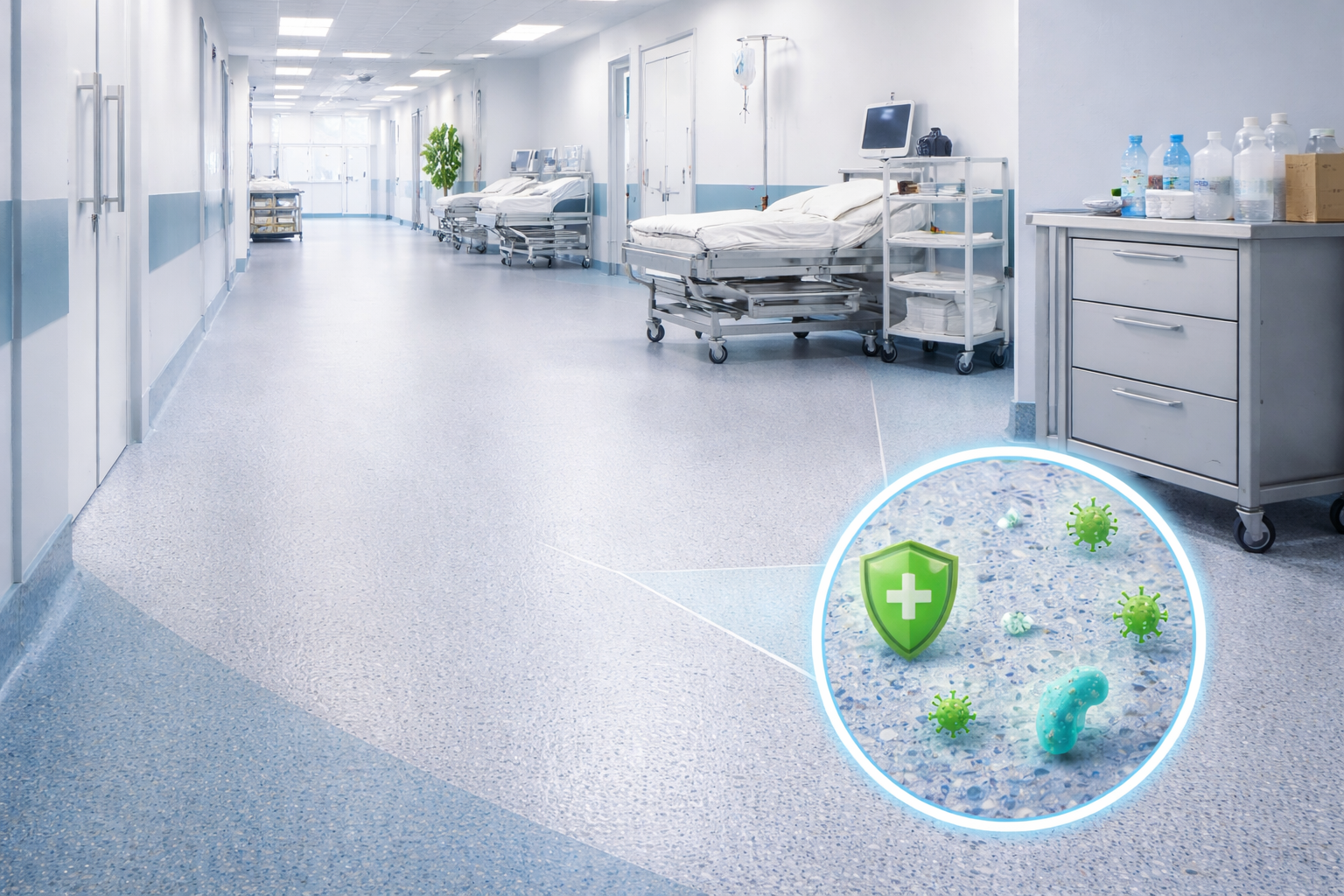
Minor flooring issues in hospitals can turn into major threats if not handled properly. A wet corridor or worn surface will cause slips, damaged floors will reduce the cleaning process, and loose tiles will conceal dirt, increasing the risk of infection. Such daily problems interfere with care and raise the cost of repairs and put patients and personnel at risk or in discomfort. The right choice of flooring for healthcare facilities will help avoid these issues before they begin. Choose reliable flooring for diagnostic centers and clinics to maintain hygienic requirements and provide relaxation for patients and caregivers, maintaining community trust constantly.
Key Requirements for Flooring in Medical Environments
Healthcare flooring systems have their challenges, which other types of commercial systems do not have. The main criteria are much more than the appearance, focusing on the performance during the constant loading.
Cleanliness: Surfaces should be easily washable and capable of enduring rough chemicals and disinfectants. This requirement goes together with infection-control policies, in which the antimicrobial flooring is clear of bacteria, molds, and viruses.
Durability: The issue of durability is very essential to the clinics and the hospital since it must be able to sustain heavy rolling loads such as beds and carts, constant foot traffic or even potential impacts without collapsing.
Safety: The safety of the patients, visitors, and the staff is also a great concern. It also indicates that the floors of hospitals and other healthcare institutions should be non-slip, and it is particularly important in places where spills or moisture are likely to occur. A Durable Epoxy Floor Coating with built-in slip resistance often meets these demands while delivering excellent chemical and wear protection.
Installation: Lastly, the installation itself should help accomplish these goals by offering as few seams as possible where contaminants can hide.
Seamless Flooring Solutions for Infection Control
Floors are frontline defenses against HAIs. In operating rooms, ICUs, and labs, seamless, monolithic floors are best for infection control. Healthcare flooring systems are non-porous and have a continuous surface composed of poured epoxy or urethane. Grout lines, seams, and cracks which the bacteria, moisture and organic waste are gathered are removed. Such systems are at times impregnated with antimicrobials to avoid the growth of microorganisms – and for spaces where a polished aesthetic is also desired, High-Gloss Concrete Polishing can provide a hygienic, easy-to-clean alternative.
Vinyl sheet is also homogeneous and has heat-welded seams that block well. Thermal welded joints establish a non-porous bond, which is smooth and simple to sanitize. Modern hospital flooring solutions rely on this seamless approach to improve hygiene, much like the reliable installations provided by Professional Commercial Flooring Orlando for healthcare and high-hygiene environments.
Custom Flooring Solutions for Healthcare Spaces
ICUs and laboratories rooms: Here are the most challenging places that need the utmost level of chemical resistance and sterility. Also, it may need static-control properties. In this case, smooth, conductive epoxy is often referred to.
Corridors and patient rooms: The greatest concerns are comfort, cleanliness, and reduction of noise. Luxury vinyl tile (LVT) comes with cushioned backs and is also referred to as heterogeneous sheet vinyl. This sheet offers both acoustic advantages and durability.
Lobbies and Waiting Areas: These are the crowded public spaces where clinics need very long-lasting and durable flooring for clinics, which should, at the same time, give a pleasant impression of a peaceful place. LVT or polished, ornamental epoxy are good choices, which are heavy-duty.
Noise-Reducing Flooring for Patient Comfort
Too much noise in the hospital (carts, footsteps, equipment) may also raise patient stress, interrupt sleep as well as slow down healing. Noise-reducing medical floors can be considered an essential element of therapeutic design.
Materials that have a sound-absorbing property ensure acoustic performance. Luxury and cushion sheet vinyl tile is designed to reduce the impact noise of footfall and dropped objects. Not only does that provide a smoother environment in which patients can recover, but it also enhances the working conditions of the staff and lowers noise propagation across the levels. In heavier-use clinical areas, High-Durability Polyurethane Floors offer similar noise reduction benefits alongside superior resistance to heavy equipment and frequent cleaning.
Anti-Slip Flooring for Patient Safety
Patient safety is one of the main concerns in healthcare and the appropriate flooring could avoid accidents. Clinical and hospital floors must also be slip resistant to reduce the chances of falls, particularly in traffic areas. The current medical grade flooring is designed with inbuilt texture, which persists through time and is simple to wash. In any area where people are regularly exposed to water or spills such as bathhouses, showers, and locker rooms, moisture-resistant medical floors with a high level of slip-resistance (such as R10 or R11) are used to keep individuals in motion – and Professional Flooring Installation ensures these critical safety features are implemented correctly from the start.
Why Choosing the Right Flooring for Healthcare Facilities Matters
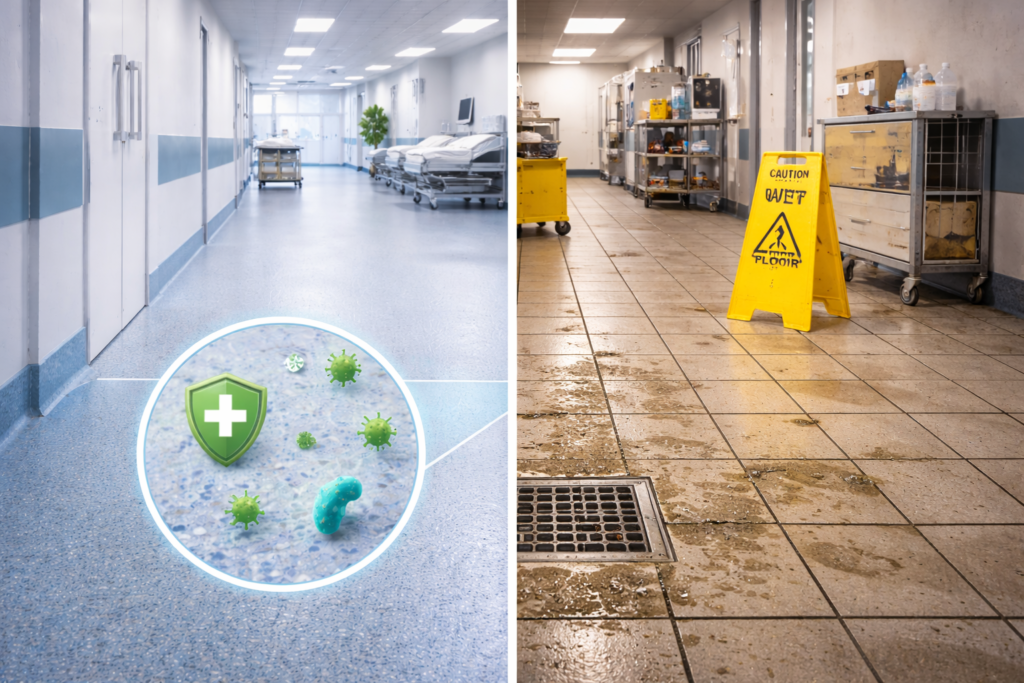
The flooring specification is a long-term capital decision that influences the daily operations. The cost-effective flooring used in a medical facility is time-saving, as it needs minimal maintenance. Also, it can serve for a long period. Failure to maintain the flooring material can easily lead to inconvenience in healthcare services. More importantly it directly targets the key goals of the organization improving well-being through building less stressful and more comfortable surroundings – which is why consistent Professional Flooring Care plays such an essential role in preserving both performance and hygiene over time.
Conclusion
Healthcare facility flooring selection is challenging yet vital to patient safety, staff productivity, and institutional hygiene. Conducting an Expert Floor Condition Inspection before finalizing choices helps identify existing issues and ensures the selected system will meet long-term clinical and regulatory needs.
Are you finding a particular solution for your healthcare institutions? Contact us for Healthcare & Life Sciences flooring solutions. The first step to a safer, cleaner and more efficient medical environment is in investing in the right foundation. Partnering with professional hospital flooring contractors PPI Floorings for appropriate medical facility flooring would be one of the most crucial decisions.
FAQs
What is the best flooring for healthcare facilities?
The best option is based on the space to be used, e.g., an operating room and a waiting room. Hygienic, durable, and safe seamless epoxy, urethane, and heat-welded sheet vinyl are generally ideal in healthcare flooring systems.
Why is seamless flooring important in hospitals?
The smooth floors do not contain any cracks or joints, no dirt, or moisture and are also much easier to cleanse and are thus crucial to infection control in high-stakes settings.
Which flooring is best for infection control in medical centers?
Fluid-applied floors (epoxy and urethane) or thermally welded sheet vinyl are the most effective defences. These antimicrobial coatings develop a non-porous, simple-to-clean surface that promotes sterile measures.
Is epoxy flooring suitable for healthcare environments?
Yes. The epoxy is the high-quality medical-grade flooring in most locations. It offers a smooth, chemical-resistant, and very durable surface that is suitable in laboratories and corridors.
What type of flooring is safest for patients and staff?
Epoxy, urethane, or sheet vinyl with a high coefficient of friction (COF) value delivers the required friction to minimise the risk of falls for both busy staff members and patients with disabilities.
How do hospitals choose hygienic flooring solutions?
Cleanability, porosity and seam integrity are highly considered, as they can resist extreme disinfectants without degrading or easily fitting, which can be installed without creating microbe-hiding areas, and would most likely consult infection-control specialists.
What flooring works best for operation theatres and ICUs?
For sensitive zones, conductive epoxy or urethane systems regulate static electricity, which is a fire hazard close to oxygen, and permit strict and terminal cleaning procedures.
Which flooring is most durable for high-traffic hospitals?
Poured resin systems, epoxy or urethane, and high-grade homogenous sheet vinyl are preferred for the reason that they handle intensive construction machine drilling, foot traffic.
Are vinyl floors good for healthcare facilities?
Yes. Vinyl flooring healthcare products, especially homogeneous sheet vinyl or luxury vinyl tile (LVT), are a great option. They are durable, comfortable to walk on, reduce noise, and have excellent chemical resistance.
What factors should be considered when selecting healthcare flooring?
Significant factors include the need for infection control, safety (slide resistance), equipment and traffic durability, acoustic needs, operational logistics, and compliance to medical regulations.