
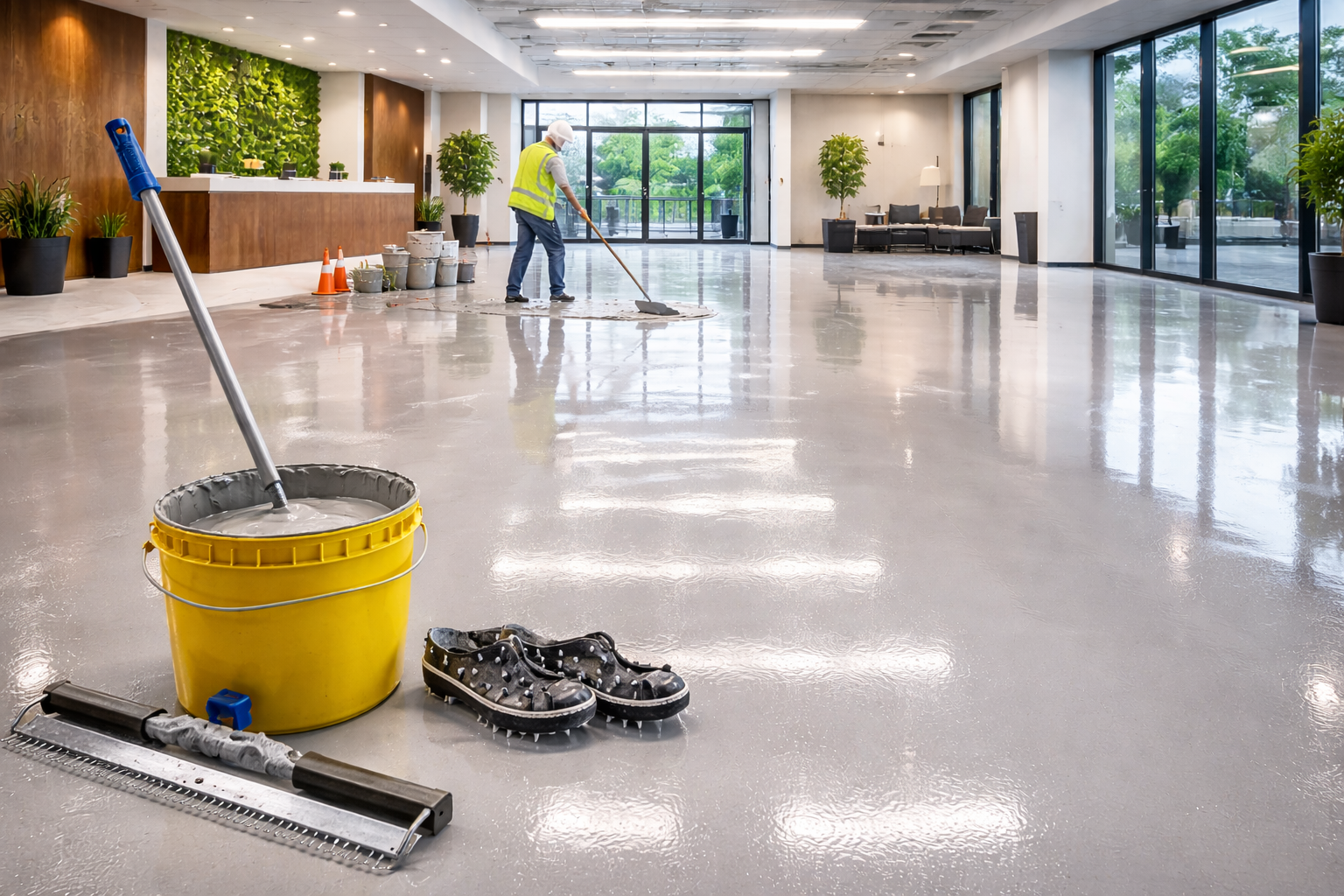
Self-leveling epoxy floor coating is a resinous flooring system that flows to a smooth, seamless finish—perfect in commercial and industrial areas. In case of broken concrete, lumpy concrete, or when you must achieve high hygienic standards, the following guide will indicate whether self-leveling epoxy is the correct solution for your facility.
How Self-Leveling Epoxy Works on Concrete Floors
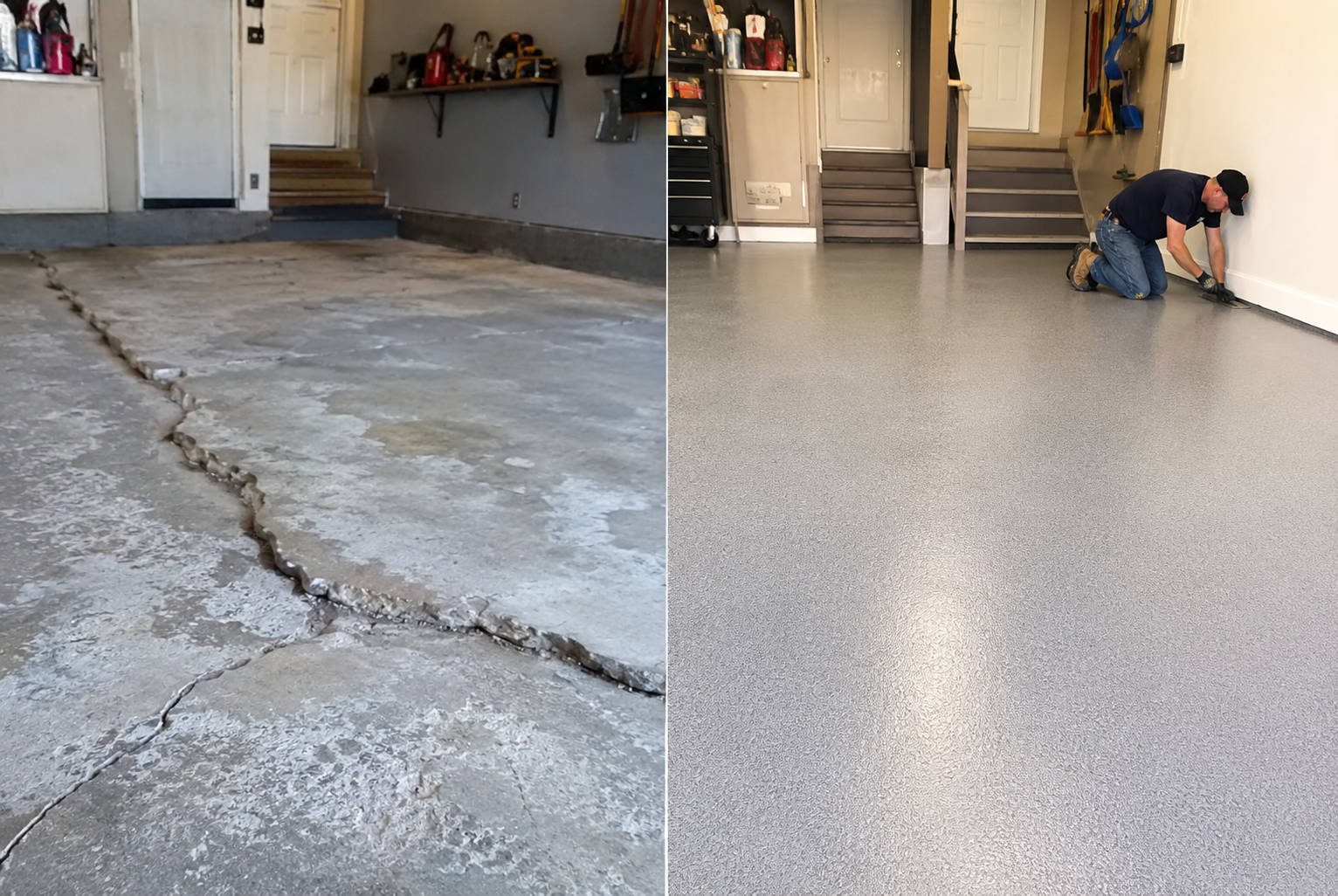
Self-leveling epoxy floor coating is a floor leveling epoxy compound that can be used as a resin to provide a smooth and even surface. It is ideal in commercial and industrial environments. In cases where your concrete is broken or uneven, or you require a hygienic floor, Urethane Concrete Floor Systems often serve as a strong complementary or alternative solution for superior flexibility and impact resistance. This guide to industrial floor leveling solutions will help you determine whether self-leveling epoxy- or another advanced system- would best suit your facility.
What you get from this:
- Continuous epoxy flooring removes cracks and fissures that may harbor bacteria
- Repairs small cracks on the surface of concrete
- Does not have variations in the thickness of the floor
- Epoxy coating is spill-resistant and cleaner-resistant in chemical
When Should You Choose Self-Leveling Epoxy Flooring?
Self-leveling epoxy flooring is the best when your facility requires correction of the surface and long-term durability. PPI Floorings has recommended it for some specific situations.
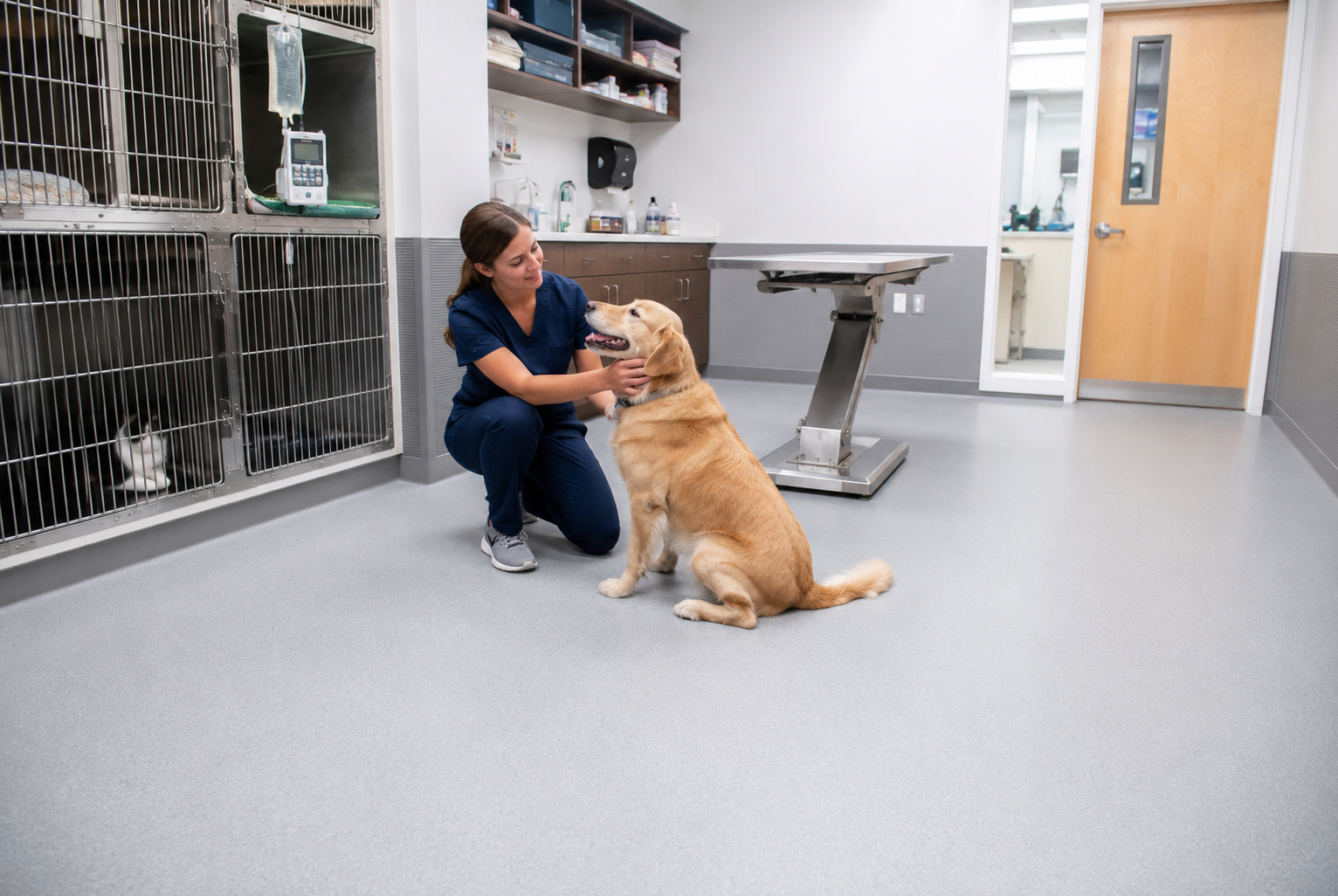
This is extremely helpful to manufacturing plants. The smooth surface can be cleaned easily and can withstand heavy machines and spills of chemicals. Sanitation laws are very stringent in food processing units. Due to its non-porous nature, bacteria will not grow on the resin flooring; thus, it is easy to clean.
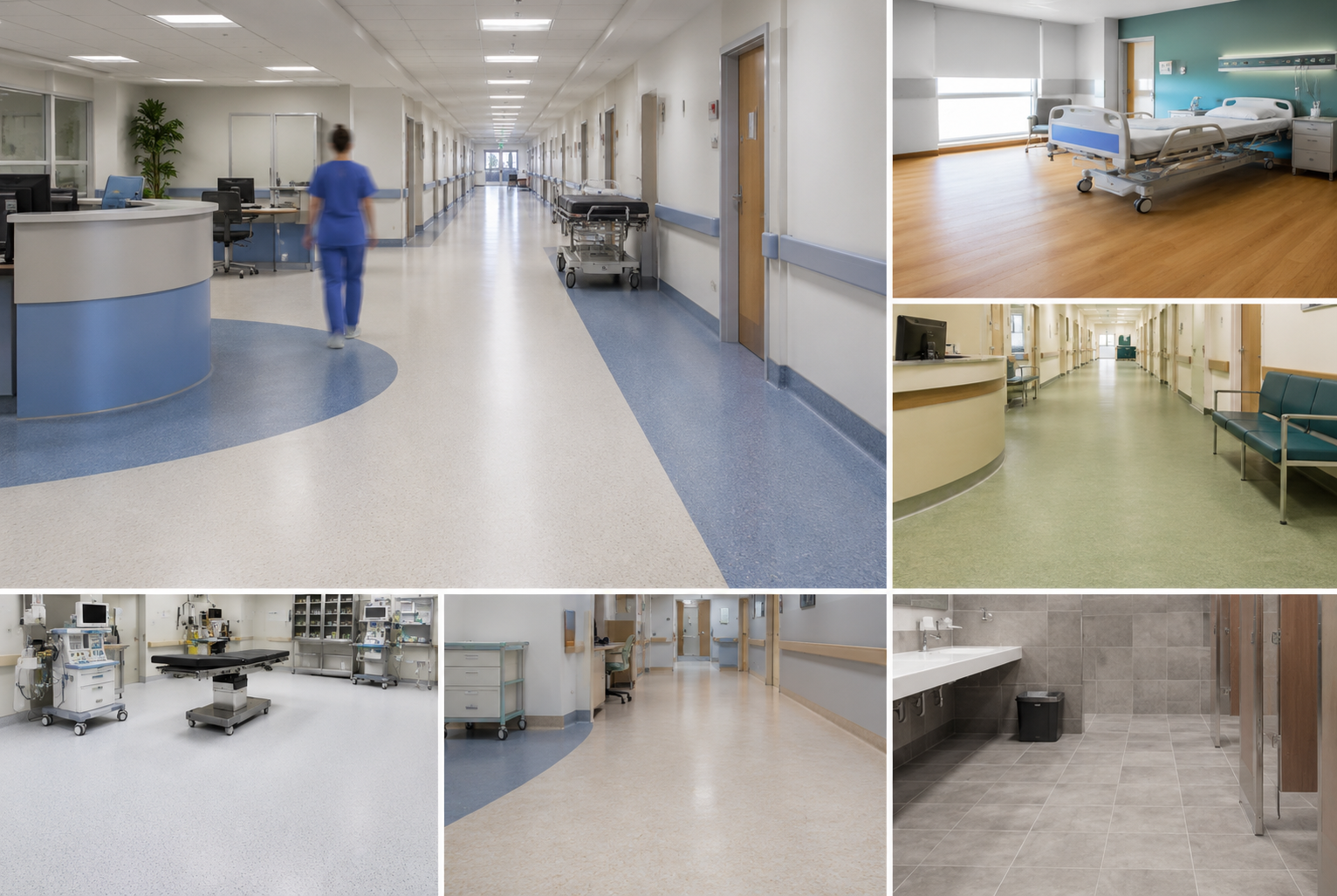
The flooring must be able to sustain the use of wheelchairs, gurneys, heavy foot traffic, and continual disinfecting in hospitals. Durable MMA Floor Coating excels in these high-demand healthcare settings due to its rapid cure time and exceptional toughness, while seamless epoxy floors in hospitals also meet all these requirements and maintain the highest standards of hygiene.
How Long Does Self-Leveling Epoxy Floor Coating Last?
Well-maintained and installed coating systems of the high-build epoxy type are very durable and long-lasting. Their life expectancy is determined by foot traffic, use of heavy equipment, exposure to chemicals, and cleaning activities. Epoxy floors have a lifespan of 10 to 15 years in factories that have forklifts and heavy machines.
When used in offices and retail premises with medium foot traffic, they can deliver a lifespan of 15–20 years. The same holds true for food manufacturing plants, where hygiene and cleanliness are non-negotiable. Epoxy flooring for hospitals is especially effective because it is thick, chemically resistant, and withstands daily use without wearing easily- especially when paired with consistent Long-Term Flooring Maintenance to preserve its performance and appearance over time.
Slip-Resistant Options in Self-Leveling Epoxy Floors
Slip-resistant epoxy flooring is also significant in areas where floors become slippery due to water, oil, or cleaning solutions. And there are many different ways to add texture to self-leveling systems.
Aggregates such as aluminum oxide or silica sand can be incorporated into the wet epoxy. You get texture once it’s sealed, and this effective method is used in factories and docks. It is also possible to add chemicals to the epoxy to provide a very slight texture that does not look different. Clean rooms and labs are good with those.
Slip-resistant topcoat sealers provide additional texture and defense against chemicals. Maintenance crews prefer such solutions, as they ensure the floors are safe yet easy to clean.
Self-Leveling Epoxy vs Traditional Epoxy Coatings
Understanding the difference between these epoxy floor coatings will assist the facility managers in choosing the appropriate one.
| Feature | Self-Leveling Epoxy | Traditional Epoxy |
| Thickness | 2-5mm (high-build) | 0.3-1mm (thin film) |
| Application | Pours and self-levels | Rolled or squeegeed |
| Surface correction | Corrects minor unevenness | Follows existing contours |
| Durability | Superior impact and wear resistance | Good for light to moderate traffic |
| Cost | Higher material and installation cost | Lower initial investment |
| Ideal for | Industrial, healthcare, food processing | Garages, retail, light commercial |
To get complete instructions, see our complete epoxy flooring solution.
Installation Process of Self-Leveling Epoxy Floors
Surface preparation— The concrete gets ground or shot blasted to form a clean, smooth surface that is compatible with primer. It must be cleared of all contaminants, oils, and loose material.
Repair of cracks and joints—Fill any important cracks and joints with epoxy filler to avoid any telegraphing to the new floor.
Application of the primer—Incorporate a self-leveling coating by applying a moisture-tolerant epoxy primer, which is allowed to bond the primer to the concrete substrate.
Mixing—The two-part epoxy components should be mixed following the manufacturer’s requirements, which is normally done using mechanical mixing equipment.
Pouring and spreading—Add the material onto the shaped surface and use gauge rakes to produce the required thickness. The material levels itself out in a few minutes.
Add texture (if you need it)— As long as the epoxy is wet, sprinkle sand-like particles all over the surface so that it is not so slippery. Or a coat of textured coating can be added once it is dry.
Conclusion
Self-leveling epoxy floor coating solutions offer both aesthetic and functional solutions to commercial and industrial needs by offering functional and seamless surfaces. From production processes to hospital settings, this resin floor system provides chemical-resistant flooring solutions with ease of maintenance, and high durability.
For more information, contact us for epoxy floor coatings solution. The team of our flooring contractors at PPI Flooring is able to evaluate the concrete situation and suggest the best self-leveling epoxy flooring method.
Frequently Asked Questions
What is self-leveling epoxy floor coating used for?
Self-leveling epoxy floor coating provides seamless and durable finishes on rough concrete in industrial as well as commercial settings for high performance.
When should you choose self-leveling epoxy flooring?
Self-leveling epoxy flooring is to be used in situations where the floor experiences high traffic, irregularities in surfaces, or is subjected to chemicals that require permanent, flat, and low-maintenance countermeasures.
Is self-leveling epoxy suitable for uneven concrete floors?
Yes, self-leveling epoxy is applied over rough concrete to fill cracks and depressions so as to achieve a flat, smooth, and structurally sound layer of flooring.
How long does self-leveling epoxy floor coating last?
Self-leveling epoxy floor coating with professional installation and maintenance should last up to ten to twenty years in stressful environments.
Is self-leveling epoxy good for commercial spaces?
Yes, it is an effective product in the commercial sector that provides durability, smooth hygiene, impact resistance, and easy cleaning under foot traffic.
Can self-leveling epoxy be used in healthcare facilities?
Self-leveling epoxy for healthcare facilities provide smooth, non-porous surfaces that facilitate maintaining sanitation and minimize the risk of contamination.
How durable is self-leveling epoxy flooring?
Self leveling epoxy flooring is resistant to abrasion, impact, moisture and chemical spillage hence very strong in a factory where there is heavy traffic and facilities.
Does self-leveling epoxy provide slip resistance?
To improve self leveling epoxy, one can incorporate slip resistance which involves the use of aggregates to improve traction during wet and oily or safety sensitive situations.
How do you maintain self-leveling epoxy floors?
Frequent sweeps, light mopping using neutral detergents as well as not abrasive chemicals will make the floor look and perform well.
What should you consider before choosing self-leveling epoxy floor coating?
Evaluate the state of the surface, the amount of traffic, the risk of exposure, the expertise of the installation, and the budget.