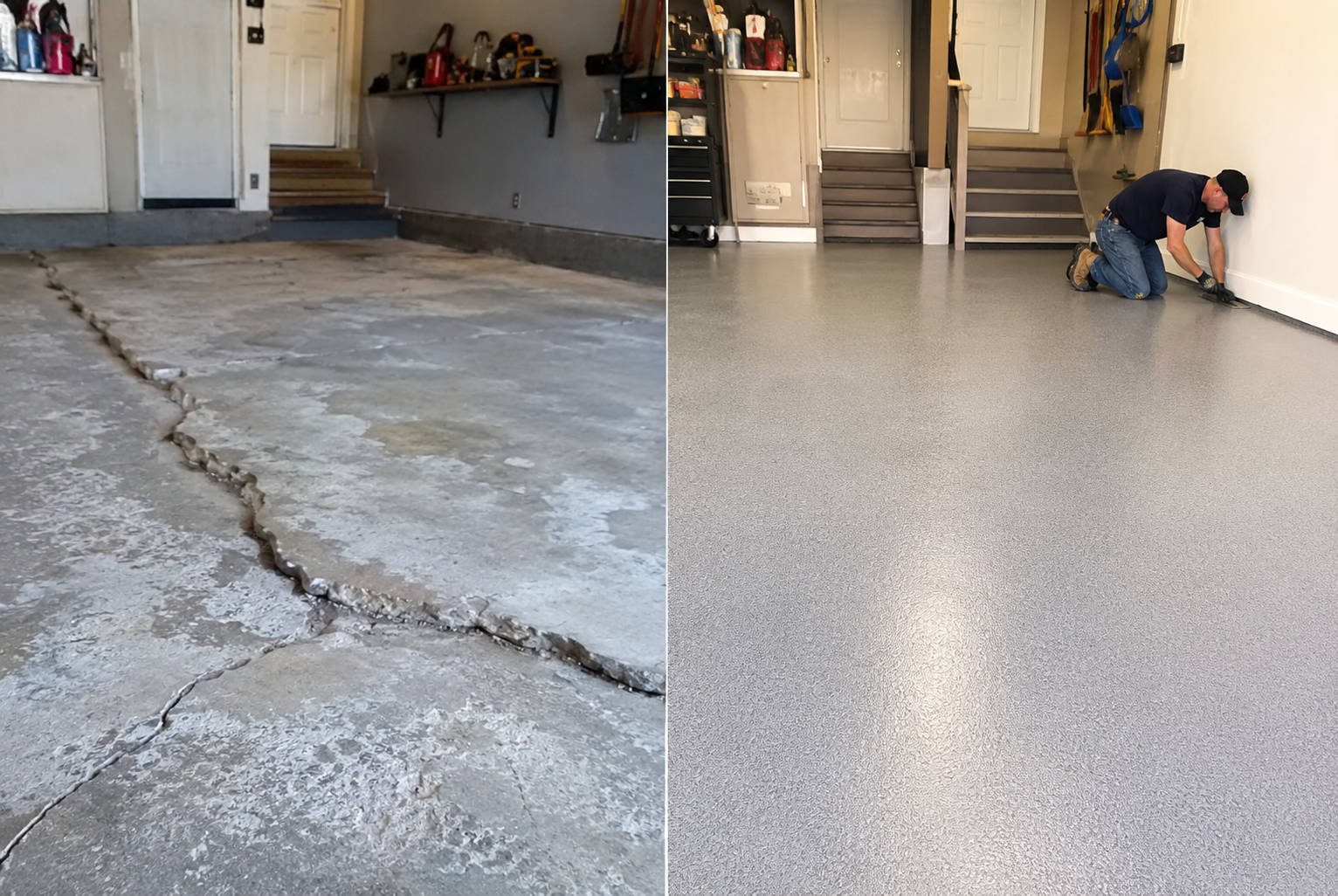

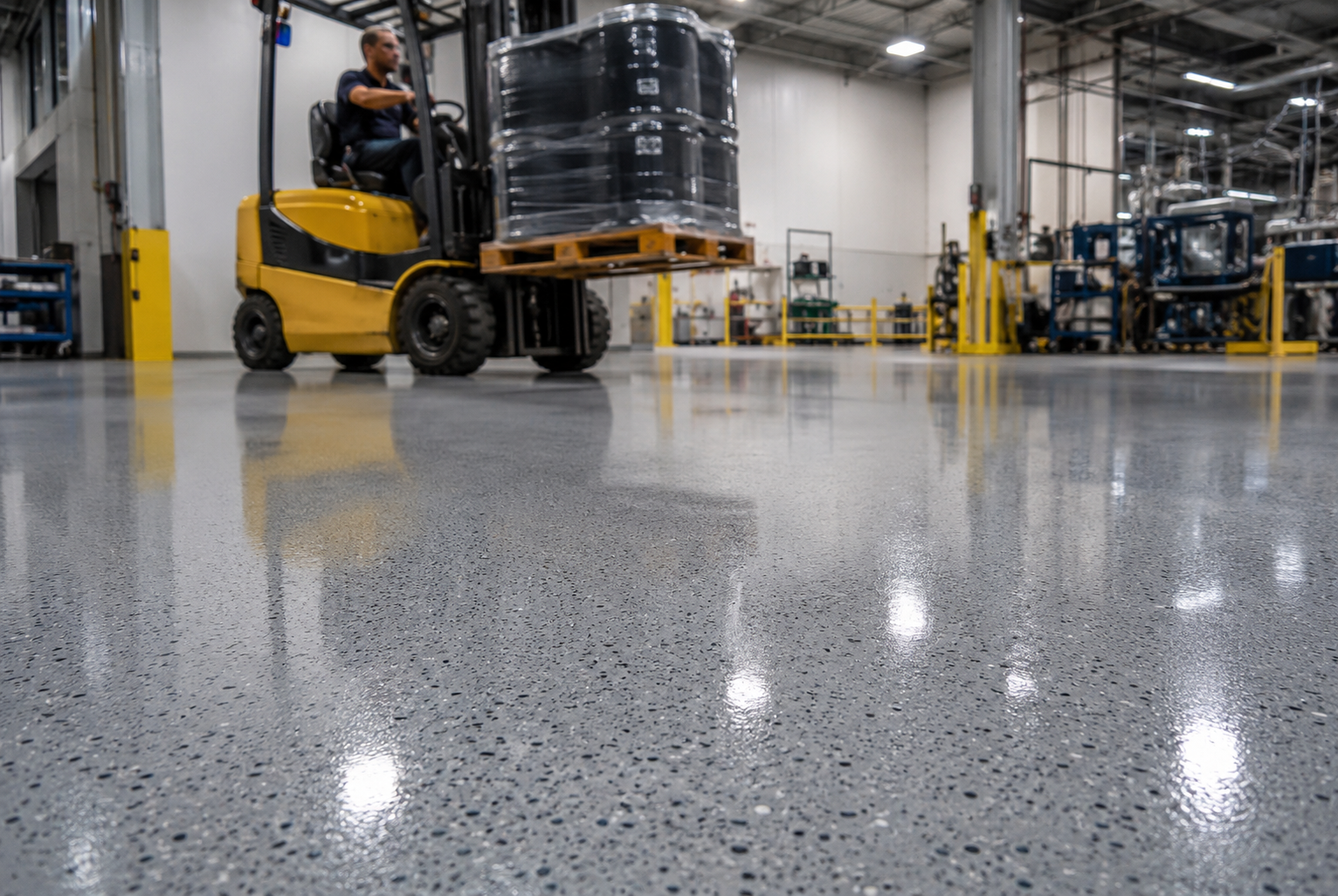
Industrial and commercial facilities place enormous pressure on flooring systems every single day. Heavy machinery, forklift traffic, dropped equipment, chemical exposure, and constant movement create conditions that standard concrete floors often cannot handle for long. Once surfaces begin cracking or deteriorating, operations become less efficient, maintenance costs increase, and safety risks become harder to manage. Many businesses choose PPI Flooring because durable flooring directly affects productivity, uptime, and long-term operational performance.
Urethane concrete flooring has become one of the most dependable solutions for facilities exposed to heavy impact and demanding working conditions. This flooring system is designed to resist abrasion, impact, thermal shock, and chemical exposure while maintaining structural integrity under pressure. From manufacturing plants and warehouses to food processing facilities and industrial environments, urethane concrete flooring delivers long-lasting performance where traditional flooring systems often fail.
What Is Urethane Concrete Flooring?
Urethane concrete flooring is a high-performance flooring system made from urethane, cement, aggregates, and specialized additives. It creates a seamless surface that bonds directly to concrete substrates, forming a durable layer capable of handling harsh industrial and commercial conditions. Unlike traditional coatings, urethane concrete flooring is engineered specifically for environments where floors experience continuous operational stress.
This flooring system is widely used because it combines strength, flexibility, and resistance in one surface. It performs well under heavy traffic, impact, moisture exposure, and temperature fluctuations. Businesses that need flooring capable of supporting nonstop activity often choose urethane concrete because it reduces operational interruptions while improving overall floor durability.
Why Do High-Impact Environments Need Specialized Flooring?
High-impact environments expose floors to repeated stress throughout the day. Forklift movement, machinery vibration, pallet traffic, and dropped tools place continuous pressure on flooring surfaces. Standard concrete often begins showing cracks, chips, or surface damage when exposed to these conditions over time.
Specialized flooring systems help facilities avoid premature deterioration and operational disruption. Urethane concrete flooring performs well because it absorbs impact more effectively than many traditional coatings while maintaining strong adhesion to the concrete substrate. This helps reduce surface failure and extends the usable lifespan of the flooring system.
Common Challenges in High-Impact Environments
- Constant forklift traffic
- Heavy equipment movement
- Surface abrasion and wear
- Chemical spills and moisture exposure
- Cracking from thermal shock
- Safety risks from damaged flooring
How Does Urethane Concrete Flooring Resist Heavy Impact?
One of the biggest advantages of urethane concrete flooring is its ability to withstand repeated heavy impact without surface breakdown. Industrial environments often involve dropped equipment, rolling loads, and constant operational movement that can quickly damage weaker flooring systems.
Urethane concrete flooring contains flexible properties that help absorb stress rather than cracking under pressure. Its strong bond to the substrate also reduces the risk of delamination or separation from the concrete below. Facilities operating under demanding conditions benefit from a flooring system that continues performing reliably even after years of heavy use.
Why Is Urethane Concrete Flooring Popular in Manufacturing Facilities?
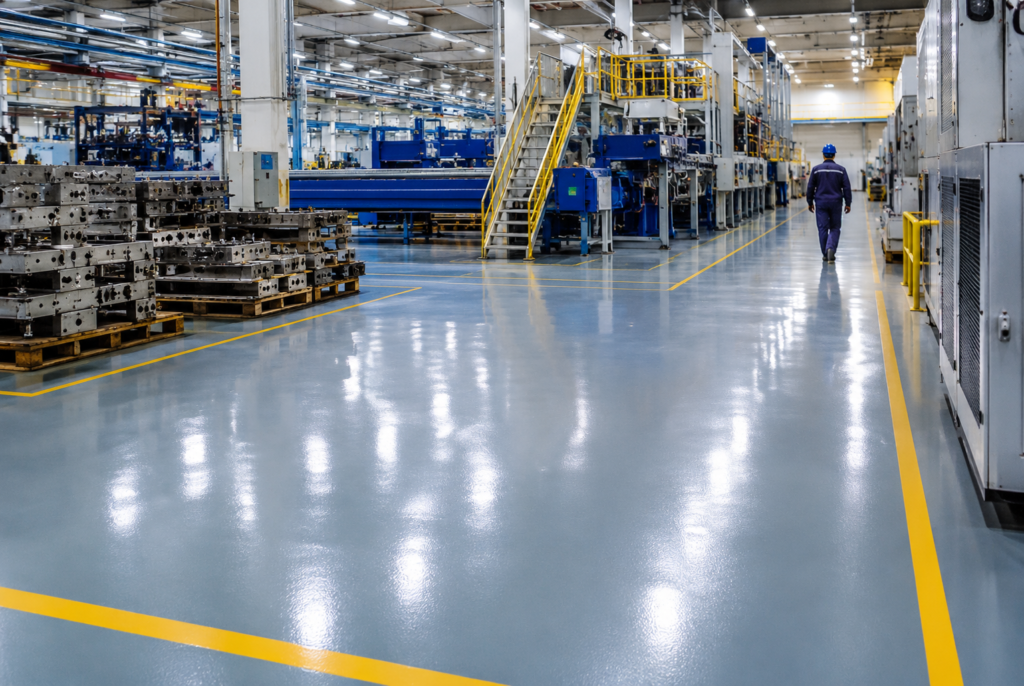
Manufacturing facilities require flooring systems capable of handling machinery, abrasion, chemical exposure, and nonstop operations. When floors fail in manufacturing environments, downtime becomes expensive and productivity can slow significantly. Businesses need surfaces that support continuous activity without constant maintenance issues.
Urethane concrete flooring remains popular in manufacturing facilities because it provides long-term durability while maintaining surface integrity under pressure. Its resistance to chemicals and impact helps facilities maintain safer and more efficient work environments. Many businesses also combine these systems with non-slip flooring features to improve workplace safety in high-traffic production areas.
Benefits for Manufacturing Facilities
- Handles heavy machinery traffic
- Resists abrasion and surface wear
- Supports safer working conditions
- Reduces maintenance interruptions
- Performs well under chemical exposure
How Does Urethane Concrete Flooring Perform in Warehouses?
Warehouses place significant stress on flooring systems because of forklift traffic, pallet movement, and continuous loading activity. Standard concrete floors often crack or wear down in areas exposed to constant operational pressure. Once damage begins, repairs can interrupt workflow and create safety concerns.
Urethane concrete flooring performs well in warehouse environments because it handles heavy loads and repeated traffic without losing structural stability. Its seamless finish also reduces weak points where damage typically begins. Warehouses that prioritize long-term durability often choose urethane concrete systems to reduce downtime and improve operational efficiency.
Can Urethane Concrete Flooring Handle Thermal Shock?
Thermal shock occurs when flooring surfaces experience rapid temperature changes that cause expansion and contraction. This is common in food processing plants, industrial kitchens, and manufacturing facilities where hot water washdowns or steam cleaning are part of daily operations.
Many flooring systems fail under thermal shock because they cannot adapt to sudden temperature fluctuations. Urethane concrete flooring performs differently because it expands and contracts more similarly to concrete substrates. This reduces cracking and helps maintain floor integrity in environments where temperature changes happen frequently.
Industries That Benefit From Thermal Shock Resistance
- Food processing plants
- Commercial kitchens
- Cold storage facilities
- Beverage production plants
- Industrial manufacturing spaces
How Does Urethane Concrete Flooring Improve Workplace Safety?
Damaged or slippery flooring creates serious safety concerns in industrial and commercial facilities. Cracks, uneven surfaces, and deteriorating coatings increase the risk of slips, trips, and operational accidents that can affect productivity and liability.
Urethane concrete flooring improves safety by providing a stable and slip-resistant surface that performs consistently under pressure. Seamless finishes help reduce trip hazards, while textured surface options improve traction in wet or high-traffic areas. Facilities that schedule regular flooring inspection services can also identify minor surface issues before they develop into larger safety concerns.
Why Is Moisture Resistance Important in High-Impact Areas?
Moisture exposure weakens many flooring systems over time. Water intrusion, chemical spills, and cleaning processes can damage surfaces, reduce adhesion, and create long-term structural issues. Facilities operating in wet environments need flooring systems that resist moisture while maintaining performance.
Urethane concrete flooring offers strong moisture resistance because of its dense and seamless construction. It prevents water penetration and maintains durability even in areas exposed to regular cleaning or washdowns. This makes it a dependable solution for facilities where moisture is a constant operational challenge.
Key Moisture Resistance Benefits
- Prevents water penetration
- Reduces surface deterioration
- Maintains strong adhesion
- Supports hygienic environments
- Improves long-term durability
How Does Proper Installation Affect Performance?
Even high-performance flooring systems can fail if installation is not handled correctly. Poor surface preparation or rushed application often leads to bubbling, peeling, or weak adhesion that shortens the flooring lifespan. Installation quality directly affects how well urethane concrete flooring performs in high-impact environments.
Professional installation begins with evaluating and preparing the concrete substrate using methods such as shot blasting or diamond grinding. Once the surface is properly prepared, the flooring system is applied carefully to create a seamless and durable finish. Businesses that contact us for professional installation support often achieve better long-term performance and fewer maintenance concerns.
Is Urethane Concrete Flooring Low Maintenance?
Facilities operating under constant pressure need flooring systems that do not require excessive maintenance or frequent repairs. Flooring downtime can interrupt operations and increase labor costs, especially in large industrial environments where repairs affect productivity.
Urethane concrete flooring is considered relatively low maintenance because of its durability and seamless surface design. Routine cleaning and proper flooring maintenance help preserve its performance over time. Since the system resists chemicals, moisture, and impact, facilities often experience fewer repairs compared to traditional flooring systems.
Why Are More Facilities Choosing Urethane Concrete Flooring?
Many businesses are moving away from standard flooring systems that cannot keep up with modern operational demands. Facilities now prioritize surfaces that support long-term durability, safety, and reduced maintenance while handling continuous heavy use.
Urethane concrete flooring continues gaining popularity because it performs consistently across demanding industries and high-impact environments. Its combination of impact resistance, thermal shock protection, chemical resistance, and seamless durability makes it one of the most reliable flooring solutions available for industrial and commercial facilities.
Conclusion
Urethane concrete flooring performs exceptionally well in high-impact environments because it is engineered to handle the challenges that damage traditional flooring systems. Its resistance to impact, abrasion, moisture, thermal shock, and chemical exposure allows facilities to maintain safer and more efficient operations without constant flooring failures.
From warehouses and manufacturing plants to food processing facilities and industrial kitchens, urethane concrete flooring provides dependable long-term performance under demanding conditions. If your facility needs a flooring solution built for high-impact environments, contact us today to learn how PPI Flooring can help you choose the right system for your operational needs.
FAQ
What is urethane concrete flooring used for?
Urethane concrete flooring is commonly used in industrial and commercial environments that experience heavy traffic, impact, moisture, and chemical exposure.
Is urethane concrete flooring good for warehouses?
Yes, urethane concrete flooring performs well in warehouses because it resists heavy forklift traffic, abrasion, and operational wear.
Can urethane concrete flooring handle thermal shock?
Yes, it is designed to resist rapid temperature changes and performs well in environments exposed to hot water or steam cleaning.
Is urethane concrete flooring slip resistant?
Yes, textured and slip-resistant finishes can be added to improve traction and workplace safety.
How long does urethane concrete flooring last?
With proper installation and flooring maintenance, urethane concrete flooring can provide long-term performance for many years in demanding environments.