
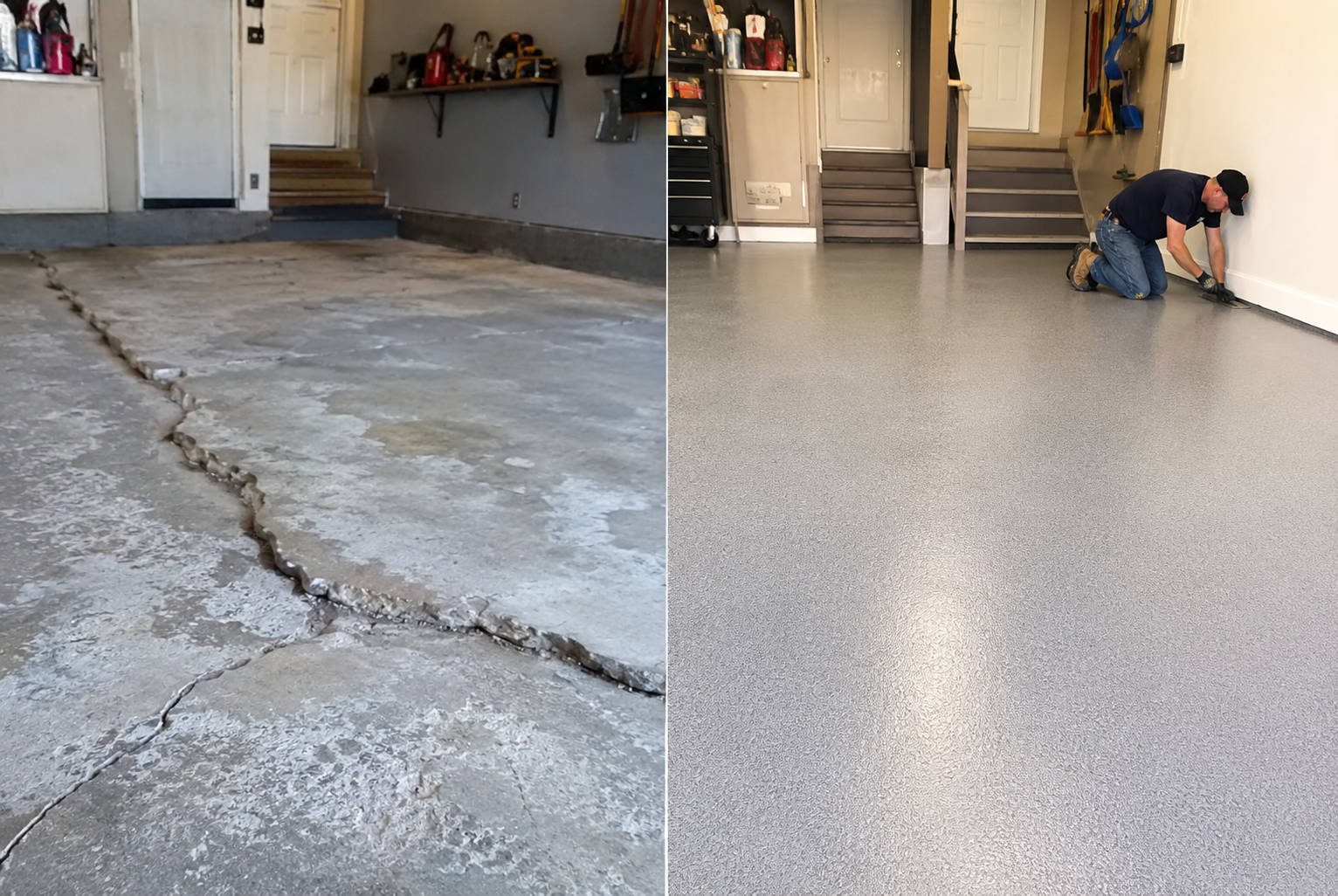
A bumpy, cracked, or sloping floor is more than just an eyesore. It is a quiet liability that can lead to injuries, equipment damage, and a workspace that looks tired before its time. For business owners managing warehouses, factories, restaurants, or healthcare facilities, uneven flooring is one of those issues that grows worse the longer it gets ignored.
Professional uneven floor repair does two big things at once. It removes the trip hazards and structural weaknesses that put people at risk, and it restores the clean, professional appearance your space needs to make a strong impression. Below, we break down exactly how proper concrete floor leveling and epoxy resurfacing can transform your facility.
Why Uneven Floors Are a Serious Workplace Hazard
Uneven concrete surfaces are one of the leading causes of slip, trip, and fall accidents in commercial settings. According to safety data, falls remain among the top workplace injuries, and many of them trace back to damaged flooring, raised cracks, or worn-down coatings.
When a floor dips or rises unexpectedly, employees lose their footing, and rolling equipment like carts, pallet jacks, and forklifts can tip or strain. Over time, this creates a compounding risk that puts your team, your inventory, and your liability insurance under pressure.
The Hidden Costs of Ignoring Damaged Concrete Flooring
A small crack or a slight dip might not seem urgent, but concrete deterioration rarely stays small. Moisture seeps in, freeze-thaw cycles widen the gap, and chemical spills accelerate the breakdown of the substrate.
The result is a chain reaction of higher repair costs, more downtime, and the gradual loss of property value. Investing in industrial floor restoration early is almost always cheaper than waiting for a full replacement later.
How Uneven Floor Repair Improves Safety
Fixing uneven flooring is not just about smoothing the surface. It is about engineering a floor that performs under real-world conditions. Here is how the right repair approach boosts workplace safety.
- Eliminates trip hazards by grinding down raised seams and filling depressions to create a level walking surface throughout the facility.
- Adds slip resistance through specialty coatings that include textured aggregates, giving traction even in wet or oily conditions.
- Improves visibility with bright, reflective finishes and clearly marked safety lines that guide foot traffic, forklifts, and emergency routes.
- Supports OSHA and EPA compliance by meeting flooring standards required for manufacturing plants, food service kitchens, and clean rooms.
Each of these benefits stacks together to lower accident risk and keep your operation running smoothly.
How Uneven Floor Repair Improves Appearance
Beyond safety, there is the visual side of the story. A facility floor sets the tone for how customers, inspectors, and employees perceive your business. A dull, patchy floor signals neglect, while a smooth, polished surface signals professionalism.
- Restores a uniform surface that looks intentional and well maintained, especially under bright facility lighting.
- Hides past damage by sealing cracks, stains, and discoloration under a fresh layer of durable epoxy floor coating.
- Boosts brand image through high-gloss, decorative quartz, or color-blended finishes that match your interior design or branding.
- Increases property value by upgrading one of the largest visible surfaces in any commercial or industrial space.
When clients walk into a showroom with a flawless floor, they assume the rest of the operation is just as sharp.
Common Causes of Uneven Floors in Commercial Spaces
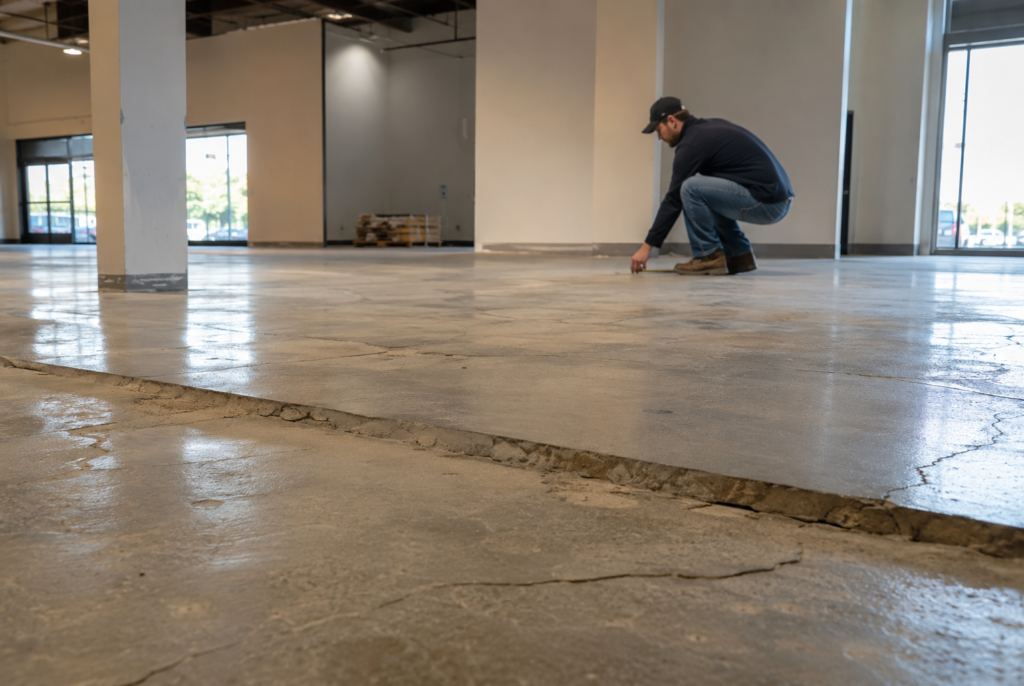
Understanding what caused the damage helps determine the right fix. Common culprits include soil settlement beneath the slab, heavy machinery impact, water infiltration, poor original installation, and chemical exposure from spills.
In food service and manufacturing environments, daily wear from carts, pallets, and cleaning chemicals can wear down the surface faster than expected. A trained flooring contractor can identify the root cause and design a long-term solution rather than a quick patch.
The Professional Floor Repair Process
A reliable floor resurfacing project follows a structured process designed to deliver lasting results. It typically starts with a thorough inspection to assess substrate condition, moisture levels, and existing damage.
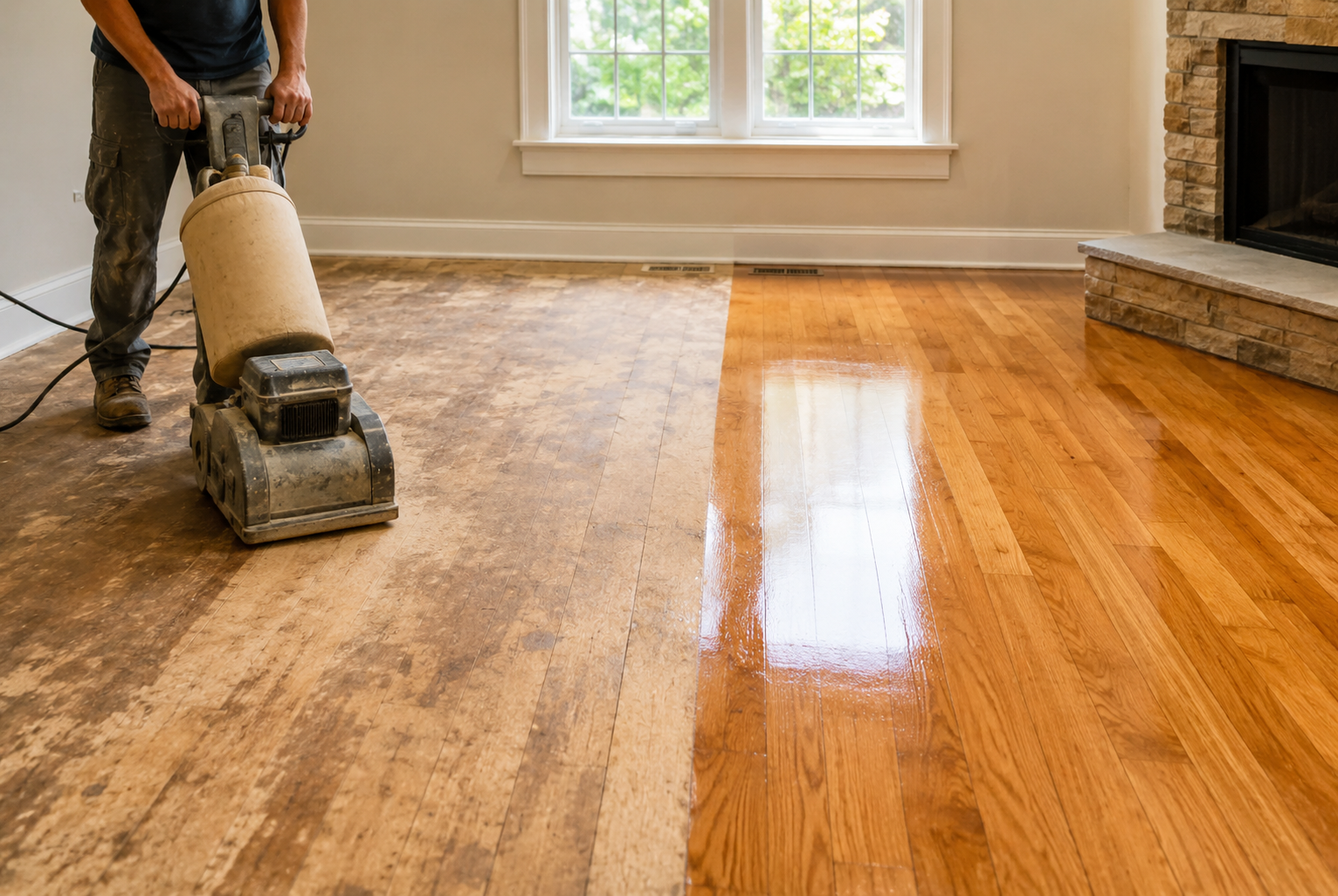
Next, the team uses shot blasting or diamond grinding to prepare the concrete, ensuring strong bonding. Cracks and divots are filled with high-strength patching compounds, and a self-leveling epoxy or protective coating is applied to create a smooth, durable surface.
Finishing touches like anti-slip additives, decorative flakes, or safety markings are added based on your industry needs. With minimum downtime planning, your facility can be back in operation quickly.
Industries That Benefit Most from Uneven Floor Repair
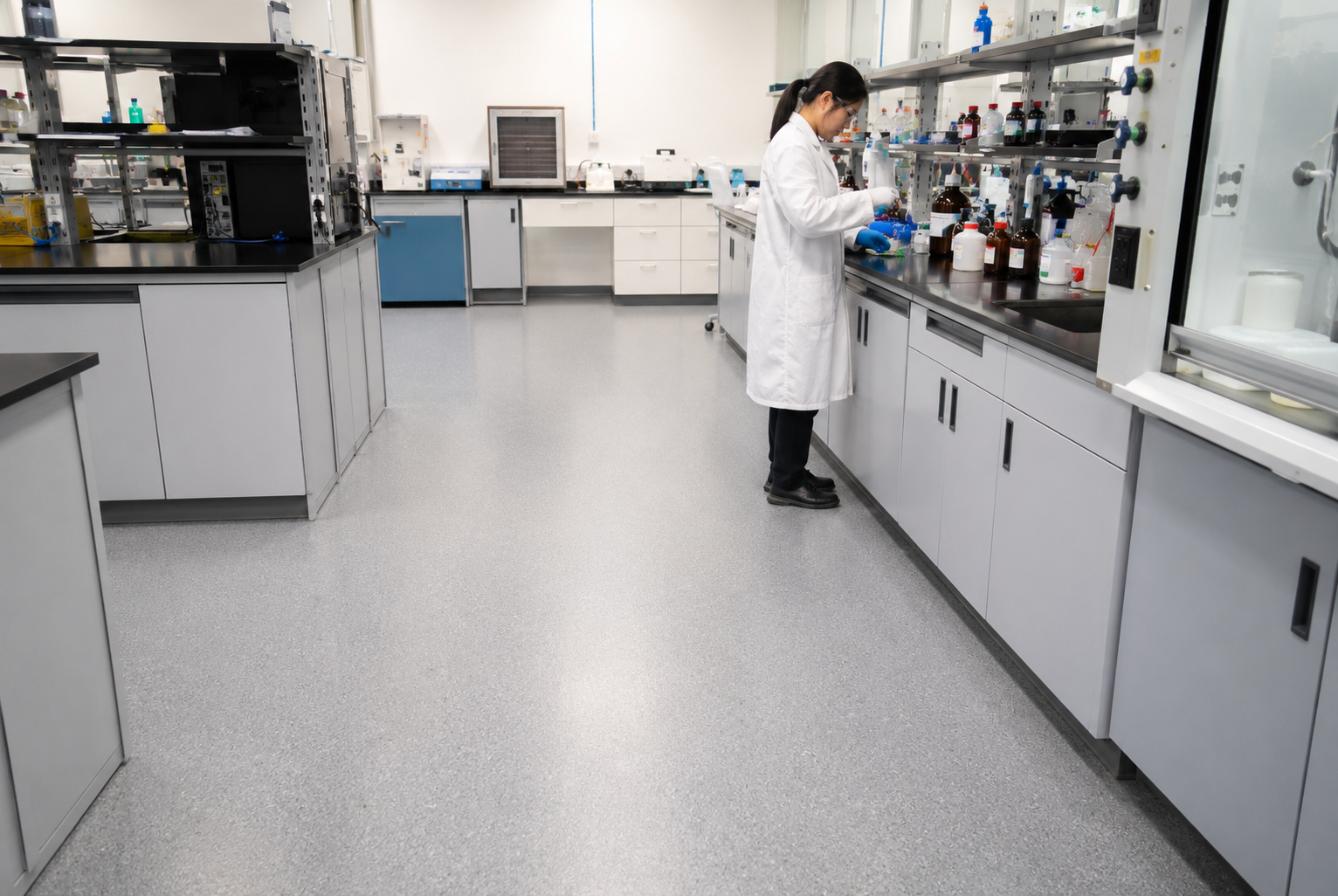
While almost every facility benefits from level flooring, certain industries depend on it. Manufacturing plants need flat, impact-resistant surfaces for heavy equipment. Food and beverage processors require seamless, antimicrobial coatings that meet FDA standards.
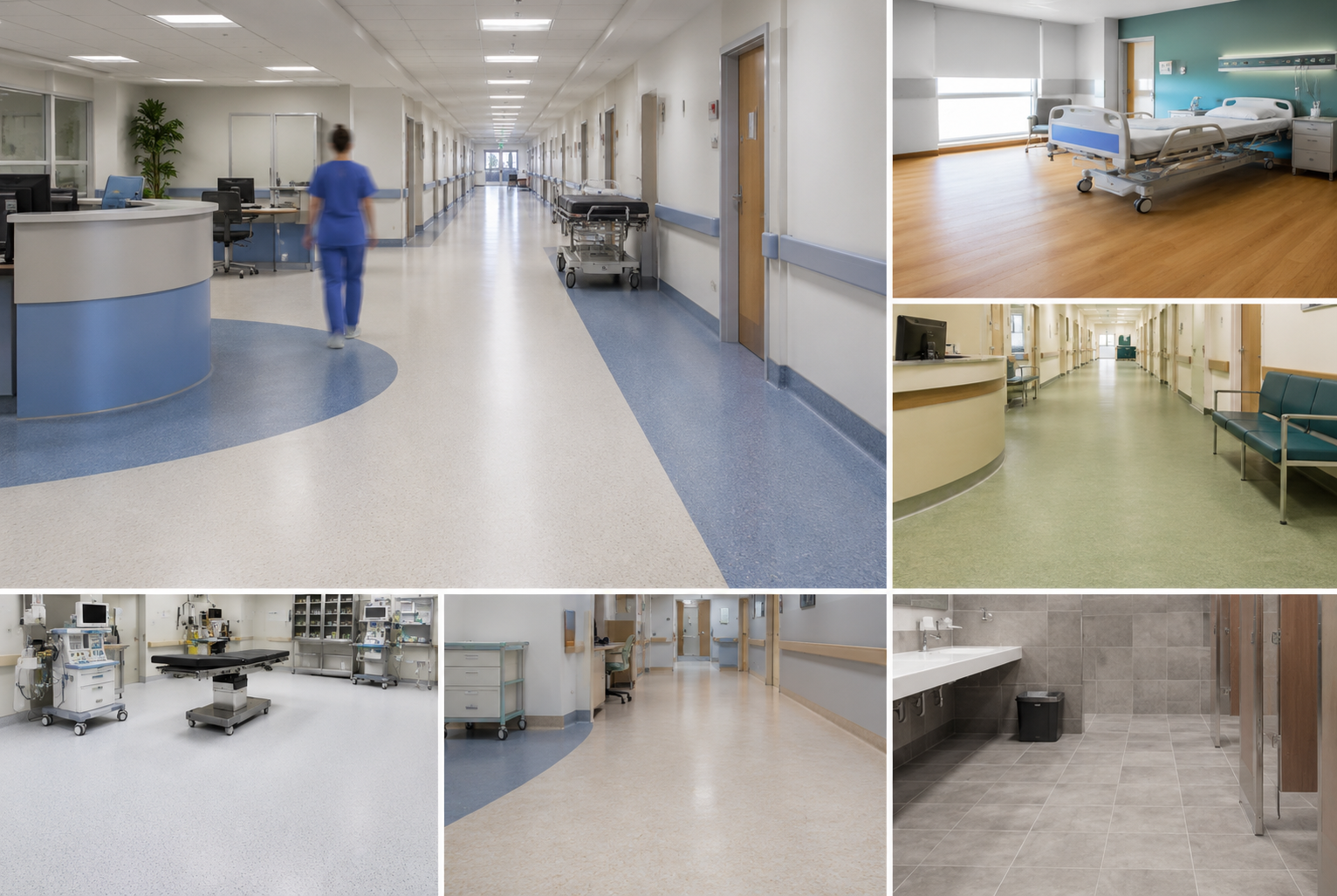
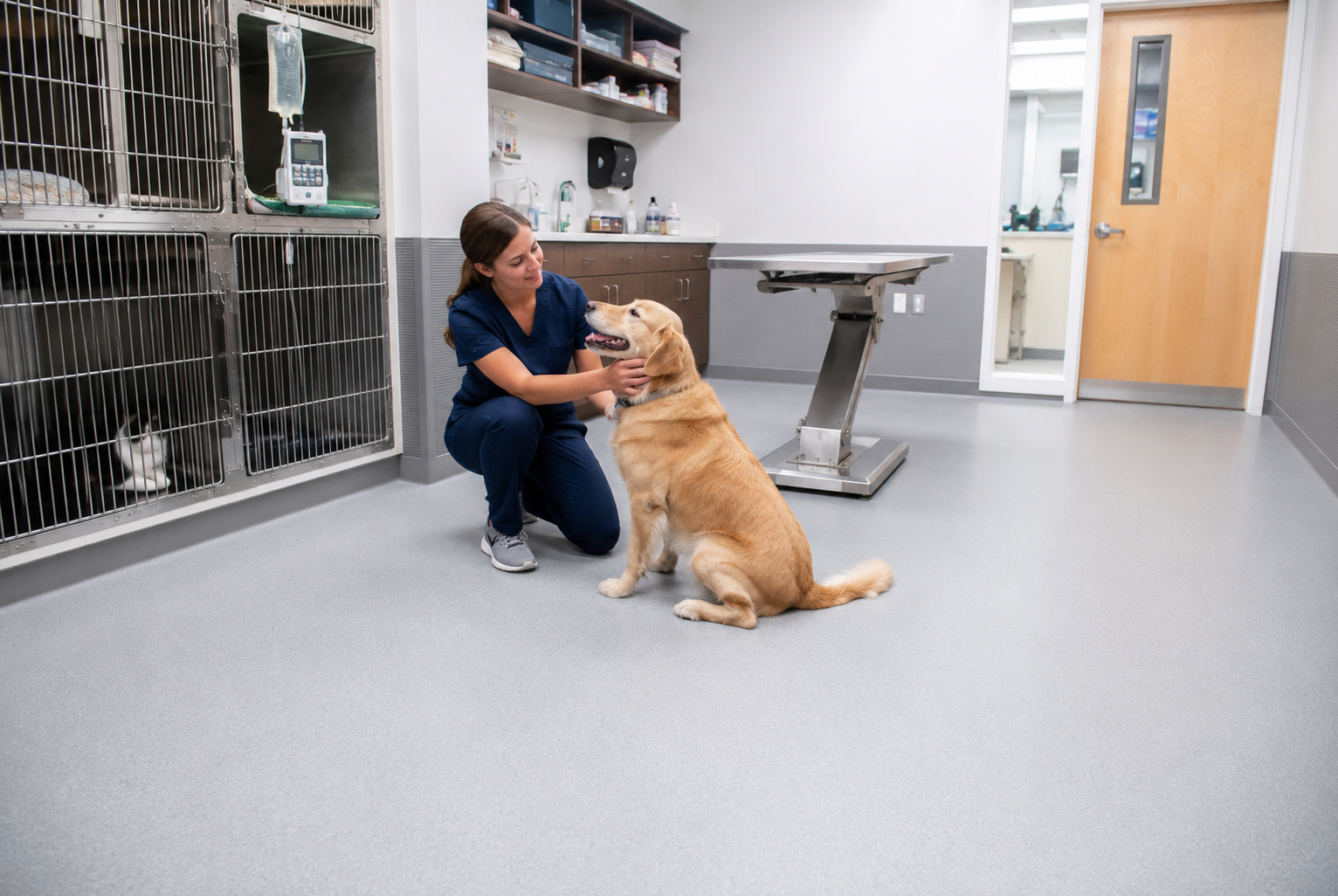
Healthcare facilities need sanitary, easy-to-clean surfaces, while automotive showrooms demand sleek, high-gloss finishes. Warehouses and distribution centers rely on durable floors that withstand constant forklift traffic.
Why Choose Professional Help Over DIY Repairs
DIY patching kits might handle a hairline crack in a garage, but commercial flooring is a different ballgame. The wrong product, improper substrate prep, or skipped curing time can cause the repair to fail within months.
A professional team brings industrial-grade equipment, manufacturer-tested materials, and years of jobsite experience. The end result is a floor that not only looks better but is also engineered to last for decades under real working conditions.
Conclusion
Uneven flooring does not fix itself, and every day it goes unaddressed is another day of unnecessary risk and worn-down appearance. With the right repair plan, your facility can look brand new, perform safely, and protect your investment for years to come.
Our team specializes in epoxy floor coatings, concrete resurfacing, and industrial floor repair built to handle the demands of your industry. We deliver turnkey service, expert workmanship, and long-term warranties that give you peace of mind. Reach out today for a no-cost, no-obligation survey, and let us help you transform your floors into a safer, smarter, more polished part of your business.
FAQ
1. How do I know if my commercial floor needs repair?
Look for visible cracks, raised seams, dips, pooling water, chipped coating, or stains that will not clean. If employees or carts struggle to move across certain areas, that is a clear sign your floor needs professional attention.
2. How long does uneven floor repair take?
Most projects are completed within a few days, depending on the size of the space and the condition of the existing concrete. Our team plans the work to minimize downtime so your operation can resume quickly.
3. Can uneven floors be repaired without full replacement?
Yes. In most cases, resurfacing, self-leveling overlays, and epoxy coatings can fully restore a damaged floor without the cost and disruption of a complete replacement.
4. Will the repaired floor be slip-resistant?
Absolutely. We can add anti-slip aggregates and textured finishes during application, which is especially valuable for kitchens, warehouses, and wet-processing areas.
5. How long does a professionally repaired floor last?
With proper installation and maintenance, a high-quality epoxy or resurfaced concrete floor can last 10 to 20 years or more, often backed by long-term warranties on materials and labor.