
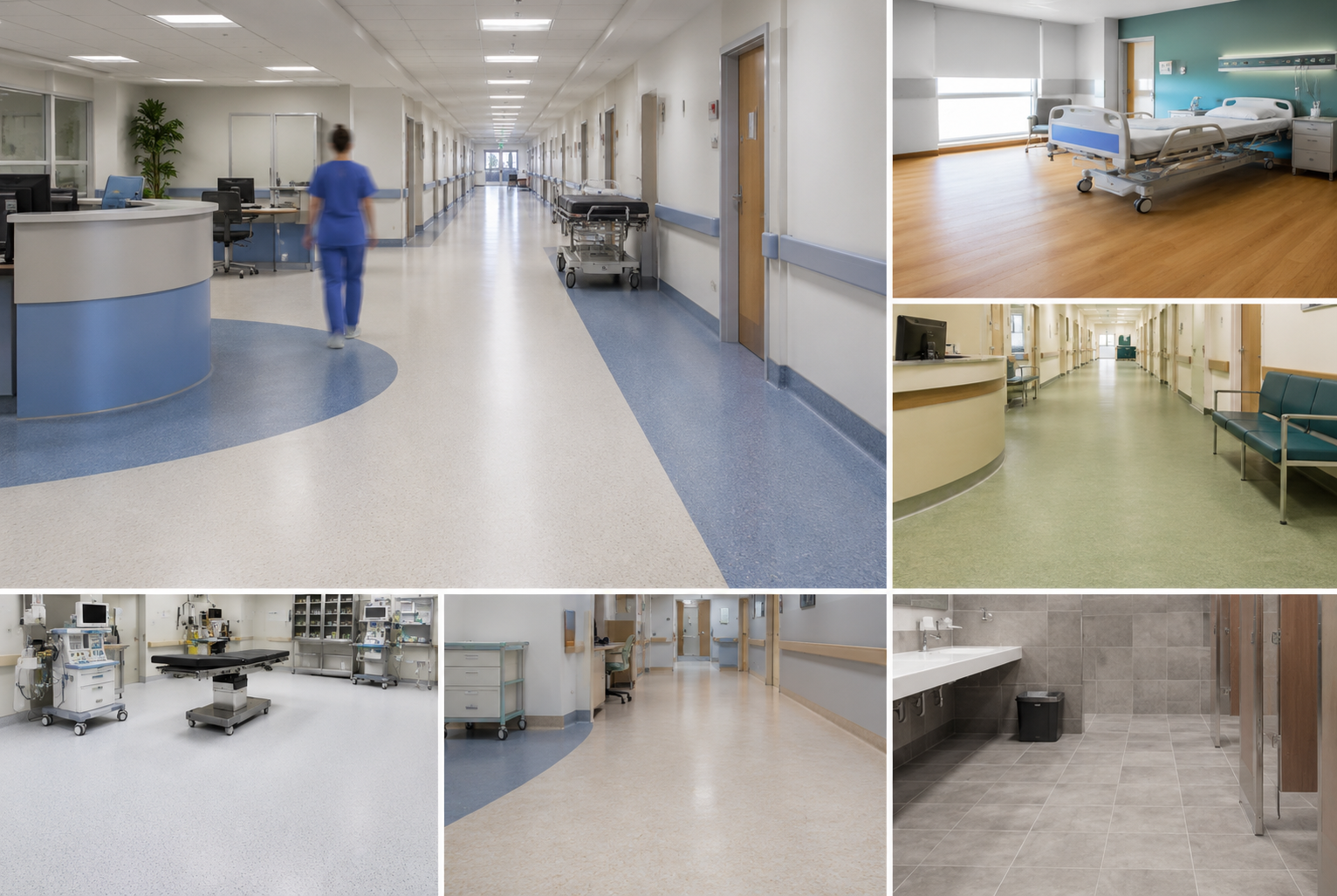
Hospitals are some of the most demanding environments any floor will ever face. Between rolling stretchers, spilled fluids, around-the-clock foot traffic, and constant chemical cleaning, the wrong flooring can fail in months instead of decades. The right one quietly protects patients, staff, and your bottom line.
Choosing hospital flooring is not just about appearance. It is about hygiene, safety, durability, and meeting strict healthcare regulations. Below, we break down the most common hospital flooring types and where each one performs best.
Why Hospital Flooring Choice Matters
In a healthcare setting, the floor is more than a surface. It influences infection control, patient safety, staff fatigue, and even how loud the environment feels during sensitive moments. A floor that cracks, peels, or absorbs liquids becomes a breeding ground for bacteria. That is why facility managers look for medical-grade flooring that is seamless, easy to clean, and built to last under heavy use.
Key Features Every Hospital Floor Should Have
Before exploring specific materials, it helps to know what separates a true healthcare floor from a regular commercial one. These features show up on almost every facility checklist.
- Seamless construction that blocks bacteria, moisture, and contaminants from settling into joints.
- Chemical resistance strong enough to handle bleach, hydrogen peroxide, and hospital-grade disinfectants.
- Slip resistance to reduce falls in busy corridors, surgical suites, and wet areas.
- Sound absorption to keep patient rooms and ICUs calm and restful.
- Long lifespan with low maintenance to keep total cost of ownership manageable.
The best hospital floors check every one of these boxes without compromising on appearance.
Common Hospital Flooring Types and Their Uses
Different zones of a hospital have very different needs. Here are the most widely used healthcare flooring options and where they perform best.
1. Epoxy Flooring
Epoxy flooring is one of the top choices in modern hospitals. It is seamless, non-porous, and highly resistant to chemicals, making it ideal for sanitary environments.
You will commonly find epoxy floor coatings in surgical suites, laboratories, pharmacies, sterilization rooms, and cleanrooms. The high-gloss finish also makes spaces look brighter and more professional.
2. Self-Leveling Epoxy
Self-leveling epoxy is a popular choice for areas that need a smooth, flat, and seamless surface across large footprints. It cures into a uniform layer that handles heavy rolling equipment with ease.
This system is often used in emergency departments, radiology rooms, and large hallways where stretchers and medical carts move constantly. Its seamless surface also makes daily cleaning faster and more effective.
3. Quartz Epoxy Flooring
Quartz flooring blends colored quartz granules with epoxy resin to deliver a decorative yet highly durable finish. It offers superior impact resistance and a slight texture that improves grip.
Hospitals often use it in cafeterias, restrooms, locker rooms, and high-traffic public corridors. The combination of beauty and function makes it a favorite for visible, patient-facing spaces.
4. Urethane Cement Flooring
Urethane cement is built for the toughest hospital zones. It can handle thermal shock, heavy impact, and harsh chemical exposure without breaking down.
It is the go-to system for hospital kitchens, dishwashing areas, morgues, and central sterile processing departments. Where extreme conditions exist, urethane outlasts most other materials.
5. Antimicrobial Resinous Flooring
Antimicrobial flooring is engineered with built-in agents that slow the growth of bacteria, mold, and fungi. It supports infection prevention in the most sensitive spaces.
This system is widely used in isolation rooms, NICUs, ICUs, and immunocompromised patient areas. It works alongside cleaning protocols rather than replacing them.
6. Decorative Flake Epoxy
Decorative flake epoxy adds color flakes to a clear or tinted topcoat, creating an attractive, textured surface. It hides minor scuffs and stains while remaining easy to sanitize.
Common applications include rehabilitation centers, outpatient clinics, mental health units, and pediatric wings. The visual warmth helps soften an otherwise clinical environment.
How to Match Flooring to Specific Hospital Areas
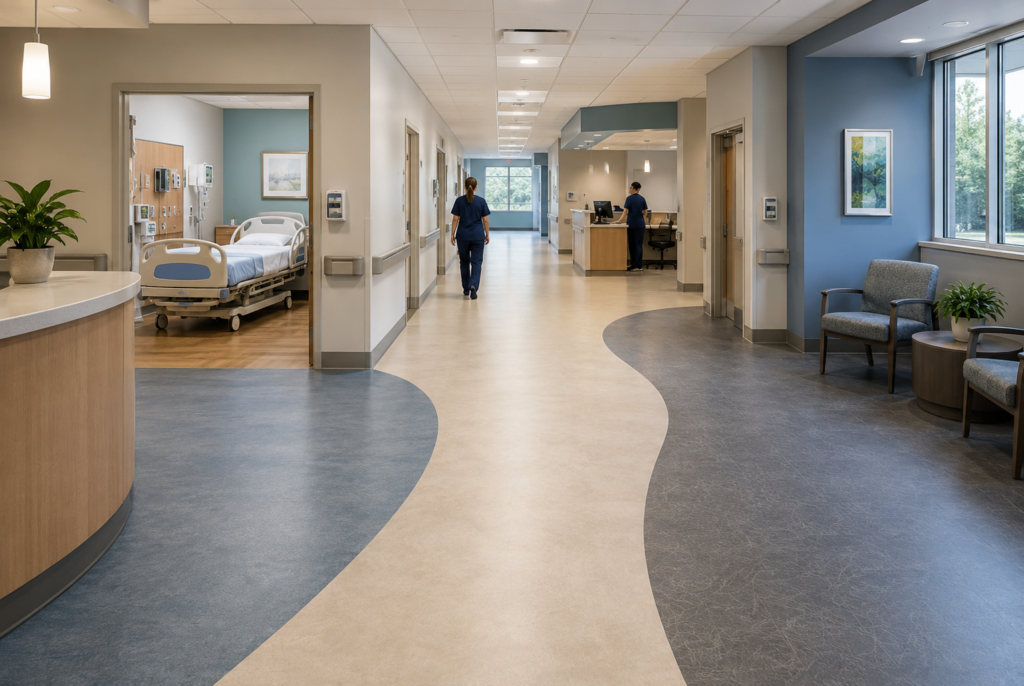
Not every zone needs the same system. Matching the right floor to the right area saves money and extends lifespan.
- Operating rooms demand seamless, sterile epoxy resinous flooring with high chemical resistance.
- Patient rooms benefit from sound-absorbing, low-maintenance, and soft-look finishes that feel less clinical.
- Hallways and lobbies need impact-resistant, easy-to-clean floors that handle constant traffic without showing wear.
- Kitchens and dishrooms require urethane cement for heat, grease, and chemical resistance.
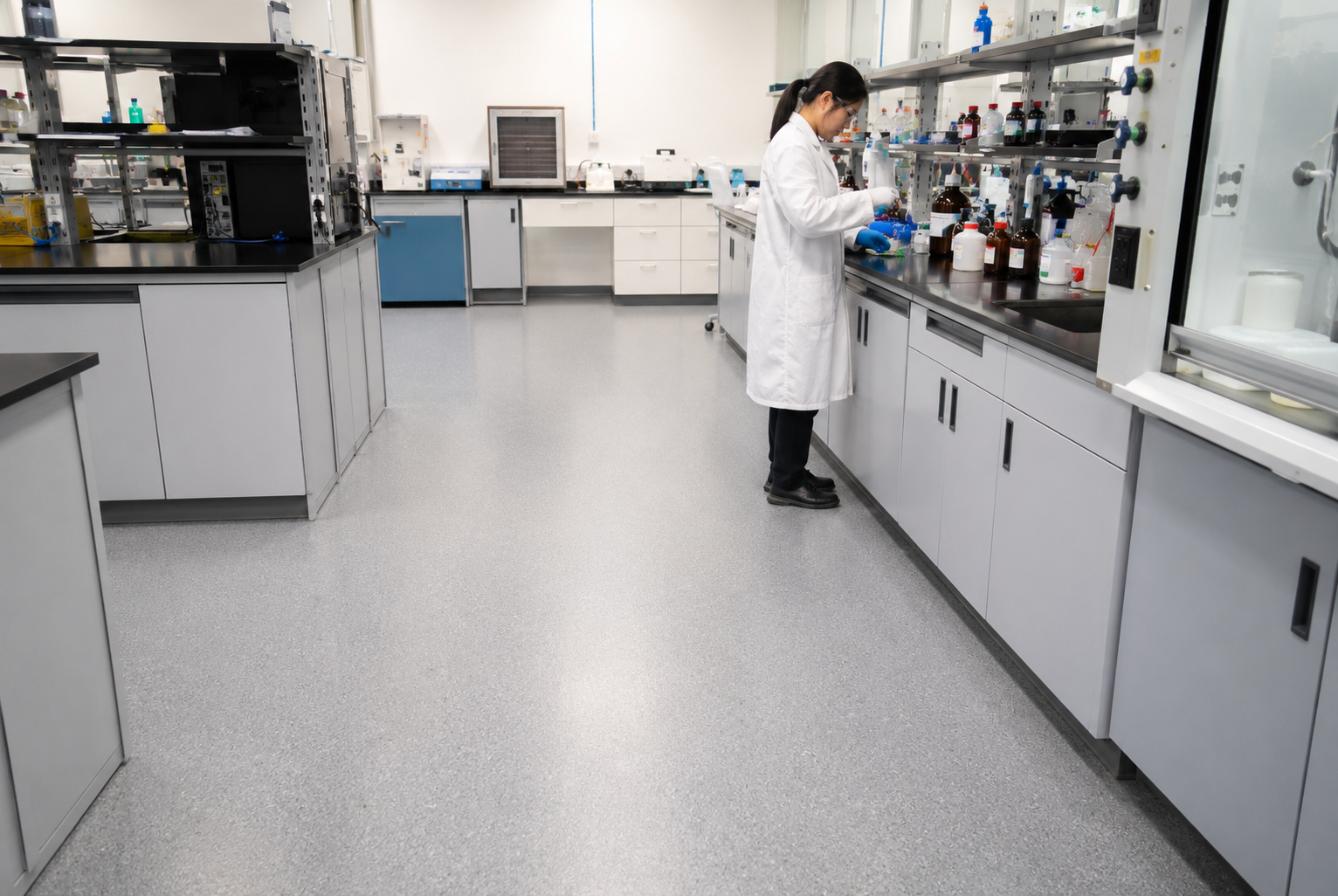
- Laboratories and pharmacies call for non-porous epoxy floor coatings to prevent cross-contamination.
When each zone gets the right system, the entire facility performs better as a whole.
Hygiene and Compliance in Hospital Flooring
Healthcare facilities must follow strict standards set by agencies like OSHA and the FDA and CDC guidelines. Flooring plays a major role in passing inspections and supporting infection control. Coved bases between walls and floors prevent moisture and bacteria from collecting in corners. Non-porous flooring systems also make decontamination far easier between shifts.
Why Resinous Flooring Outperforms Tile and Vinyl
Tile and vinyl have been used in hospitals for years, but they come with serious drawbacks. Grout lines hold bacteria, and vinyl seams peel under disinfectants, and both can become slippery when wet. Resinous flooring systems eliminate seams, resist chemicals, and last far longer with less maintenance. That is why more healthcare facilities are switching from traditional materials to commercial epoxy flooring.
The Professional Installation Process
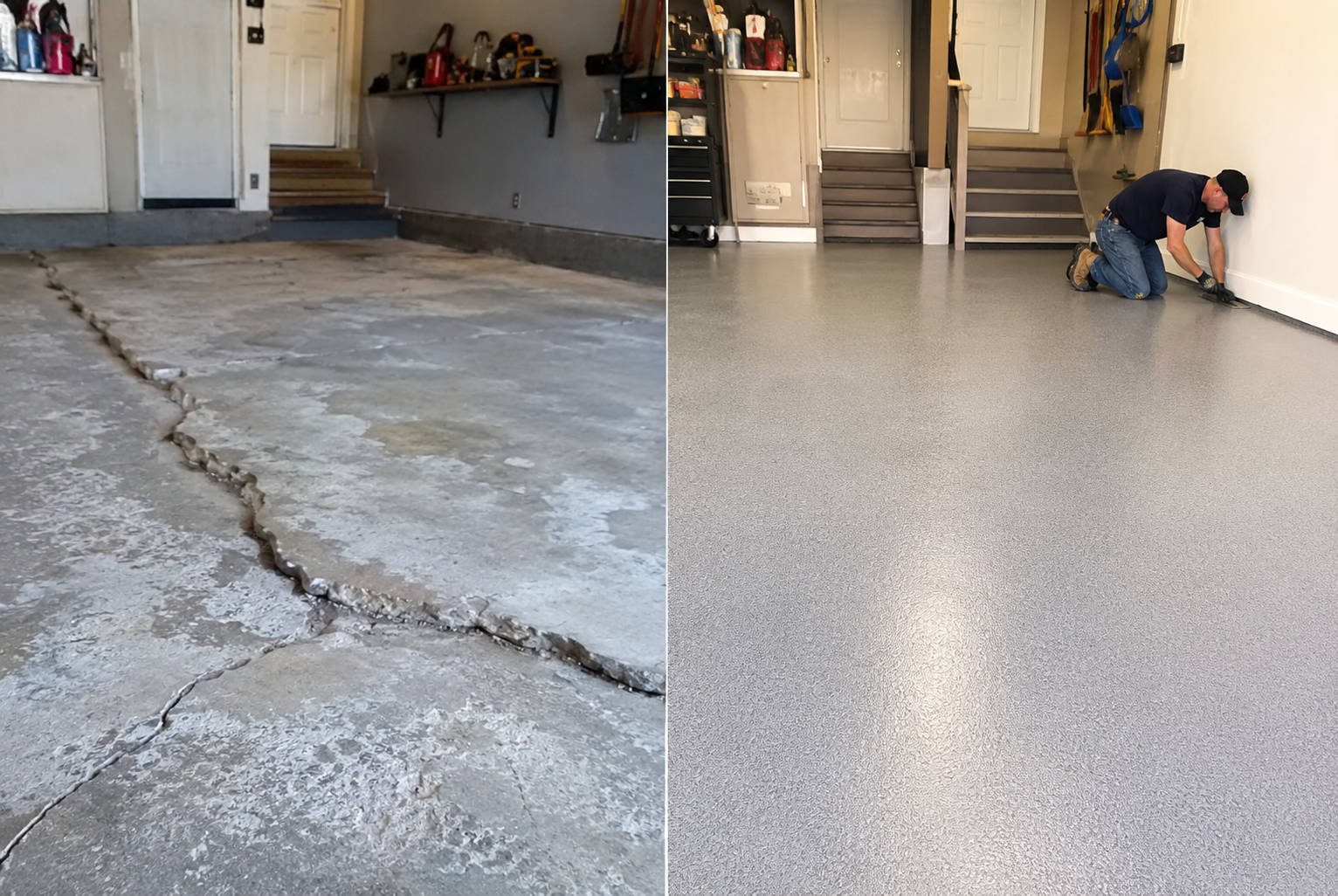
A high-quality hospital floor starts with proper preparation. The concrete is first cleaned and profiled using shot blasting or diamond grinding for strong adhesion. Cracks are filled, primer is applied, and the chosen system is installed in layers. Final touches like anti-slip additives, coving, and safety markings complete the job. Skilled crews plan around hospital schedules to minimize downtime.
How Long Does Hospital Flooring Last?
When installed correctly, medical facility flooring can last 15 to 25 years or more. Lifespan depends on the system used, the traffic level, and how well the floor is maintained over time. Regular cleaning with neutral pH disinfectants and quick repair of minor damage keeps performance high. Many facilities also benefit from long-term warranties on materials and labor.
Conclusion
Hospitals deserve floors that work as hard as the people inside them. Whether you manage a surgical center, urgent care, or full-service hospital, the right system protects your patients, staff, and investment for decades.
Our team specializes in healthcare flooring solutions, epoxy resurfacing, and antimicrobial floor coatings designed for the strict demands of medical environments. Contact us today for a free, no-obligation consultation and let us help you create a cleaner, safer, more efficient hospital from the floor up.
FAQ
1. What is the most hygienic flooring for hospitals?
Seamless epoxy flooring is widely considered the most hygienic option. Its non-porous surface prevents bacteria, fluids, and contaminants from soaking in, making sanitation fast and effective.
2. Which hospital flooring is best for operating rooms?
Operating rooms typically use self-leveling or antimicrobial epoxy floors. These systems are seamless, sterile, chemical-resistant, and meet strict infection control standards.
3. Is epoxy flooring slippery in hospitals?
Not when installed properly. Anti-slip aggregates can be added to the topcoat to create a textured finish that improves grip in wet or high-traffic areas.
4. How long does hospital epoxy flooring last?
With professional installation and proper care, hospital epoxy flooring can last anywhere from 15 to 25 years, often backed by long-term material and labor warranties.
5. Can flooring be installed without shutting down the hospital?
Yes. Most installations are phased and scheduled around operations, allowing critical areas to stay open while other zones are upgraded with minimal disruption.