
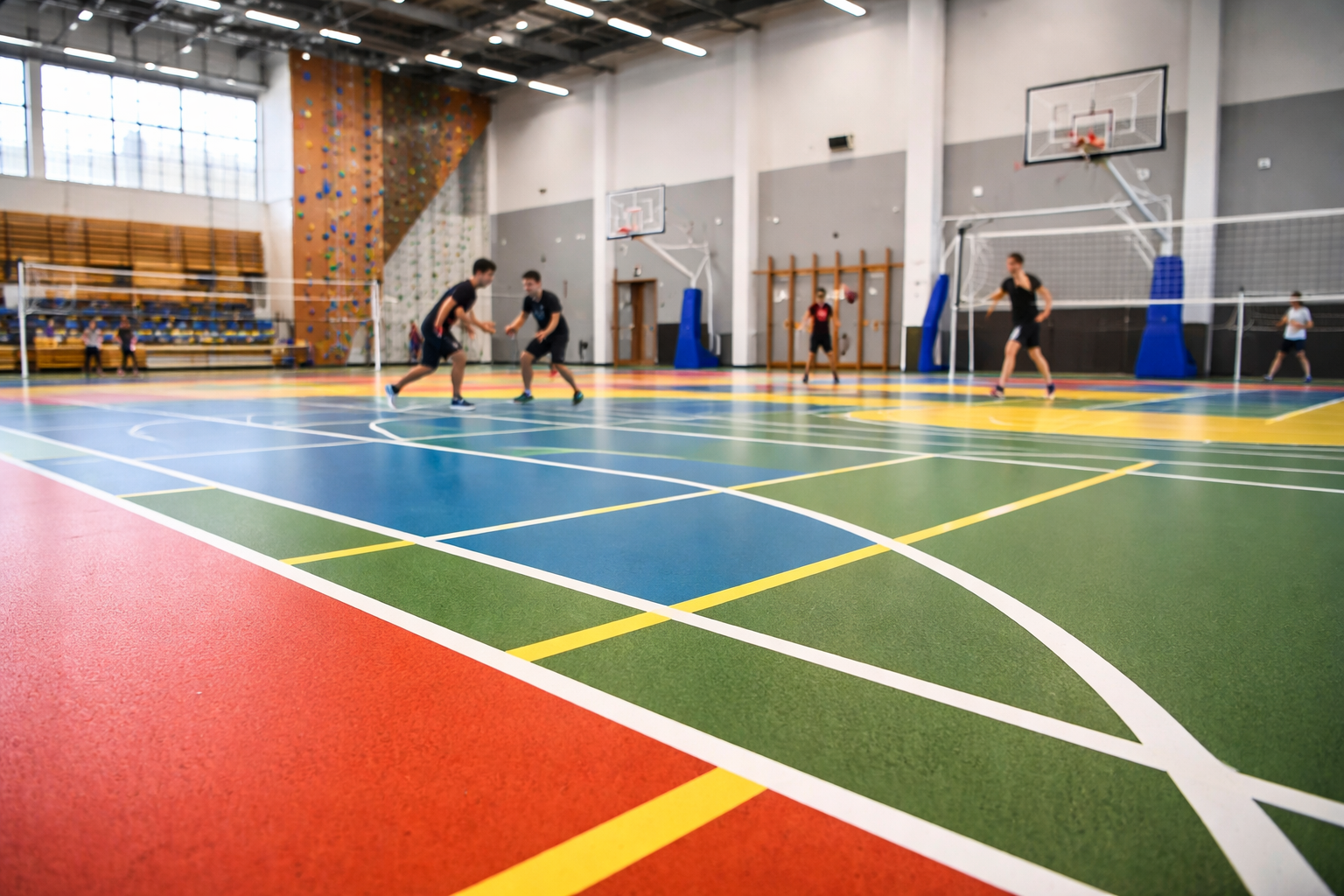
Across the USA, facility managers are increasingly turning to advanced synthetic surfaces to meet the rigorous demands of modern athletics. Polyurethane sports flooring has become the gold standard for commercial facilities due to its seamless finish and elite performance characteristics. Whether designing a high school gymnasium or a professional training center, those in charge prioritize surfaces that can withstand heavy use while protecting the athletes who use them. This blog explores the technical advantages, installation nuances, and long-term benefits of choosing a high-performance sports polyurethane flooring system for your next recreational project.
What Is Polyurethane Sports Flooring and How Does It Work?
A sports polyurethane flooring system is a multi-layered surfacing solution designed for flexibility and strength. Unlike rigid options, these polymer flooring systems are engineered to be “point elastic,” meaning they deform under pressure for comfort before returning to their original shape.
The typical elastic sports flooring consists of a rubber base mat adhered to the subfloor, followed by a pore filler and self-leveling polyurethane resin. This liquid application creates a completely seamless surface, eliminating trip hazards found in modular tiles. The result is a consistent finish that supports diverse athletic movements.
Why Polyurethane Sports Flooring Is Popular in Athletic Facilities
The primary reason for the widespread adoption of high-performance sports flooring is its incredible versatility. Facility owners require a surface that can handle more than just sports; it must also support heavy bleachers, equipment, and foot traffic. Sports flooring durability is a hallmark of polyurethane, as it resists scratches, scuffs, and chemical spills better than traditional vinyl or timber.
In large-scale projects, such as sports hall surfaces and specialized athletic track surfaces, the uniformity of the material is a major draw. Because it is poured on site, there are no seams to pull apart or collect dirt. This seamless nature contributes to a cleaner environment and a more professional aesthetic that lasts for decades with proper care.
How Polyurethane Sports Flooring Enhances Athlete Safety
Safety is the most critical factor in any commercial recreational space. Utilizing shock-absorbing sports flooring significantly reduces the risk of long-term joint injuries and acute impact trauma. The specialized shock absorption layer within the system dissipates the energy of a jump or a fall, protecting the player’s ankles, knees, and hips.
Beyond cushioning, floor impact resistance ensures that the surface remains flat and stable under intense localized pressure. This stability prevents the “trough” effect where a floor dips during a sprint, which can lead to stumbles. By combining vertical deformation with energy return, this flooring helps athletes perform at their peak while minimizing the physical toll on their bodies. You can learn more about how these technologies integrate into broader floor safety solutions for commercial environments.
Installation Process of Polyurethane Sports Flooring Systems
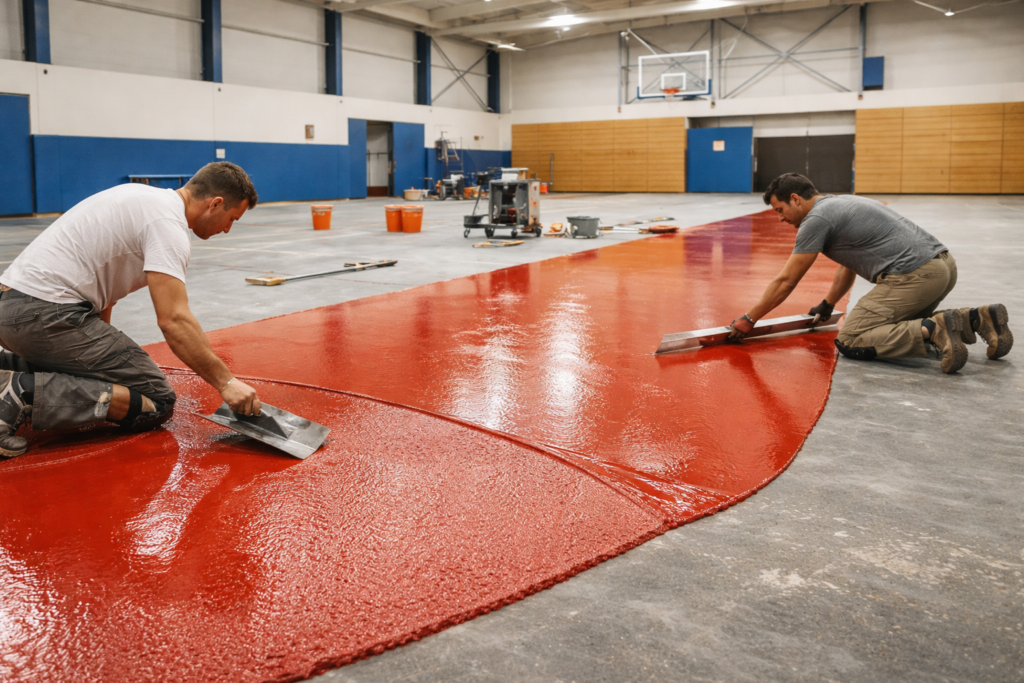
Installing a polyurethane athletic flooring system is a technical process requiring a controlled environment. First, rigorous subfloor preparation ensures the concrete is level and dry. A high-strength adhesive then bonds a prefabricated rubber shock pad to the floor. After the adhesive cures, a specialized pore filler seals the mat.
Next, the polyurethane wear layer is applied using notched squeegees for a level finish. Finally, a matte topcoat is applied to provide necessary friction and color, followed by precise game line painting for a professional look.
Where Polyurethane Sports Flooring Is Commonly Used
Because of its adaptable nature, multi-purpose sports flooring is found in a variety of settings. It is the preferred choice for indoor court flooring systems because it provides a true ball bounce and excellent traction.
Common applications include:
- Volleyball court flooring where diving and rapid lateral movements are frequent.
- Gymnasium polyurethane flooring for K-12 schools and universities.
- Professional sports court flooring for basketball and futsal.
- Community centers that require a surface for both sports and social events.
The ability to customize the thickness of the shock pad makes it easy to tailor the polyurethane court flooring to the specific needs of the sport being played.
Slip Resistance and Shock Absorption in Sports Flooring
An anti-slip sports flooring system is essential for maintaining a fast-paced game without the risk of sliding. The topcoat of a polyurethane floor is formulated to provide a consistent coefficient of friction, ensuring players can stop and turn on a dime even if there is slight moisture from perspiration.
These recreational flooring solutions balance grip with “slideability,” which is important for sports like volleyball where a player may need to slide across the floor safely. This balance, combined with slip-resistant flooring technology, creates a reliable environment for all ages and skill levels.
Maintenance Practices for Polyurethane Sports Floors
One of the most attractive features of polyurethane flooring is the ease of maintenance. Unlike wood floors that require frequent sanding and refinishing, polyurethane surfaces only need routine cleaning with a neutral detergent and an auto scrubber.
Regular inspections should be conducted to check for any deep gouges from heavy machinery or external debris. Because the surface is non-porous, it does not harbor bacteria or odors, making it a hygienic choice for high-traffic community centers. Over time, if the floor loses its luster, it can be easily recoated without the need for a full replacement.
How to Choose the Right Polyurethane Sports Flooring System
When evaluating sports hall flooring solutions, facility managers should consider the primary activity of the room. A space used mainly for yoga and light aerobics will require a different shock pad thickness than a high-impact basketball court.
Prioritize sports flooring durability by checking the technical specifications for tensile strength and tear resistance. It is also wise to consider the color options and line marking requirements early in the design phase to ensure the final product meets the branding and functional needs of the facility. Selecting a system that offers a balance of safety, longevity, and ease of care will ensure a high return on investment.
FAQ
What is polyurethane sports flooring?
It is a seamless, multilayer synthetic flooring system composed of a rubber base mat and liquid polyurethane resins, designed specifically for athletic use.
Why is polyurethane flooring suitable for sports facilities?
It offers a unique combination of durability, seamless hygiene, and “point elastic” comfort that protects athletes while withstanding heavy commercial use.
Where is polyurethane sports flooring commonly used?
It is frequently installed in school gymnasiums, indoor basketball and volleyball courts, multipurpose community halls, and professional training centers.
How does polyurethane flooring improve athlete safety?
Through its shock absorption layer, the floor reduces the impact on joints and prevents injuries related to falls or repetitive strain.
What preparation is required before installing polyurethane sports flooring?
The concrete subfloor must be shot blasted or ground to a smooth finish, tested for moisture levels, and completely cleared of dust and oils.
How does polyurethane sports flooring provide shock absorption?
Shock absorption is provided by a prefabricated rubber base mat that sits beneath the polyurethane layers, which compresses and displaces energy upon impact.
Is polyurethane flooring suitable for indoor sports courts?
Yes, it is one of the most popular choices for indoor courts due to its consistent ball bounce and high traction surface.
What maintenance practices help maintain polyurethane sports floors?
Daily sweeping and weekly cleaning with a specialized floor scrubber and pH-neutral cleaner are the primary requirements for long-term care.
How durable is polyurethane sports flooring in high-activity environments?
It is exceptionally durable, resisting permanent indentation from heavy loads and maintaining its structural integrity through years of intense athletic activity.
What factors should sports facilities consider when choosing polyurethane flooring?
Facilities should consider the level of shock absorption needed, the expected type of footwear, the frequency of multipurpose use, and the long-term maintenance budget.
Conclusion
Choosing the right surface is an investment in both athlete longevity and the structural value of your property. Polyurethane sports flooring remains the premier choice for facilities that refuse to compromise on performance or safety. We encourage you to learn more about advanced surfacing options or explore related solutions tailored specifically for your commercial space. Visit another page on our site to discover how modern, high-performance surfacing can revitalize your recreational environment and elevate the athlete experience. Selecting a high-performance sports polyurethane flooring system ensures your facility remains a top-tier destination for years to come.